
The company behind Sour Puss liquor is transferring its production from Minnesota to Quebec after witnessing a sudden drop in sales when provincial liquor boards halted their orders during the ongoing Canada-U.S. trade dispute.
Phillips Distilling Company in Minnesota has entered into a five-year agreement to produce its sweet-and-sour drinks in Montreal following the suspension this spring of American-made alcoholic products on retail shelves across Canada.
Until then, Canada had been the brand’s largest customer, and accounted for the nearly 98 percent of the one million Sour Puss bottles sold by the company last year, according to Phillips Distilling Company CEO Andy England.
“The drop in sales in Canada is significant enough to Phillips Distilling Company that we were compelled to take action,” England told The Epoch Times via email. “Losing the majority of our business in Canada was certainly the impetus for change, but now that we have done the work of moving our Canadian Sour Puss production to Quebec, it makes sense that it’s there. It’s essentially a Canadian brand.”
The company officially kicked off production of Sour Puss at Station 22 Distillery in Montreal last week, but the change has been in the works for several months.
England said his company began exploring options to make the product in Canada “just days after the trade war began.” The company looked at 19 different production sites across Canada before narrowing down the list to its top three contenders. Station 22 was chosen in the end because of its “capabilities and speed to market.”
The company’s raspberry-flavoured liqueur is slated to hit store shelves next month and England said two provinces have already placed orders, although he did not say which liquor boards his firm has finalized deals with.
“It is certainly our hope to restore sales in Canada, and now it’s up to provincial liquor boards to decide whether to return Phillips Distilling Company’s products to shelves and for consumers to choose how to spend their hard-earned dollars,” he said.
The Liquor Control Board of Ontario (LCBO) said in a media statement that it is in “active discussions” with the supplier, but did not respond to a request for additional comment. Quebec’s SAQ also did not respond to a request for comment before publication.
American Alcohol Sales
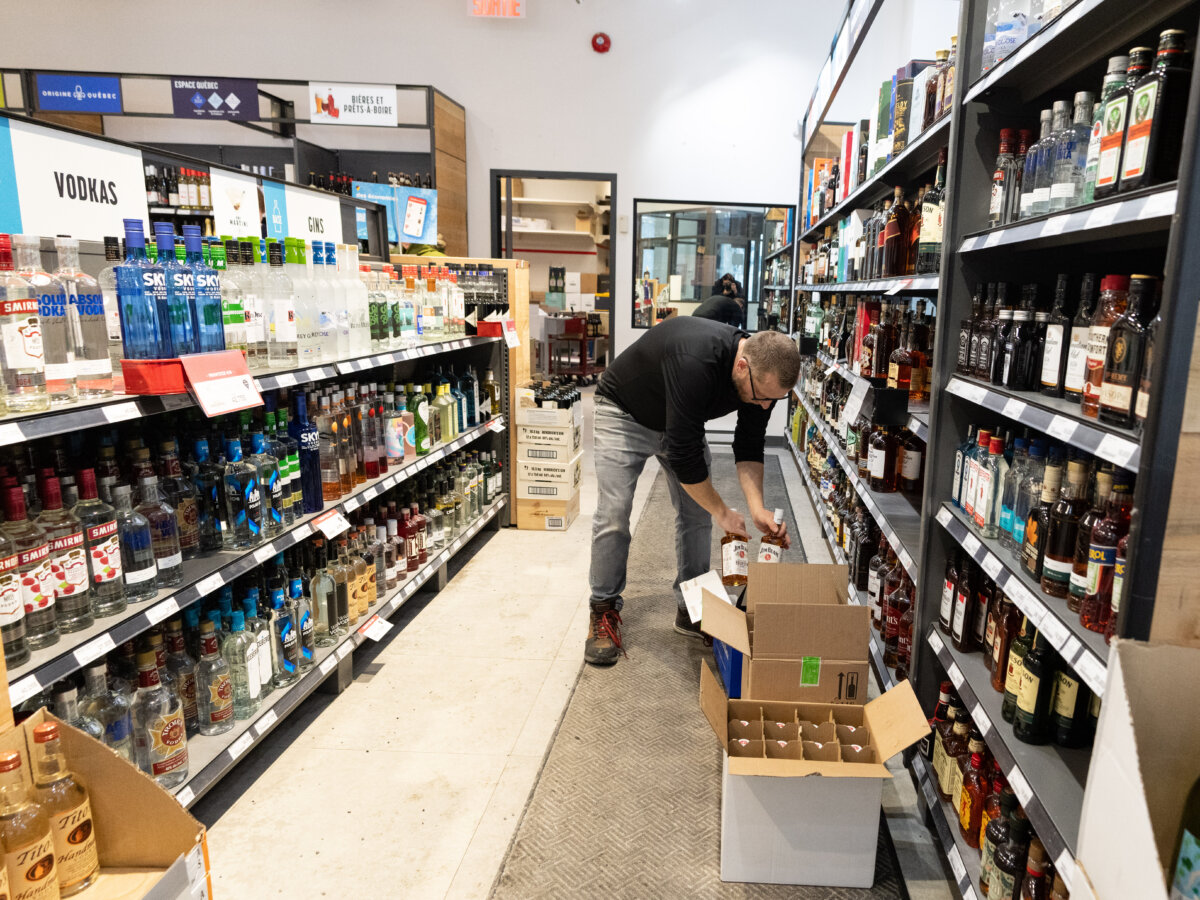
Alberta and Saskatchewan are the only provinces that have completely reinstated the buying and selling of U.S. alcohol products. Most other provinces and territories continue to uphold their prohibitions in government-operated stores due to the ongoing Canada-U.S. trade dispute.
Ontario in particular has staunchly opposed trade with American alcohol suppliers. Premier Doug Ford instructed the LCBO to remove American alcohol from its store shelves in response to U.S. President Donald Trump slapping tariffs on Canadian goods this spring and the ban remains in place.
Ford has described the LCBO as the “largest purchaser of alcohol in the entire world,” and has pledged to use the agency’s buying power to ban U.S. products.
He vowed last month to ban Crown Royal whiskey from Ontario-run liquor stores if British alcoholic beverage company Diageo proceeds with its plan to close its bottling plant in Amherstburg, Ont., in February to move bottling volume to the United States.
Ontario’s large population, combined with the LCBO’s exclusive control over alcohol distribution, positions the Crown corporation as a major international buyer of alcoholic beverages.
Future Plans
England said his firm is going all-in on its Canadian production plans and will launch Sour Puss ready-to-drink 7 percent alcohol cocktails, a new product, in January.
“We probably wouldn’t have been able to launch such a product without Station 22, because we don’t have a can line at our Minnesota plant,” England said, noting that the new beverage should “help get us on the growth track.”
He said the move to Montreal lowers transportation costs and makes it easier to adapt to Canadian consumer preferences such as canned cocktails or hard seltzers, a segment that is gaining popularity in Quebec.
Phillips Distilling Company produces a number of alcoholic beverages, including UV Vodka, and the Kamora and Leroux brand of liqueurs.
The Canadian Press contributed to this report.
 Friends Read Free
Copy
Facebook
Tweet
Friends Read Free
Copy
Facebook
Tweet