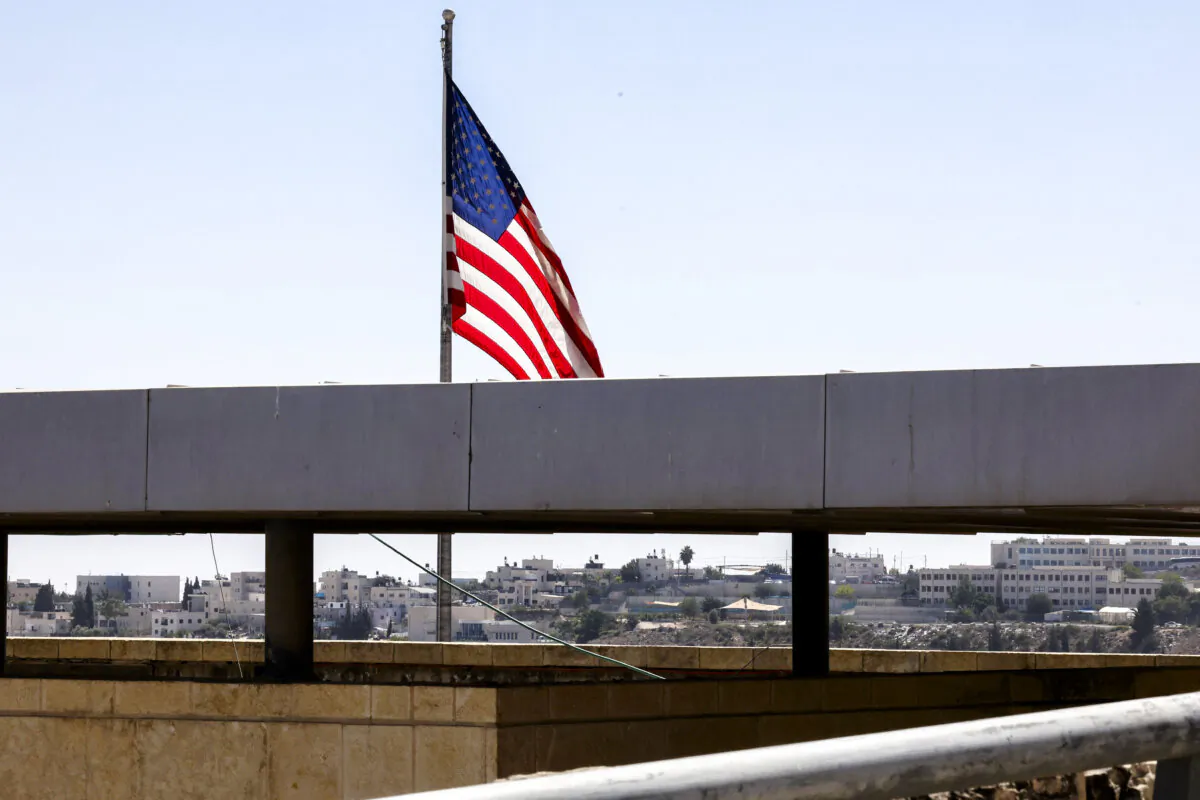

The United States authorized nonemergency government personnel and family members to leave Israel over “safety risks” amid growing Washington–Tehran tensions, the U.S. Embassy in Jerusalem said on Feb. 27.
“In response to security incidents and without advance notice, the U.S. Embassy may further restrict or prohibit U.S. government employees and their family members from traveling to certain areas of Israel, the Old City of Jerusalem, and the West Bank. Persons may wish to consider leaving Israel while commercial flights are available,” the embassy added in the statement issuing the instruction.
The embassy did not elaborate on the specifics of the “safety risks.”
An “authorized departure” allows affected personnel to decide whether to leave or stay, unlike a departure order, which requires them to leave the country, according to the advisory.
Such an order was instituted this week for some personnel at the U.S. Embassy in Beirut, Lebanon, on Feb. 23.
The Epoch Times contacted the U.S. Embassy in Jerusalem for comment but did not receive a response by publication time.
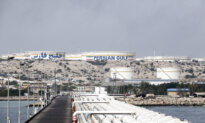
The United States has increased its military presence in the Middle East in recent weeks as negotiations with Iran continue over Tehran’s nuclear program.
The talks, which took place in Geneva, Switzerland, on Feb. 26, were the third such meeting between representatives of both nations and were mediated by Oman.
Washington wants a deal to constrain Tehran’s nuclear program, while Iran has maintained that it wants to continue enriching uranium, even as its program sits in ruins following the U.S. attack in June 2025 on three of its nuclear sites, part of the 12-day war last year.
The talks ended the same day with no sign of a breakthrough.
Iran has threatened to strike American bases in the region if it is attacked, and an escalation could also draw in Israel, which conducted a 12-day bombing campaign in June 2025 against Iran that Washington eventually joined.
Ahead of the Geneva talks, on Feb. 25, U.S. Secretary of State Marco Rubio warned that Iran “poses a very grave threat to the United States and has for a very long time.”
Rubio said that after Tehran’s nuclear program was obliterated during Operation Midnight Hammer, “they were told not to try to restart it,” but “they’re always trying to rebuild elements of it.”
“You can see them always trying to rebuild elements of it. They’re not enriching right now, but they’re trying to get to the point where they ultimately can,” he added.
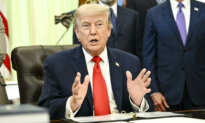
His comments built on statements by U.S. President Donald Trump in his State of the Union address to Congress on Feb. 24, and by U.S. Vice President JD Vance on Feb. 25.
During his Feb. 24 speech, Trump said Iran was attempting to reboot its nuclear program, working to build missiles capable of reaching the United States, and was responsible for roadside bombings that have killed U.S. service members and civilians.
He has also warned that it will be a “very bad day” for Iran if no deal is reached to solve the long-running dispute over Tehran’s nuclear program.
Vance told reporters the day after Trump’s address that “the principle is very simple: Iran cannot have a nuclear weapon.”
 Friends Read Free
Copy
Facebook
Tweet
Friends Read Free
Copy
Facebook
Tweet