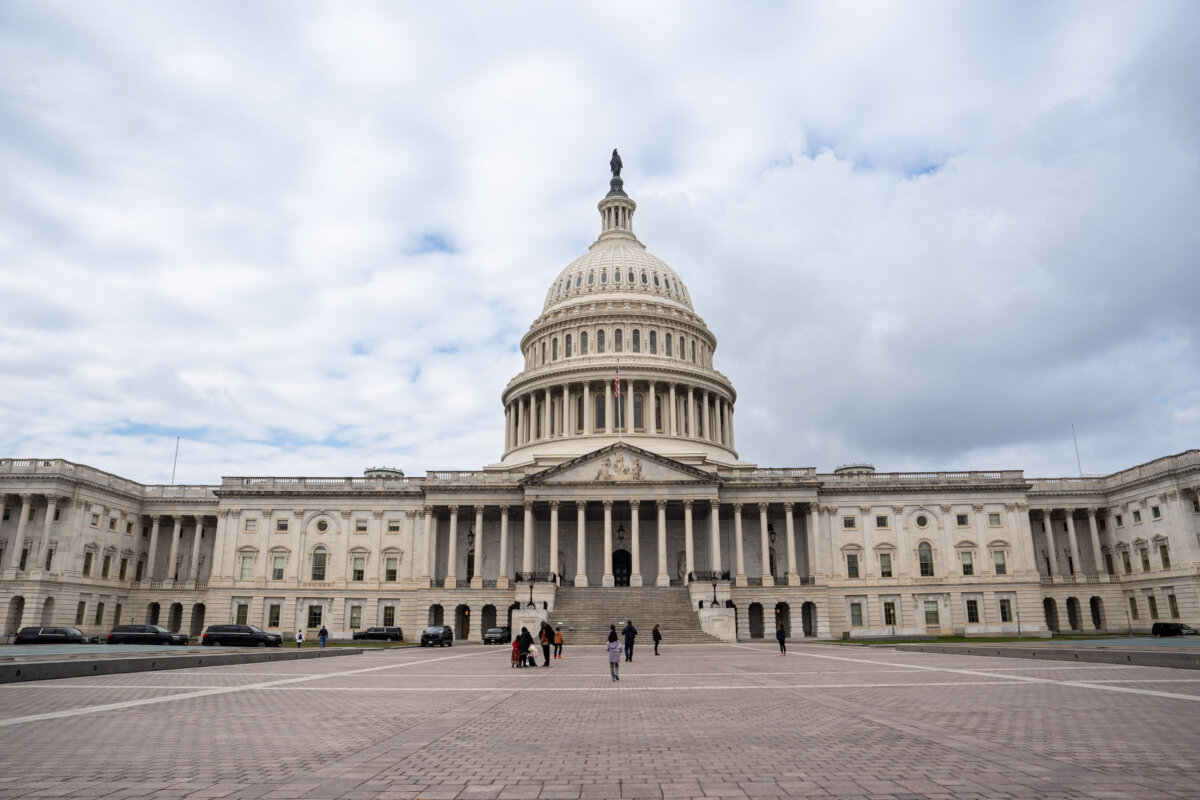

The U.S. government’s shutdown, after reaching day 36 on Nov. 5, is now the longest in U.S. history.
Congress failed to meet its emergency funding deadline on Oct. 1, which would have funded government operations through the end of the year.
Government has been shut down since, leaving 1.4 million federal employees without pay, not including military personnel.
The government is currently in a deadlock over disagreements with Republican proposals for funding.
Although the Congress is currently majority Republican, the Senate still needs seven Democratic votes to reach the 60-vote threshold. With neither party willing to budge on its positions, it appears that a solution will not be met with anytime soon.
House Speaker Mike Johnson (R-La.) addressed a press conference on Nov. 3, blaming Democrats for the shutdown.
“Democrats made a deliberate choice to keep the government closed. The shutdown will only end when those same Democrats make a deliberate choice to open,” he told reporters.
Democrats hold that they won’t vote on a Continuing Resolution (CR) unless funding is included for health care protections, which are set to expire at the end of the year.
Republicans believe this is a separate issue and therefore has nothing to do with government funding.
A CR is a temporary funding bill that keeps federal agencies operating while Congress debates the main budget for the year.
With the shutdown now in its second month, at least 670,000 employees have been furloughed, and approximately 730,000 are working without pay.
Approximately 42 million Americans are facing disruptions to food welfare via Supplemental Nutrition Assistance Program (SNAP) benefits.
Massive flight disruptions have been appearing across the country, with cancellations and delays heading into the thousands. The Federal Aviation Administration formally issued an emergency order to slash domestic operations to take effect on Nov. 7.
There have been 11 government shutdowns in the United States since the 1980s.
Previously, government agencies would continue to run during budget disputes, but in 1980 and 1981, then-Attorney General Benjamin Civiletti argued in a series of legal opinions that they shouldn’t have the authority to do so during funding gaps.
The previous shutdown lasted for 34 days, from Dec. 21, 2018, to Jan. 25, 2019, during President Donald Trump’s previous administration over border wall funding on the U.S.–Mexico border.
Other significant shutdowns occurred in 2013 for 16 days during President Barack Obama’s tenure, over disagreements on health care funding.
In 1995, during President Bill Clinton’s administration, the government shut down twice for a total of 26 consecutive days.
The United States has a unique system of governance that requires passage of a bill to be approved by the House, the Senate, and the president, which can fail at any of these stages.
In other countries like the UK, the ruling party generally has authority over the whole budget process, but has to maintain the confidence of the House of Commons; any disagreements could result in a vote of no confidence, which could lead to the ruling government collapsing, and a snap re-election.
A similar situation has occurred in France, which has now lost its 5th prime minister since late 2024 over budget disagreements.
Nathan Worcester contributed to this report
 Friends Read Free
Copy
Facebook
Tweet
Friends Read Free
Copy
Facebook
Tweet