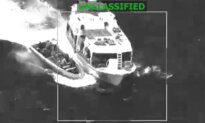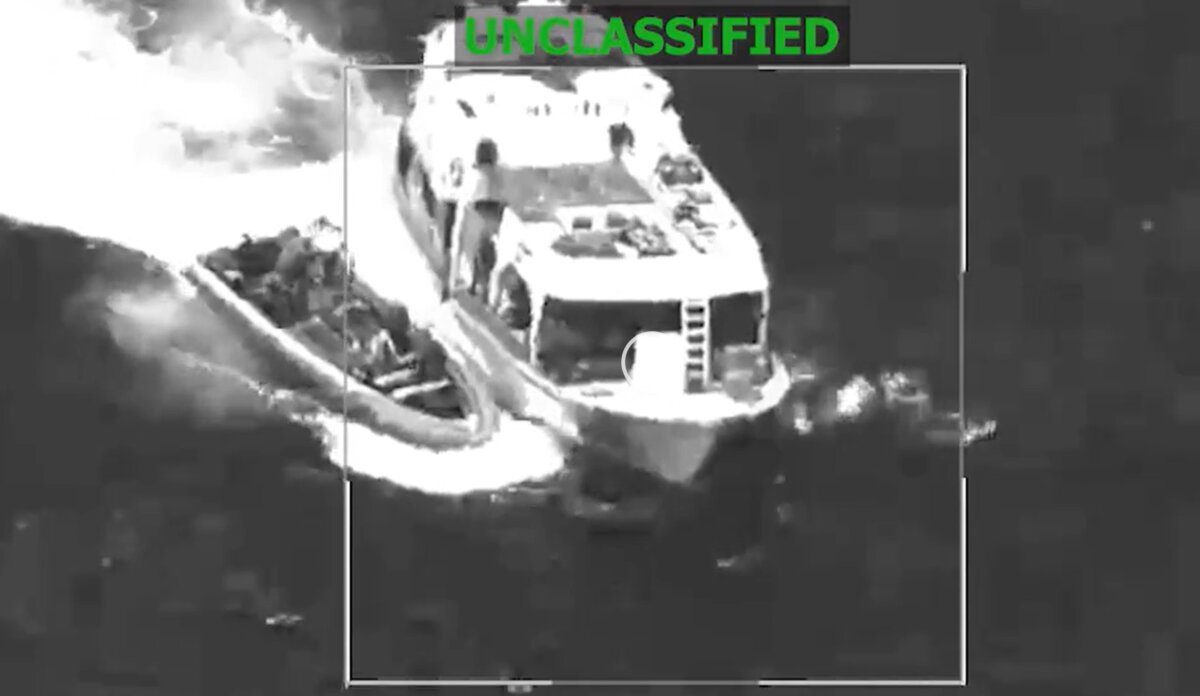

The U.S. military said it intercepted and sank a vessel operating as a floating refueling station for maritime drug traffickers in the eastern Pacific after intelligence linked it to Ecuadorian terrorist organization Los Choneros.
A Marine task force operating from the USS San Antonio boarded, searched, and cleared the vessel on Sept. 3 without incident, U.S. Southern Command said, adding that the operation was carried out in coordination with the Ecuadorian government.
The people on board were removed for transfer to Ecuadorian authorities before U.S. forces sank the vessel.
“This interdiction cuts off a critical node in the traffickers’ logistics chain and advances the goals of the Americas Counter Cartel Coalition (A3C) and JTF-WHEM to dismantle narco-terrorist networks,” U.S. Southern Command said in a statement.
A3C, established in March 2026, is a military partnership between the United States and other Western Hemisphere nations aimed at disrupting cartel operations.
Washington designated Los Choneros and another group, Los Lobos, as foreign terrorist organizations and specially designated global terrorists in September 2025.
The U.S. State Department said both organizations had attacked and threatened public officials, judges, prosecutors, journalists, and security personnel in Ecuador.
It also said the groups were linked to the Sinaloa Cartel and the Jalisco New Generation Cartel and sought control of drug-trafficking routes through Ecuador by using violence against the country’s population.
The statement added that Washington would continue working with Ecuadorian President Daniel Noboa to disrupt the revenue streams that finance cartel activity.
The Sept. 3 operation followed a similar mission conducted on Aug. 28.
In that incident, Southern Command said U.S. forces, also working with Ecuador, located and sank another vessel in the eastern Pacific that was serving as an offshore refueling point for drug-trafficking boats.
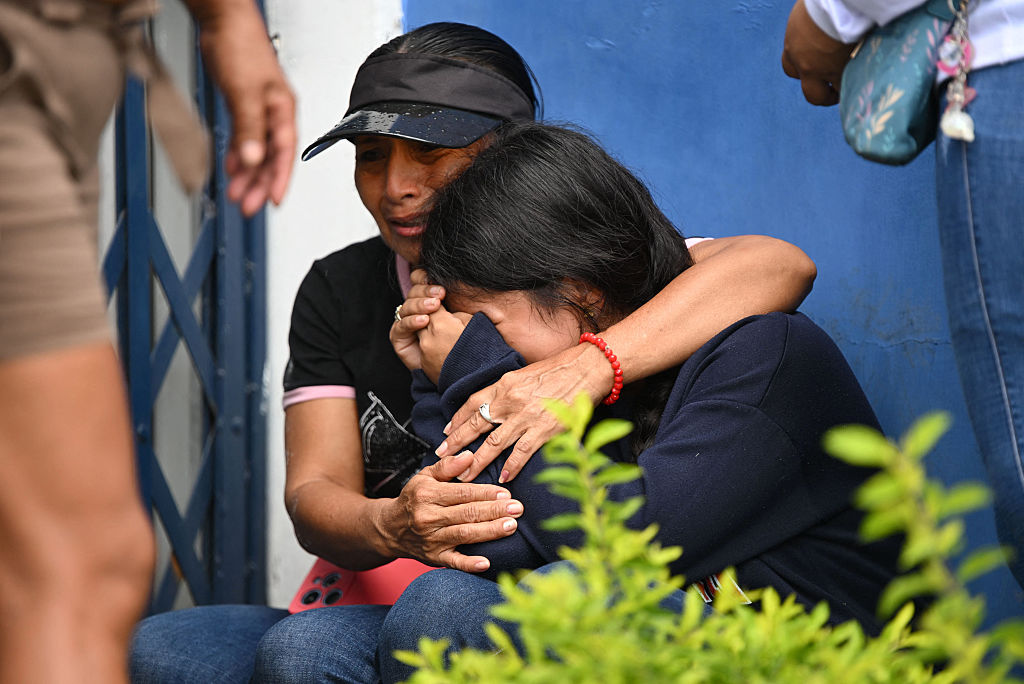 Family members of fishermen wait for news at the harbor captaincy, after the U.S. military said it intercepted and sank a vessel allegedly used to support at-sea drug trafficking by the Ecuadorian criminal organization Los Choneros, in Manta, Manabí Province, Ecuador, on Sept. 3, 2026. (Ariel Ochoa/AFP via Getty Images)
Drug cartels have turned the small ports of Ecuador’s Manabi province into a cocaine-trafficking hub, extorting local fishermen who are prized for their navigation skills. The cartels present an impossible choice: earn more than a year’s legal income smuggling drugs, or face extortion, threats and violence.
Police and local people said last month that fishermen who don’t cooperate are often forced to pay about $1,200 per fishing trip, three or four times their earnings in an average month, locals say, or risk retaliation against themselves and their families.
If they do transport cocaine, they can earn as much as $40,000 a trip, according to fishermen in San Mateo and Jaramijo, their relatives, and police. Asked about the alleged extortion, Ecuador’s national police said, “Some fishermen are forced to take part in these activities, exposing themselves both to law enforcement action and reprisals from the criminal organizations.”
Cooperation With Ecuador
Last month, Ecuadorian authorities, supported by the U.S. Drug Enforcement Administration and U.S. Southern Command, conducted coordinated operations targeting criminal organizations involved in international cocaine trafficking.
The U.S. Embassy in Ecuador said in an Aug. 27 statement that Ecuadorian police carried out simultaneous raids across the country following a years-long investigation.
It targeted criminal structures linked to Los Lobos and Los Choneros that allegedly moved cocaine through Ecuador to Central America, Mexico, and other international markets.
More than 20 arrests were made, according to the embassy. Authorities also seized rifles, handguns, vehicles, a small aircraft, ammunition, ballistic vests, communication devices, cocaine, synthetic drugs, and U.S. currency, it said.
Authorities also disabled two clandestine airstrips that they said were believed to support international cocaine trafficking.
DEA Administrator Terry Cole said the operation showed what the United States and Ecuador could accomplish through sustained cooperation against narcoterrorism.
Commander Gen. Francis L. Donovan, head of Southern Command, described the August enforcement action as a decisive victory for the region and said it dealt “a severe blow to the logistics, finances, and leadership of a regional illicit network.”
He added that Southern Command and Joint Task Force Western Hemisphere remained committed to working with regional partners “to defeat narcoterrorists in our hemisphere and defend our homeland.”
Reuters contributed to this report.
 Friends Read Free
Copy
Facebook
Tweet
Friends Read Free
Copy
Facebook
Tweet