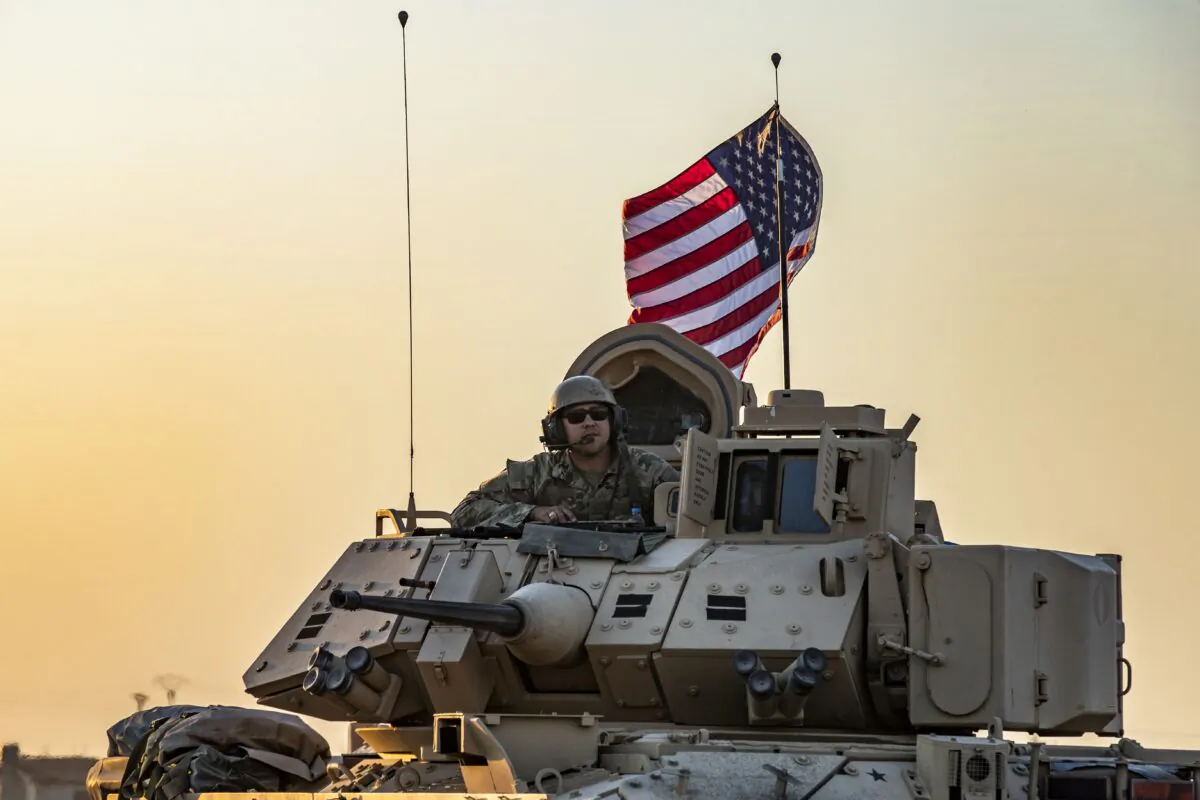

The U.S. military and Syrian government forces destroyed more than 15 ISIS terrorist group sites containing weapons caches in southern Syria, U.S. Central Command (CENTCOM) said in a Nov. 30 statement.
The operation is part of broader military prevention efforts to ensure that ISIS cannot rebuild following the group’s territorial defeat by the U.S.-led coalition in 2019.
CENTCOM commander Adm. Brad Cooper described the operation as successful, noting that it “ensures gains made against ISIS are lasting and the group is not able to regenerate or export terrorist attacks to the U.S. homeland and around the world.”
Multiple airstrikes and controlled ground detonations destroyed several storage facilities across Rif Damashq Province between Nov. 24 and 27, according to CENTCOM.
More than 130 mortars and rockets, along with multiple assault rifles, machine guns, anti-tank mines, and materials used to build improvised explosive devices, were destroyed in the operation.
“We will remain vigilant and continue to aggressively pursue ISIS remnants in Syria,” Cooper said.
The latest round of strikes follows other military operations against ISIS in recent months. CENTCOM confirmed more than 22 completed operations on Nov. 12, resulting in five ISIS members being killed and 19 captured, according to the U.S. military.
Global Coalition
Following a meeting between U.S. President Donald Trump and his Syrian counterpart, President Ahmed al-Sharaa, on Nov. 10, Syria agreed to join the U.S.-led coalition to tackle ISIS.
Formed in 2014, the Global Coalition to Defeat ISIS brings together 89 partners committed to combating the group in Iraq, Syria, and worldwide.
The coalition includes numerous countries across Europe, Asia, Africa, and the Middle East, as well as institutions such as the European Union, the Arab League, NATO, and others.
Beyond its military operations in Iraq and Syria, the coalition targets ISIS finances, restricts foreign fighter flows, supports stabilization and essential services in liberated areas, and counters the group’s propaganda, the coalition stated in its mission.
“We will continue to aggressively pursue ISIS remnants in Syria while working with the Global Coalition Against ISIS to ensure the gains made against the group in Iraq and Syria are lasting and ISIS is not able to regenerate or export terrorist attacks to other countries,” Cooper said on Nov. 12.
Repatriation Efforts
During a United Nations conference in September, Cooper urged coalition members to intensify efforts to prevent ISIS from reemerging.
He also stressed the need to speed up the return of detainees and displaced persons from northeast Syria to their home countries.
At their peak in 2019, the al-Hol and al-Roj camps in northeast Syria held roughly 70,000 displaced persons. That number has now dropped to fewer than 30,000, according to CENTCOM.
“Repatriating vulnerable populations before they are radicalized is not just compassion—it is a decisive blow against ISIS’s ability to ever regenerate,” Cooper said on Nov. 12. “The United States will continue supporting the Coalition and all nations committed to bringing their citizens home.”
Security Operations
The Syrian Ministry of Interior revealed on Dec. 1 details of an ongoing campaign to track terrorist networks and disrupt their funding.
The ministry stated that the Syrian forces carried out two operations targeting terrorist cells affiliated with the ISIS terrorist organization in both the Al-Dana area and west of Idlib city.
“The operations resulted in the seizure of small arms and ammunition, explosive belts, and improvised explosive devices,” the ministry stated. “It was also revealed that some members of these cells were involved in the killing of a civilian and burying him near the city of Maaret Misrin.”
The current Syrian government, headed by Sharaa, was formed after the overthrow of Bashar al-Assad in December 2024, following a 13-year civil war that ended with a victory by Islamist group Hayat Tahrir al-Sham (HTS).
HTS was designated a foreign terrorist organization by the State Department in 2018 but was removed from the list this year. The group began as the al-Nusra Front, an affiliate of al-Qaeda, the Islamist terrorist group founded by Osama bin Laden.
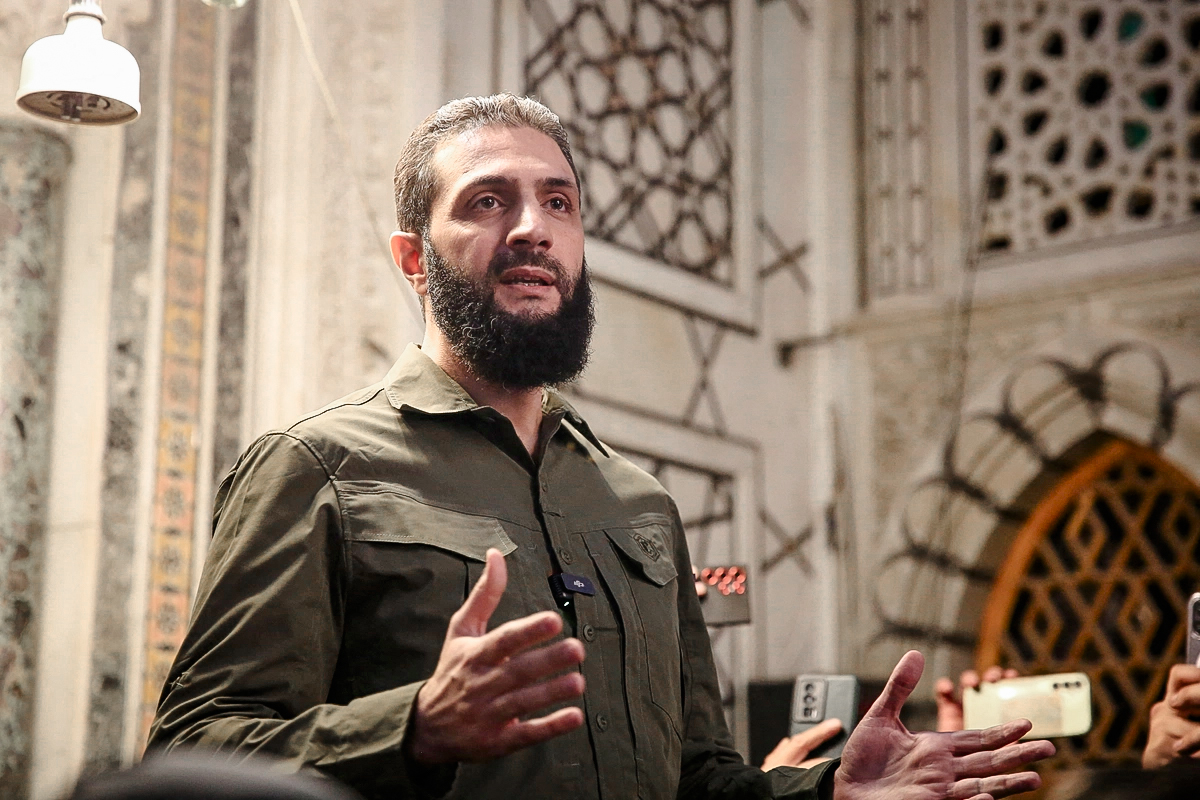
A now-deleted bounty notice against Sharaa noted his role in founding the al-Nusra Front and leading the group through its reorganization into HTS. The bounty notice further stated that the group had taken part in kidnappings and killings in Syria over the years, including the 2015 slayings of 20 Druze villagers in Idlib Province.
In October, the U.N. Security Council also lifted terror-related sanctions designations on him and Syria’s interior minister, Anas Khattab.
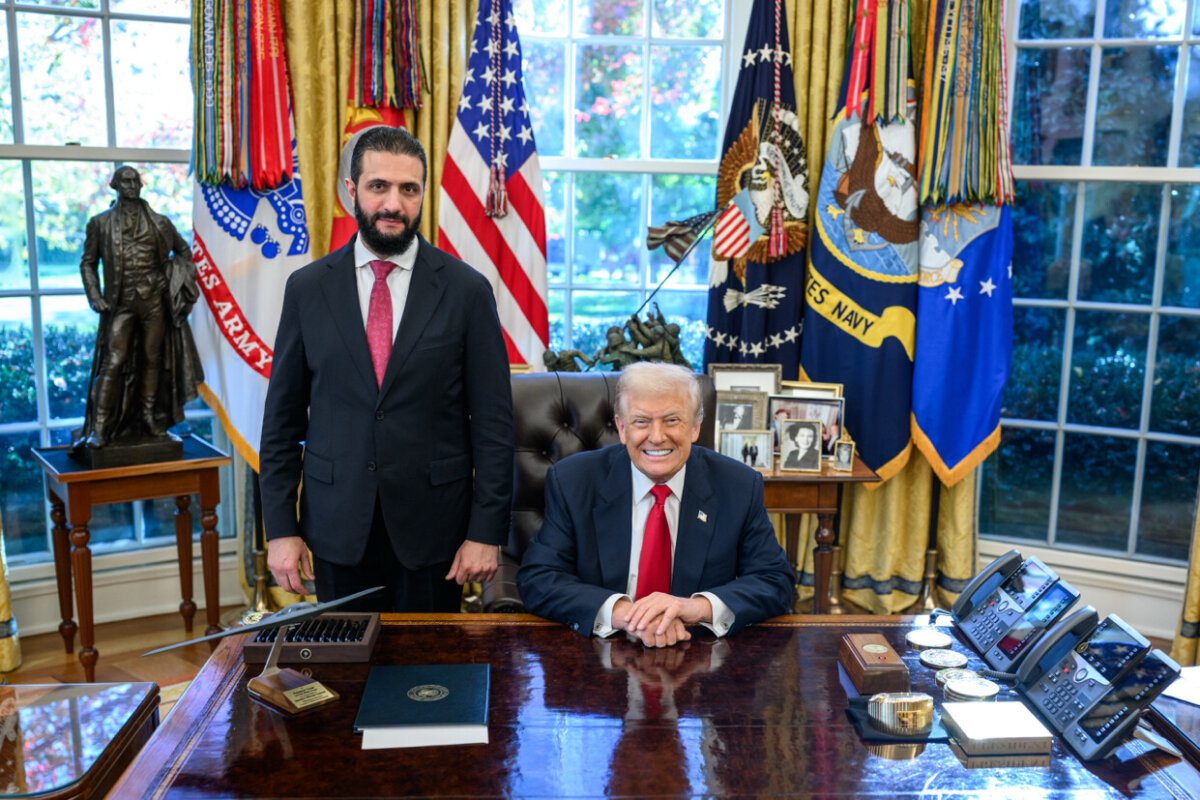
In June, Trump rescinded unilateral U.S. sanctions on Syria via executive order, saying that it was “a chance at greatness” for the Syrian people, but he kept sanctions on Assad and other leaders.
The United States revoked the designation of HTS as a foreign terrorist group in July.
 Friends Read Free
Copy
Facebook
Tweet
Friends Read Free
Copy
Facebook
Tweet