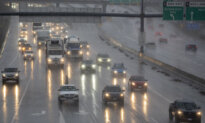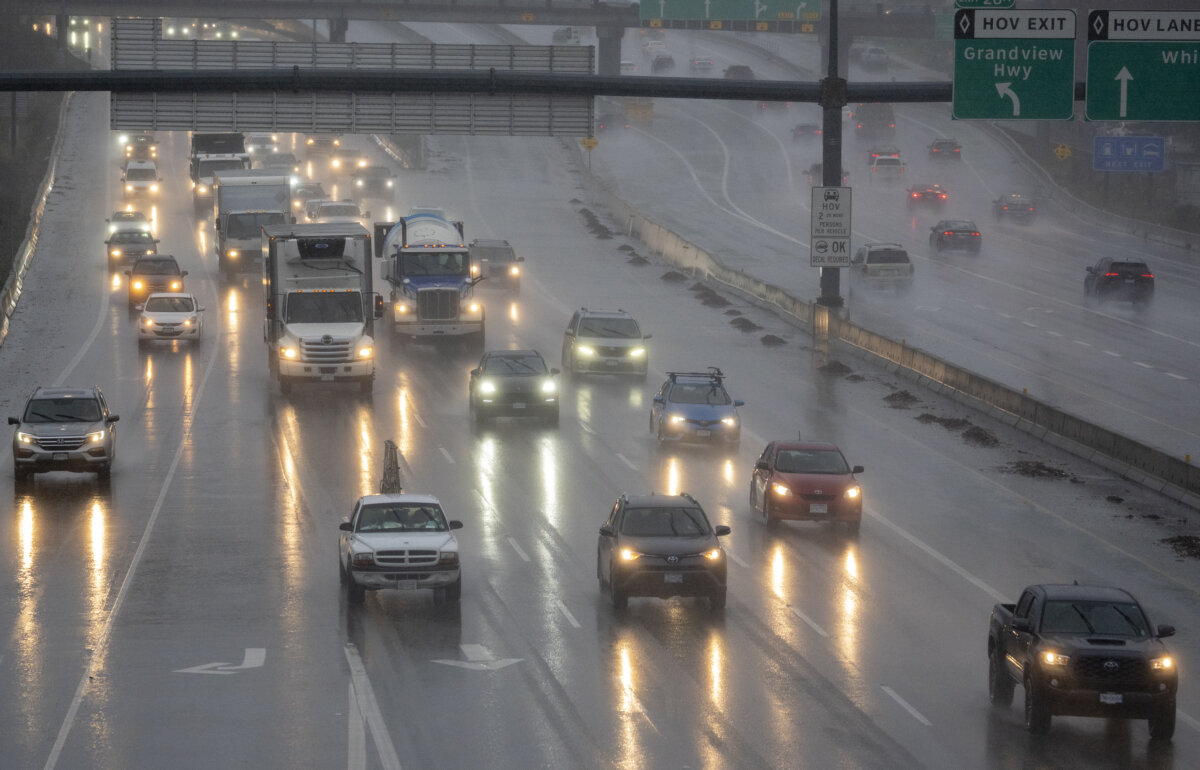

A committee of the Vancouver city council has unanimously passed a motion urging Ottawa to regulate “excessively bright” headlights on vehicles, citing their effects on public safety.
The standing committee on city finance and services unanimously passed the motion introduced by Coun. Sean Orr on Jan. 21 that advocates for federal measures to regulate headlight brightness.
“I admit it’s a little personal,” Orr said during the meeting. “My mom absolutely hates these lights when driving, and from what I’ve been hearing… a lot of people do as well.”
The motion seeks to address the prevalence of LED and high-intensity lights it says reduces night-time visibility, and notes that current Transport Canada regulations do not address glare and the impact of bright lights on other drivers.
The motion directs Mayor Ken Sim to request that the federal transport minister address the issue through “updates to national vehicle safety standards and enforcement mechanisms, informed by safety impacts on drivers, pedestrians, cyclists, seniors, and people with vision impairments.”
The motion notes it aligns with Vancouver’s Vision Zero policy, which aims to eliminate traffic-related fatalities and injuries, as well as they city’s “climate and transportation policies that encourage walking, cycling, and transit.” It says these policies are being undermined “when street conditions feel unsafe due to vehicle glare.”
The mayor and all councillors at the meeting voted in favour of the motion, which is set to be forwarded to the Federation of Canadian Municipalities for review during the next annual conference.
The resolution urges the federal government to set more precise and enforceable restrictions on headlight brightness, beam pattern, and mounting height. It also asks Ottawa to bolster supervision of adaptive and high-intensity lighting technologies while also improving regulations and enforcement concerning non-compliant aftermarket vehicle lighting.
“The proliferation of oversized vehicles with elevated headlight mounting heights, combined with brighter factory-installed and aftermarket headlights, has intensified glare impacts, especially on lower vehicles and active transportation users,” the motion reads, adding that “other jurisdictions have begun examining limits on headlight brightness, beam pattern, mounting height, adaptive lighting behaviour, and enforcement of illegal aftermarket modifications.”
Transport Canada’s headlight regulations fall under the Canada Motor Vehicle Safety Standard—CMVSS 108—requirements. The rules focus on technical aspects like brightness, aiming, and height, but don’t explicitly address glare.
The ministry is working on headlight glare by updating federal rules for new vehicles, allowing adaptive systems, but the agency has said that enforcement of aftermarket LED swaps falls to the provinces.
 Friends Read Free
Copy
Facebook
Tweet
Friends Read Free
Copy
Facebook
Tweet