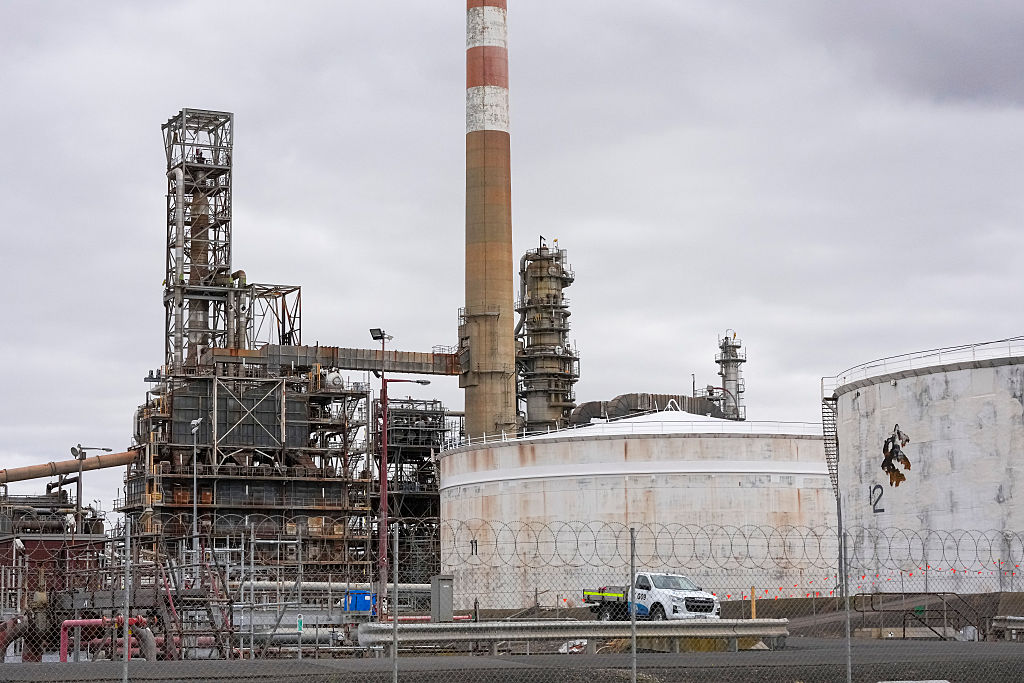

Viva Energy says it will likely take weeks to return to normal refining capacity after a blaze erupted at its Geelong facility on April 15.
Currently, capacity has been reduced for fuel to 60 percent, while diesel and jet fuel have been cut to 80 percent.
“The company has sufficient fuel stocks to cover this reduced production and expects to maintain normal fuel supply to our customers following this incident,” the company said in an ASX statement.
“Over the next few weeks, and subject to plant inspection, the company expects to be in a position to restart the [Reformer and Residue Catalytic Cracking Unit or RCCU] and lift production of diesel, jet fuel and petrol to over 90 percent of capacity.”
Viva expects production levels to be maintained while repairs continue, with a further assessment to begin this week.
Viva caught on fire just before midnight on April 15 burning for several hours the next day.
The incident comes amid heightened scrutiny of Australia’s fuel supply chains, which have been heavily impacted by the Iran War, leading to a spike in petrol prices at the bowser—prices for unleaded neared $3.00 per litre before the federal government’s fuel excise tax was cut.
Viva also owns one of the only two refineries left in Australia with the other being Ampol’s Lytton Oil Refinery.
In 2000, Australia had eight refineries that provided the nation’s needs, but most have been closed down in favour of importing cheaper alternatives from Singapore, South Korea, and China.
There are some efforts to restart local production with the Queensland LNP government backing a private sector bid to build a new diesel refinery in Gladstone.
Government Says More Fuel Supply on the Way
Meanwhile, federal Energy Minister Chris Bowen revealed on April 19 that Australia now has about 46 days worth of fuel supply.
The minister provided the information as part of his weekly update on the country’s fuel situation.
“That’s eight days more than the update last week,” Bowen said.
“That is just under 2 billion litres of petrol. And diesel, we have 31 days’ worth of supply. That’s the same as last week, 2.8 billion litres.”
Regarding jet fuel, Bowen says Australia has about 30 days’ worth of supply.
“Interestingly, also, these figures are more than we had on hand at the beginning of the Iran conflict,” he said.
“At the end of February and at the beginning of March, we had 36 days’ worth of petrol.
“So, we now have 10 days more petrol than we had when this international crisis began.”
The minister also announced that 61 cargo ships full of fuel were currently on their way to Australia, four more than the week before.
“So, we have locked in contracts through the rest of April and now all through May, and over the next four weeks, rolling four weeks, these updates I give each Saturday, we have 4.1 billion litres of fuel locked in, contracted to deliver to Australia.
“That consists of 2,055 million litres of diesel, 390 million litres of jet fuel, 753 million litres of petrol, and 903 million litres of crude oil, all scheduled, contracted to arrive in Australia over the next four weeks.”
 Friends Read Free
Copy
Facebook
Tweet
Friends Read Free
Copy
Facebook
Tweet