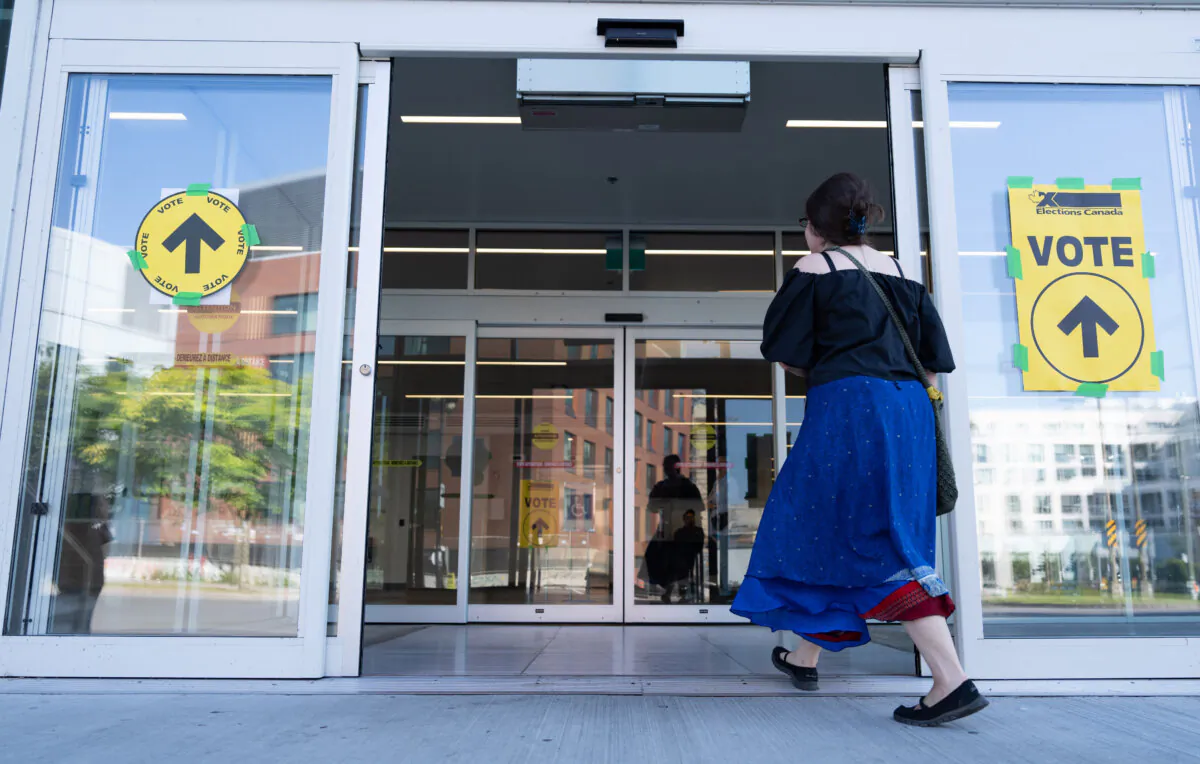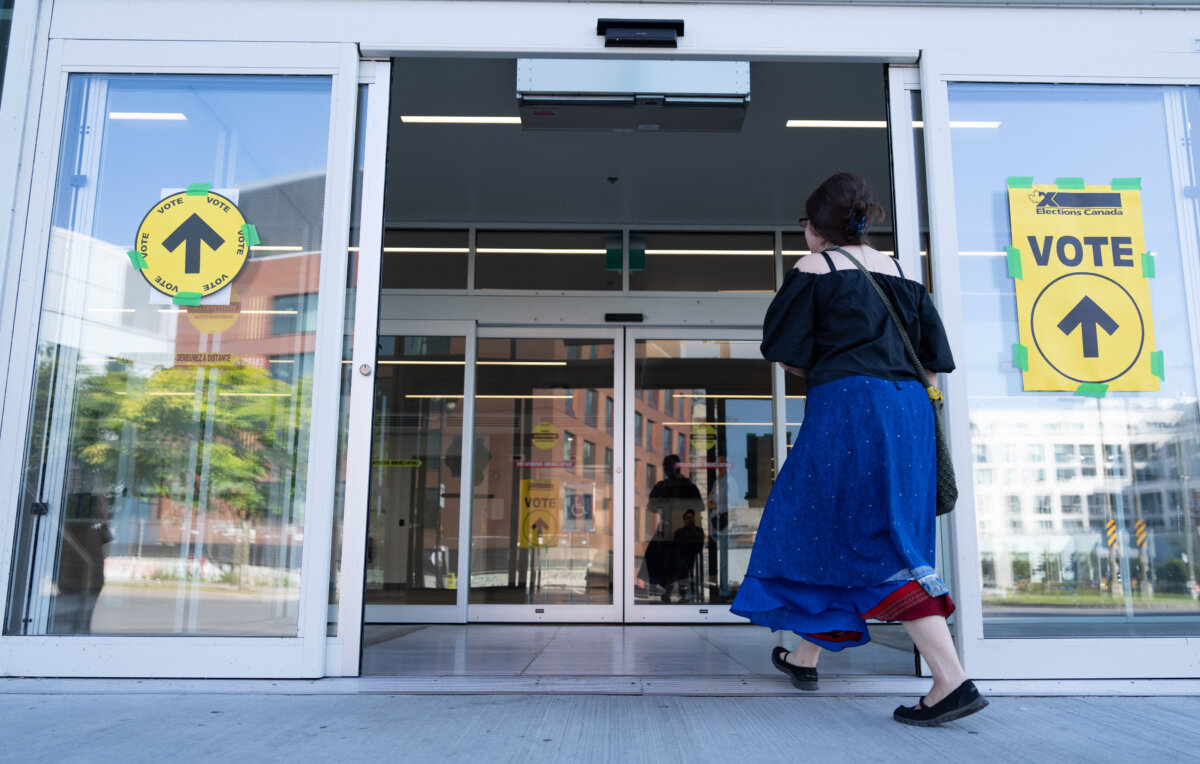

Residents in Ontario, Quebec, and British Columbia head to the polls today in three federal byelections as the trade dispute between Canada and the United States continues to be a key issue for many voters.
The Ontario and B.C. electoral districts are seen as safe for the Liberal party, according to pollster 338Canada, but the Quebec riding of Chicoutimi-Le Fjord is currently a toss up between the governing Liberals and the Bloc Québécois.
Here’s a look at all three races.
North Vancouver-Capilano
The Liberals are heavily favoured to win in the B.C. riding of North Vancouver-Capilano which was vacated this summer by former cabinet minister Jonathan Wilkinson.
Wilkinson resigned his seat in June to take on the role of Canada’s ambassador to the European Union after securing 59.8 percent of the vote in the April 2025 election.
Wilkinson served as the minister of Fisheries and Oceans, environment minister, and finally as energy minister under former Prime Minister Justin Trudeau. He was not included in Prime Minister Mark Carney’s cabinet in 2025.
Braeden Caley, who previously served as Carney’s deputy chief of staff and was a senior member of his election campaign, is now hoping to fill the empty seat in his home province.
The Conservative candidate is Stephen Curran, a commercial lawyer who finished second to Wilkinson in 2025, securing slightly more than 33 percent of the votes.
NDP candidate Stephen Tweedale, who serves as a party staffer for the local MLA, will be trying to renew the party’s fortunes after the NDP won just 4 percent of the vote in North Vancouver-Capilano last spring.
Environmental scientist Shelley Luce is running for the Green Party. The Greens garnered less than 2 percent support in the riding in 2025.
Beaches-East York
Veteran MP Nathaniel Erskine-Smith resigned from his Toronto-area riding after deciding to run for the leadership of the provincial party—a pursuit he has since abandoned after failing to secure a nomination for a provincial Liberal seat earlier this year.
Erskine-Smith was first elected in 2015 and was named transport minister in the latter part of Trudeau’s leadership. He was returned to the backbenches by Carney after the election, a decision that Erskine-Smith criticized. The former MP was also critical about some elements of Carney’s 2025 budget.
Like the B.C. riding, Beaches-East York is considered safe for the Liberals. Erskine-Smith won his seat in 2025 with more than 67 percent of the vote, outpacing the Conservative candidate by 23 points.
Running for the Liberals in the byelection is Tanveer Shahnawaz, the former constituency office manager for Erskine-Smith. He will be up against Shannon Devine for the NDP, who secured third place in the 2025 election as well as Tory candidate Jim Sybros and Bruce Livesey for the Greens.
Chicoutimi-Le Fjord
The third riding, Chicoutimi-Le Fjord, became vacant after Carney’s appointment of Conservative MP Richard Martel to the Senate. Martel secured victory in the rural Quebec riding last spring with 34 percent of the vote, narrowly defeating the Bloc Quebecois and the Liberal candidates.
Martel won four straight elections for the Conservatives in the riding, located roughly 200 kilometres north of Quebec City. Lawyer and teacher Regis Gaudreault is running for the Tories in a bid to keep the seat blue, but 338Canada is predicting a toss up between the Liberals and the Bloc.
He is up against Liberal candidate Daniel Gobeil, the previous president of a provincial dairy association, Bloc candidate Caroline Dube, who served as the director of the office for Bloc MP Mario Simard. Representing the NDP is Raphael Emond, and Nathe Perrone is running for the Greens.
Trade War Impact on Byelection
The Saguenay region in Quebec has been severely affected by the tariffs imposed by U.S. President Donald Trump. This area is a key producer of aluminum and forestry products, and it is also home to many dairy farmers who are impacted by the trade conflict due to American discontent with Canada’s supply management system.
Carney’s decision to withdraw from trade talks has not seemed to harm the Liberals’ standing in Quebec.
A poll by the Angus Reid Institute after the trade talks ended last weekend suggests 76 percent of Canadians approved of Carney’s decision to walk away from the negotiating table—and that number in Quebec was 85 percent.
Carney has characterized the withdrawal as necessary to protect Canada’s French language rights, saying the Americans were demanding changes to Canadian French-language protections, bilingual labelling including French user manuals, and French content rules.
Trump and U.S. Trade Representative Jamieson Greer have both denied the prime minister’s accusations. Greer said the issue had nothing to do with the language or Canadian laws that product labels be presented in both English and French. Instead, what was highlighted as a concern during trade discussions was the rules requiring American tech and streaming companies such as Netflix to contribute a portion of their Canadian earnings to local broadcasting funds, he said.
The conflicting accounts from both sides of the border led some opposition MPs to suggest that Carney’s decision to withdraw from a deal, citing the protection of the French language, was in fact an attempt to win favour with Quebecers prior to the byelection.
Conservative MP and Quebec Lieutenant Pierre Paul-Hus suggested last week that the Liberals could be using the story as a political tactic to garner French support ahead of the byelection and called on the government to release the details of the proposed deal.
Paul-Hus said Quebecers have a “right to know what really happened at the negotiating table and to learn the true details of the deal that fell through.”
The Carney government has not responded to the Conservatives’ request to release the documents.
Bloc Québécois Yves-François Blanchet also criticized the Liberals in a statement last week, accusing the Carney administration of making the issue seem more serious than it actually was.
“Interesting. Beyond the fact that it wasn’t as significant as the Liberals and Messrs. Carney and Le Blanc claimed, it is now necessary to address the other crucial issue for Quebec: the funding of Quebec and Canadian production and the discoverability of French-language music on online platforms,” he wrote in social media.
The stakes are also lower than in previous byelections.
The Liberals secured victories in all three byelections held in April. Combined with five opposition MPs crossing the floor, it gave the Liberals 174 seats in the House of Commons, providing the government with a narrow yet functional majority.
Even with the resignations of Erskine-Smith and Wilkinson the Liberals have been able to retain a 172-seat majority but the recent official resignation of former MP Stephen Guilbeault last week and Shaun Chen earlier this month, drops the Liberals down to 170 seats going into the Aug. 31 byelection.
Byelections must still be called to fill the seats vacated by Guilbeault and Chen and additional byelections will also be necessary after Conservative Cathay Wagantall officially steps down as the MP for Saskatchewan riding of Yorkton-Melville this week, and Conservative MP Larry Brock resigns his seat in the Ontario riding of Brantford-Brant South-Six Nations next month.
The Canadian Press contributed to this report.
 Friends Read Free
Copy
Facebook
Tweet
Friends Read Free
Copy
Facebook
Tweet