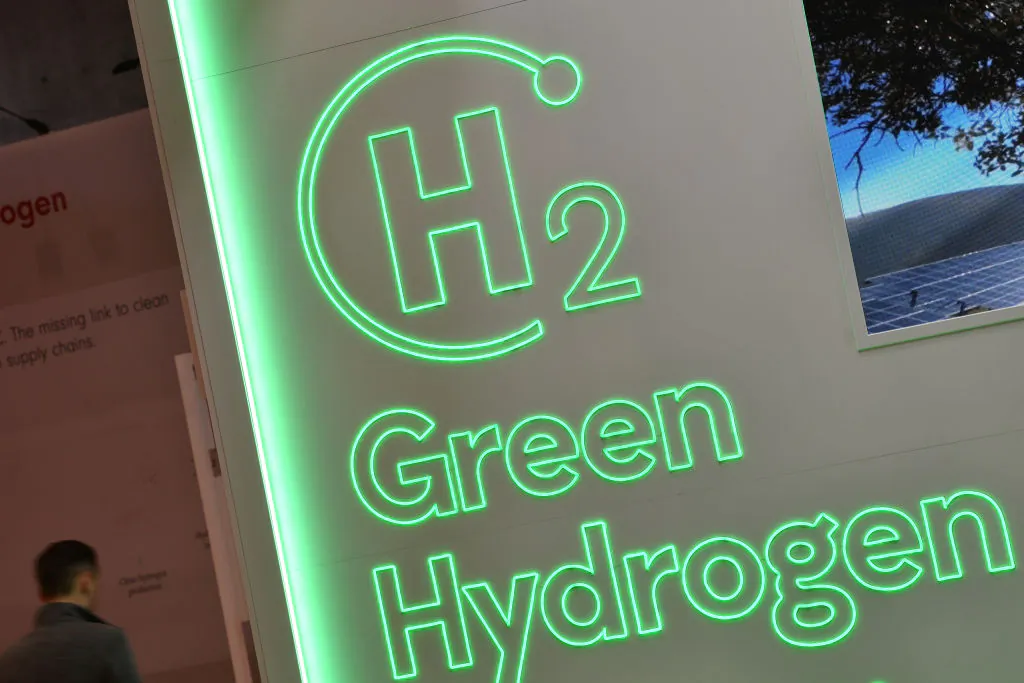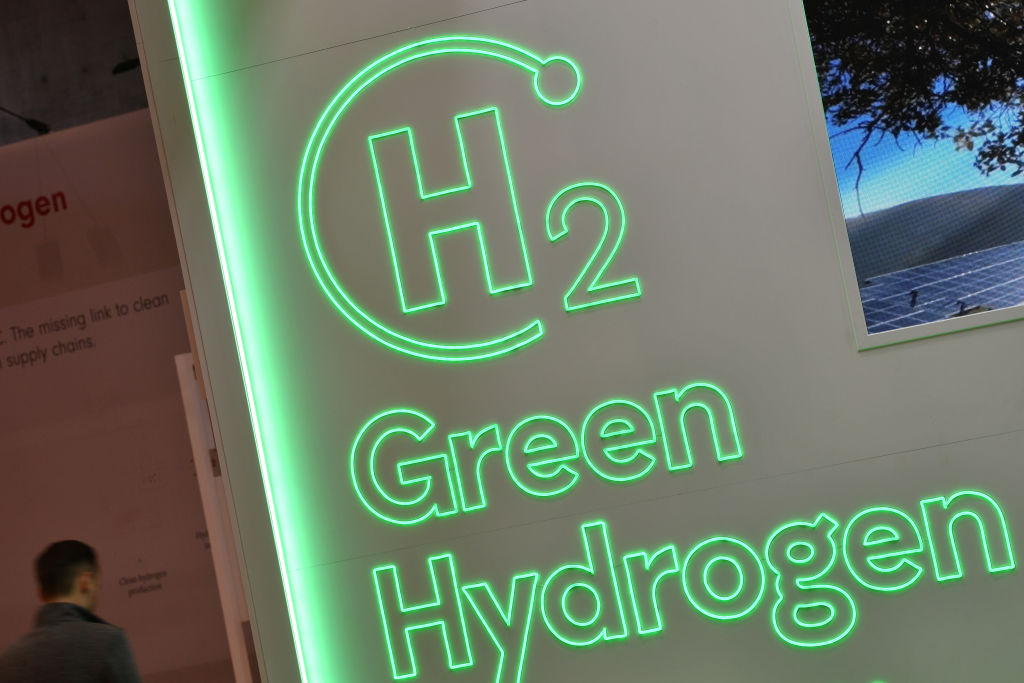

The collapse of Australia’s largest planned “green” hydrogen project exposes the unfeasibility of the country’s net-zero plan, says one energy researcher.
In late June, Stanwell, an energy company owned by the Queensland government, announced its withdrawal from the CQ-H2 project.
The decision effectively puts an end to the proposed $14.75 billion (US$9.6 billion) large-scale renewable hydrogen production facility in central Queensland intended to create exports to Singapore and Japan.
While Stanwell did not explain the reason for its withdrawal, it was reported the company was struggling to secure sufficient funding for the project.
In February, Stanwell applied to the newly elected Liberal National Party (LNP) government for additional funding of $1 billion. However, that request was rejected.
Before that, the project received $15 million in funding from the former state Labor government via the Queensland Renewable Energy and Hydrogen Jobs Fund and another $20 million from the federal government.
Following Stanwell’s announcement, former Queensland Labor Premier Annastacia Palaszczuk conceded that large scale renewable hydrogen projects may not “stack up” economically.
Nevertheless, Palaszczuk defended her support for the project when she was leader, arguing it was necessary for the government to be ahead of the curve on new technologies.
Green Hydrogen Not Economically Feasible: Analyst
Jude Blik, a senior policy analyst at the Centre for Independent Studies’ energy team, said the collapse of CQ-H2 project proved that green hydrogen was not viable when exposed to market forces free of government intervention.
“It has never been feasible, and is unlikely to be any time soon,” he told The Epoch Times.
The analyst explained that the high prices of hydrogen were driven by physics, not technology.
Renewable hydrogen is generated by splitting water into hydrogen and oxygen with energy from renewable sources such as wind and solar.
While the production of “green hydrogen” may not release carbon emissions, Blik pointed out that it takes an enormous amount of energy to make and store the resource.
“Our analysis indicates a realistic price of green hydrogen above $10 per kilogram. By contrast, hydrogen from natural gas costs around $2 per kilogram,” he said.
“This means that for any project to be successful, it will either need to find a buyer at $10 per kilogram, or achieve subsidies of $8 per kilogram—both of which are completely unrealistic.”
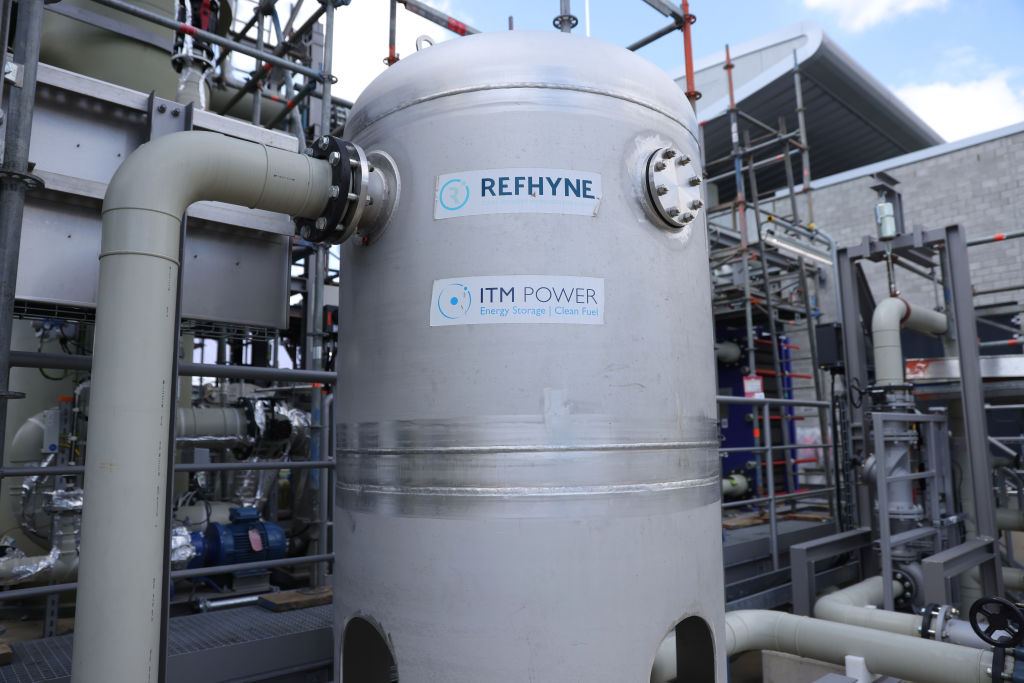
At present, the federal government is only providing a $2 per kilogram tax offset for renewable hydrogen manufacturers via the Hydrogen Production Tax Incentive.
Meanwhile, Graham Young, executive director of the Australian Institute for Progress, said there were cheaper alternatives to “green hydrogen” in the energy market.
“Gas is a much cheaper … and it is unlikely that anything is going to change for reasons of physics and chemistry,” he told The Epoch Times.
“Where there is a need for hydrogen itself, then it can be produced via the reduction of natural gas using steam.
“There are also reservoirs of naturally occurring hydrogen that are being targeted by mineral exploration companies, which are likely to be more economic.”
Hydrogen a Cornerstone of Labor’s Net Zero Push
In 2024, the Labor government introduced the National Hydrogen Strategy (pdf), which earmarked hydrogen, including “green hydrogen,” as a cornerstone of Australia’s net-zero transition.
It also outlined a roadmap for Australia to become a global leader in producing the resource in the coming decades.
According to the strategy, hydrogen is a versatile fuel that has many applications, including being able to be stored, transported, and used to generate electricity or heat when needed.
As hydrogen can be used as a feedstock for various manufacturing processes, it is expected to play a crucial role in decarbonising existing hard-to-abate sectors such as steelmaking, ammonia production, heavy transport, and power storage.
In the same year, the Labor government also rolled out the $22.7 billion Future Made in Australia industrial policy, which identified green hydrogen as one of the five key industries for support.
But Other Challenges Remain
Despite its perceived importance to Australia’s energy transition, the hydrogen industry faces numerous challenges.
A recent report by the global energy consultancy company Wood Mackenzie revealed Australia was falling behind other countries in hydrogen development, with 80 percent of its low-carbon hydrogen projects still in the early stage and multiple high-profile cancellations.
Blik said the economic unfeasibility of hydrogen projects is putting Australia’s net-zero policy at risk.
“Green hydrogen is the panacea that Australia’s net-zero hopes and dreams have been pinned on,” he said.
“Without hydrogen, the whole plan for net zero begins to unravel.”
Australia Should Focus on Its Strengths: Young
Meanwhile, Young said the government should not persist with uneconomical energy projects in the push toward net zero.
“[That] wouldn’t put us in front of any curve that mattered, and would have wasted taxpayers’ money on a project that will never produce more income than its costs,” he said.
Rather than joining the race to become a global leader in green hydrogen, the analyst said Australia should refocus on industries where it has an advantage and find ways to improve its stagnant productivity.
“Australia has done best by being an early adopter of new technology, not as the inventor of it,” he said.
“If, despite the odds, someone manages to invent a method of producing green hydrogen that is economical, there will be nothing to stop us buying the technology and deploying it.
“Until then, we should concentrate on those industries where we already have a natural advantage, and fix the productivity problem that plagues our economy.”
 Friends Read Free
Copy
Facebook
Tweet
Friends Read Free
Copy
Facebook
Tweet