
News Analysis
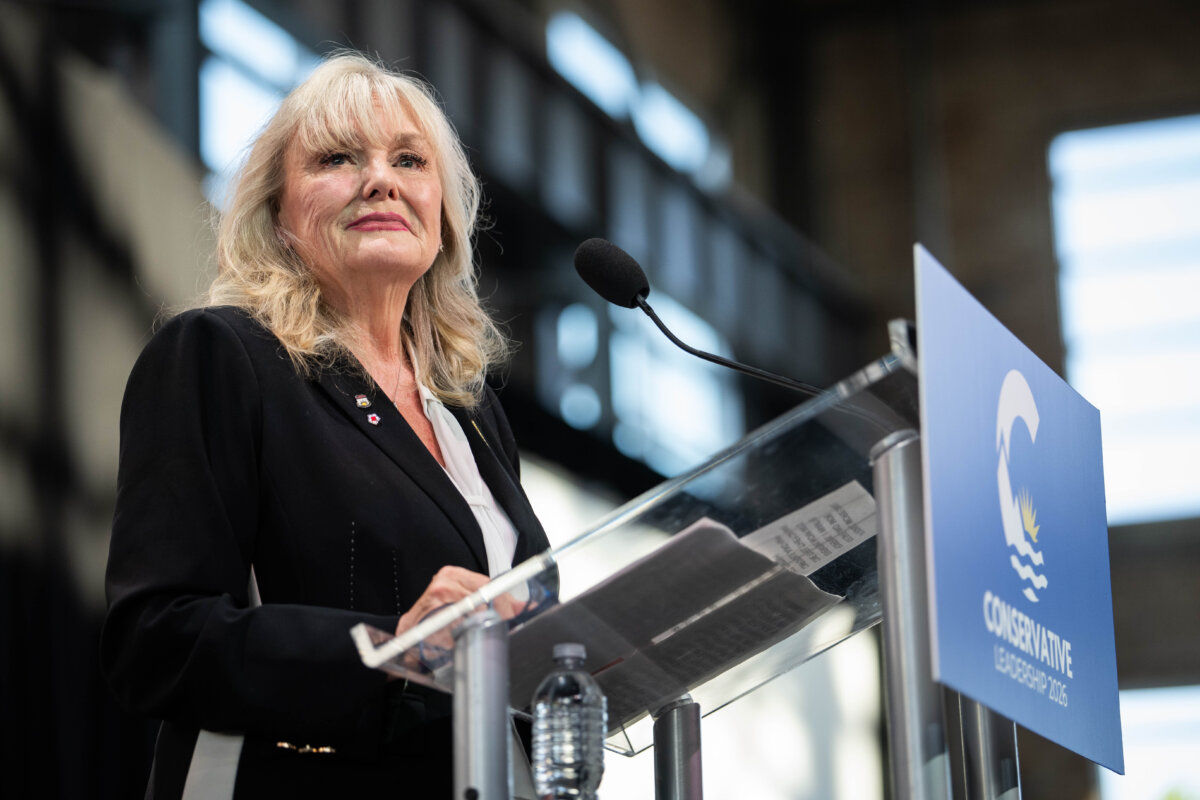
Long-time Conservative MP Kerry-Lynne Findlay overcame a number of setbacks, including a campaign defection, unsubstantiated media allegations late in the race, and a high-profile, organized opposition campaign, to win the B.C. Conservative leadership race.
Her victory and ability to mobilize the grassroots is a continuation of the legacy that helped transform the B.C. Conservatives from a fringe party to the Official Opposition in recent years, and signal a main direction of B.C. politics to come, several observers say.
Grassroots Support
Some observers partly attribute the result to a desire to shift the party away from figures perceived as associated with the B.C. Liberal and B.C. United legacy parties toward a more grassroots, populist conservative wing of the voting base.
“It shows that the party is moving in a different direction,” Mario Canseco, president of ResearchCo. Public Opinion Polls and Analysis, told The Epoch Times. “I don’t think we can refer to this party as the de facto inheritors of the B.C. Liberals, when the B.C. Liberal figures of the past endorsed the people who finished in third and fifth place.”
He was referring to former B.C. Liberal MLAs Iain Black and Peter Milobar, who both drew considerable support from figures associated with B.C. United and the B.C. Liberals.
The B.C. Liberals, later renamed B.C. United, led the province from 2001 until 2017, when they lost that year’s provincial election to the B.C. NDP.
MLA John Rustad was forced out of the B.C. Liberal Party in 2022 because of his position on climate change and carbon emissions, and later became the leader of the nearly non-existent B.C. Conservatives, which had recently been revived through the efforts of people such as now-federal Conservative MP Aaron Gunn. Gunn himself was excluded from the B.C. Liberal leadership race in 2021 for saying that Canada’s treatment of indigenous people did not amount to genocide.
Rustad served as leader in the 2024 election, when the party won 44 seats and became the official Opposition. For its part, B.C. United ultimately paused operations and supported the B.C. Conservatives in 2024, with most B.C. United MLAs joining the newly revived party.
Rustad resigned in December 2025 amid internal party division and the defection, removal, or resignation of a number of MLAs, including MLA Dallas Brodie who had split off to form the populist right OneBC party in June last year.
Elliott’s Achilles Heel
The May 30 leadership vote saw Findlay narrowly beat political commentator Caroline Elliott—whose campaign team included strategists from past federal Conservative and Ontario Progressive Conservative campaigns—in the fourth round. Black came in third, followed by entrepreneur Yuri Fulmer in fourth and Milobar in fifth place.
Although Elliott polled consistently high in the lead-up to the final vote tally, backed by an experienced, well-funded campaign team, Stewart Prest, a political science lecturer at the University of British Columbia, said her ties to B.C. United Leader Kevin Falcon, including being his sister-in-law, were part of what prevented her from winning.
Elliott, who worked as an adviser to various cabinet ministers in the B.C. Liberal government of Gordon Campbell, was also endorsed by him in the race.
Having a campaign team from outside of the party also worked against her, says David Leis, president of the Frontier Centre for Public Policy.
“The perception was that Caroline Elliott was less grassroots when she imported a team from outside the province,” Leis said in an interview.
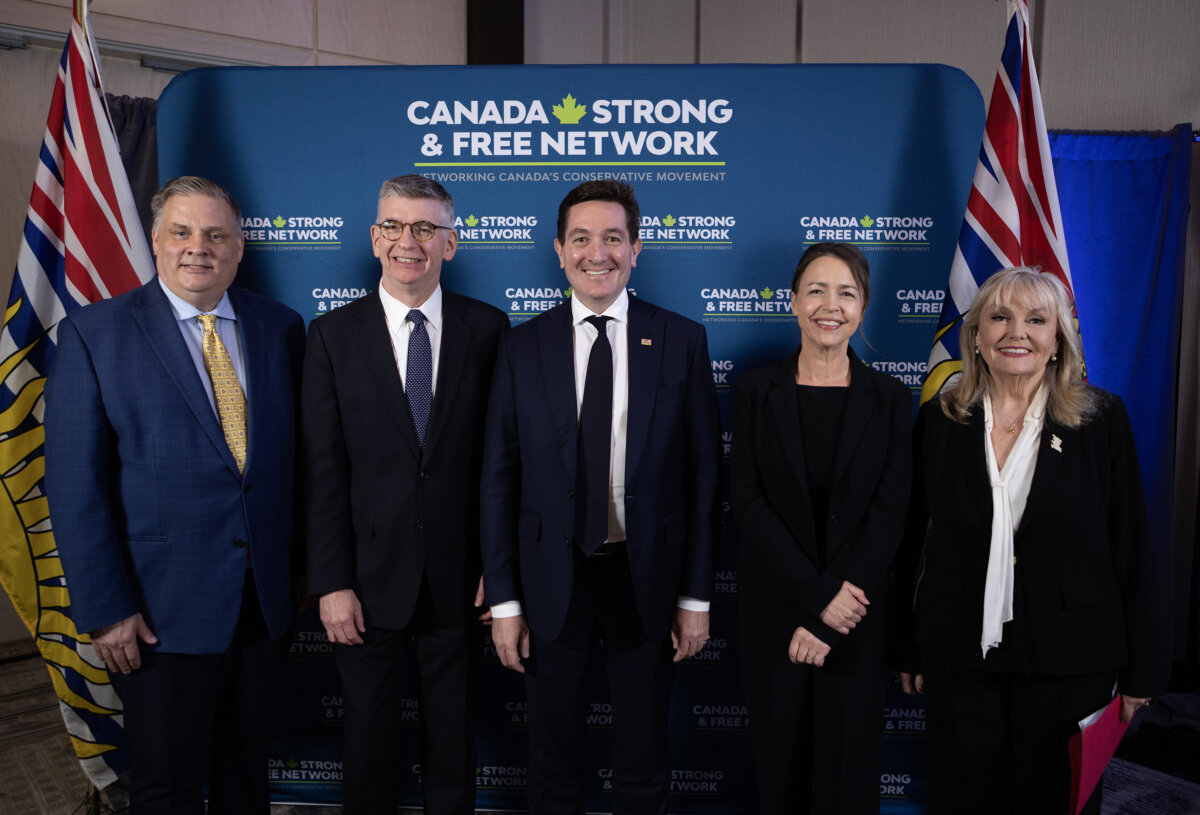
Another aspect that may have figured into Elliott’s loss was her missing a debate hosted by Juno News in May.
“If it had been a different candidate who hadn’t made the Juno debate, for instance, that would not have been a big deal,” Prest said. “But for Elliott it was seen as a test of her commitment to the populist cause, and so became a big deal.”
Shift Away From Establishment
Prest says that Findlay’s victory represents a desire for a shift away from the more establishment wing of the party.
“They really wanted a true populist right leader,” Prest said in an interview, adding that many members who voted for Findlay wanted “as clean a break as possible from that centre-right tradition,” represented by the B.C. Liberal and B.C. United era.
Leis also said Findlay’s win spotlights a populist base.
“The BC Conservative Party is very much a grassroots movement,” Leis said. “Findlay really was able to convince the membership that she had the experience and had the principled bona fides of a conservative, that there was not going to be a betrayal of those basic principles.”
Azim Jiwani, former chief of staff to Rustad, said Findlay was able to tap “into the heart and soul of the movement” and earn voter support.
“She shows relentless spirit, and she spoke to people in a very heartfelt, genuine way at the grassroots level,” Jiwani told The Epoch Times. “I mean, she personally toured the north twice at the age of 71.”
How Findlay Activated the Grassroots
Canseco said the strong grassroots appeal of the party base was revealed in the surge in party membership ahead of the leadership vote.
Prest, Canseco, and Leis all said Findlay won because she best portrayed herself as the most consistently conservative voice among the five candidates.
“I think she was able to position herself as the most authentic vehicle for conservative frustration,” Prest said. “She really was able to signal to her core supporters and those who came to her banner that she was willing to say what needed to be said and to do what needed to be done.”
The five party leadership candidates all agreed on the need to repeal DRIPA (Declaration on the Rights of Indigenous Peoples Act), which they said clouded the future of private property rights in B.C. and dampened investment into the province. They also overlapped on calls for reducing regulations, addressing the affordability crisis in the province, and opposing policies of the governing NDP.
While Black and Milobar said the party should focus on free market policies and maintain a civil libertarian position on social issues, Fulmer, Findlay, and Elliott said the party needed to stay conservative on both economics and social issues.
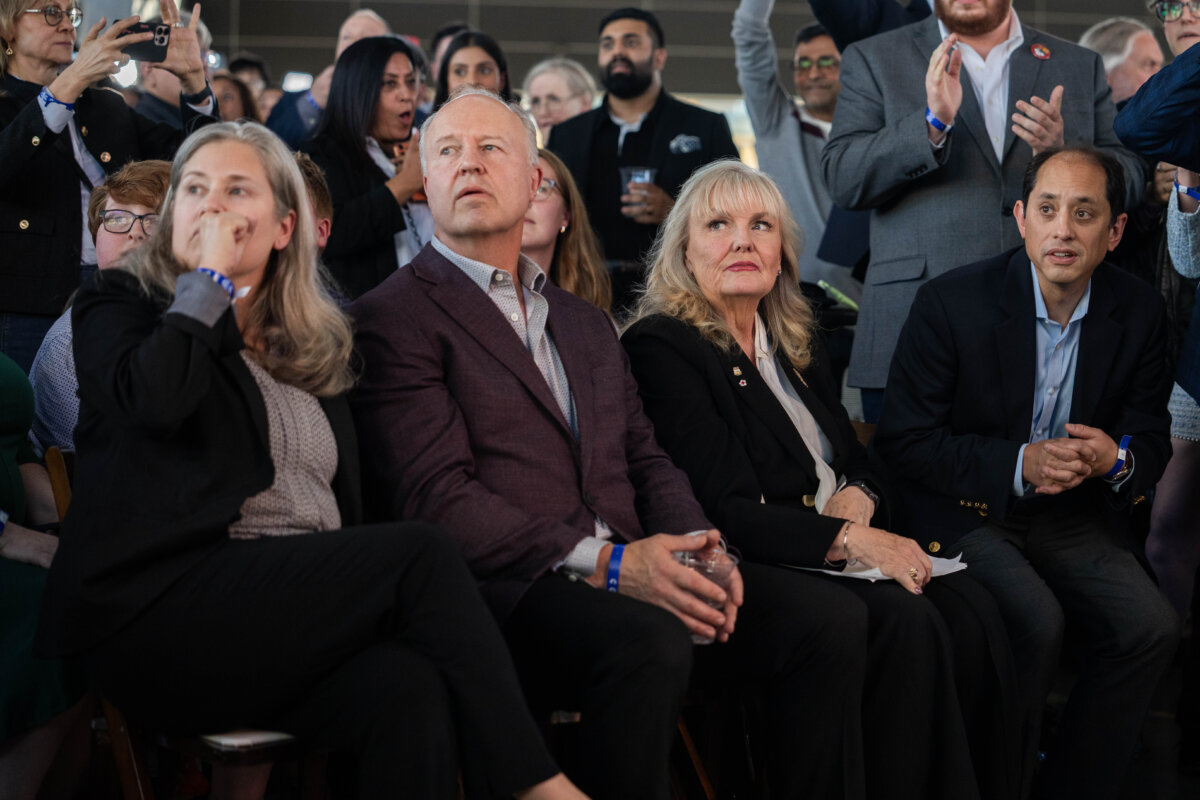
After winning the leadership vote, Findlay said her priorities are faith, family, and freedom. And in making the call for volunteers to help ahead of the next provincial election, she spoke of the primacy of God and defeating socialist policies.
“In our national anthem, we cry out to God to make our land glorious and free—free people making free choices and free speech in a free-enterprise market economy, where hard work is rewarded and we are not crushed by socialist overreach that wants to dictate literally what we think, what we believe, what we can say, and who we associate with,” she said.
Findlay, a long-time lawyer, served as a former federal cabinet minister under former Prime Minister Stephen Harper, including appointments as associate minister of national defence and minister of national revenue.
She went on to represent the now-abolished riding of Delta-Richmond East from 2011 to 2015, followed by South Surrey-White Rock from 2019 to 2025, as a federal Conservative in Parliament.
Findlay also served as chief Opposition whip from 2022 to April of last year under Conservative Leader Pierre Poilievre.
She has said she will focus on natural resource development, reducing taxes and red tape, ensuring private property rights, improving public safety, upholding parental rights, and promoting freedoms.
Findlay is married to Surrey South MLA Brent Chapman, the longest-serving member of the B.C. Conservative caucus, having joined the party long before its rise in the polls.
Setbacks
Despite polling well as the race approached the home stretch, Findlay’s campaign faced a tough battle against Elliott’s talent-stacked campaign team and experienced the early departure of campaign manager David Denhoff, who defected to Elliott in March, saying Findlay “can’t win this leadership.”
In mid-May, Findlay faced media and political backlash after she accused Milobar of having a potential conflict of interest when it comes to the issue of property rights and aboriginal title claims, saying his wife works for the Kamloops Indian band, also known as the Tkʼemlúps te Secwépemc. The First Nation has filed an aboriginal title claim over land in Kamloops and surrounding areas.
Findlay was hit with further controversy in late May when a news article reported unsourced allegations that Findlay was facing an investigation by Elections Canada over her unsuccessful 2025 federal election campaign.

Findlay called the allegations “completely false” in a May 22 press conference in Victoria, adding that she had not been made aware of any campaign investigation.
The B.C. Conservatives’ leadership election organizing committee said in a May 22 response to the allegations that there was “not enough credible evidence to take further action.”
For his part, Canseco believes the controversy may actually have helped Findlay’s campaign.
“It certainly galvanizes the base to the point of saying, ‘they’re scared of us, and this is why they’re trying to stop us,'” Canseco said. “We weren’t talking about Black or Fulmer or Milobar, to a lesser extent about Elliott.”
“It allows you to dominate the final stage,” Canseco noted of the controversy, adding that the attacks on Findlay may have struck a chord with grassroots voters who also feel their values and beliefs are under assault.
What’s Next?
Canseco said the leadership race represents more than just a new leader for the B.C. Conservatives; it represents a grassroots takeover of the party.
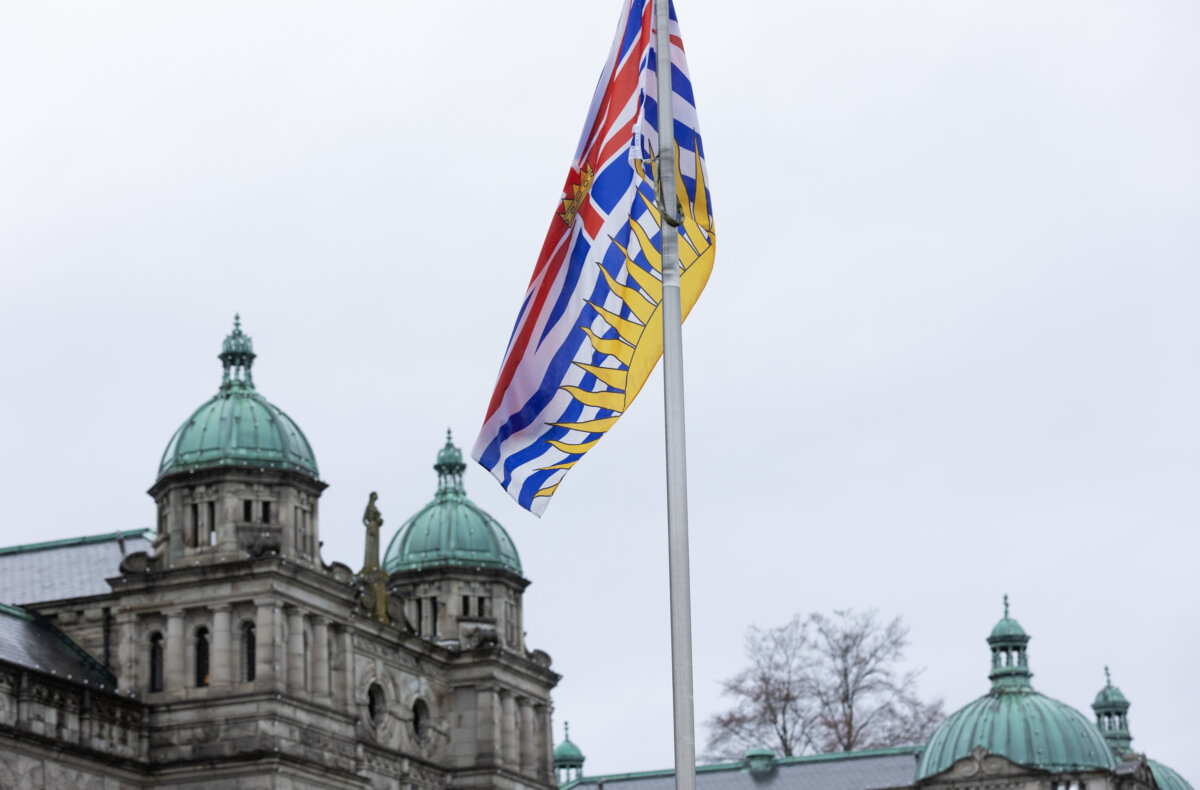
“I think that’s precisely what happened,” Canseco said, adding that old assumptions about how the B.C. Tories would or should look no longer apply.
However, winning a leadership race in Findlay’s case may be far easier than winning a provincial election, according to Prest, who said some of Findlay’s comments on indigenous relations and social issues will likely be used against her in NDP messaging.
“If the NDP were given the ability to choose their opponent, this is the candidate they would choose,” he said.
“Because all of the things that she has said on social issues and on indigenous relations are things that can be effectively weaponized against the B.C. Conservatives,” Prest added.
Canseco similarly argued that Findlay’s next task in addition to unifying her party will be broadening her appeal to middle-of-the-road voters and apolitical British Columbians who are most concerned with cost-of-living and economic issues.
For his part, Leis said he believes Findlay will succeed in appealing to the social values of right-leaning voters while also selling a successful message on economic improvement.
“A lot of this reflected the debate that occurred over several occasions where people believe that in the end she was the best suited to be able to both unify the party and be successful at the next election,” he said.
 Friends Read Free
Copy
Facebook
Tweet
Friends Read Free
Copy
Facebook
Tweet