
All 10 Canadians thought to be at risk from the hantavirus are back on Canadian soil and are currently in isolation, health authorities say.
The outbreak started last month aboard a luxury Dutch vessel during a weeks-long cruise that kicked off April 1 in Argentina. Three passengers from the MV Hondius—a Dutch couple and a German woman—have since died and several others have developed symptoms of the rare rodent-borne disease.
Here’s a look at the latest information on the Canadians linked to the Andes hantavirus outbreak and what health officials say the rest of the country can expect over the next several weeks.
Who Is Affected?
The last of the Canadians thought to be at risk from the hantavirus were finally able to return to their home country this weekend.
Oceanwide Expeditions, the cruise ship’s owner, confirmed there were four Canadians among the roughly 130 other asymptomatic passengers on board when the MV Hondius reached port in Tenerife, an island in Spain’s Canary Islands early on May 10.
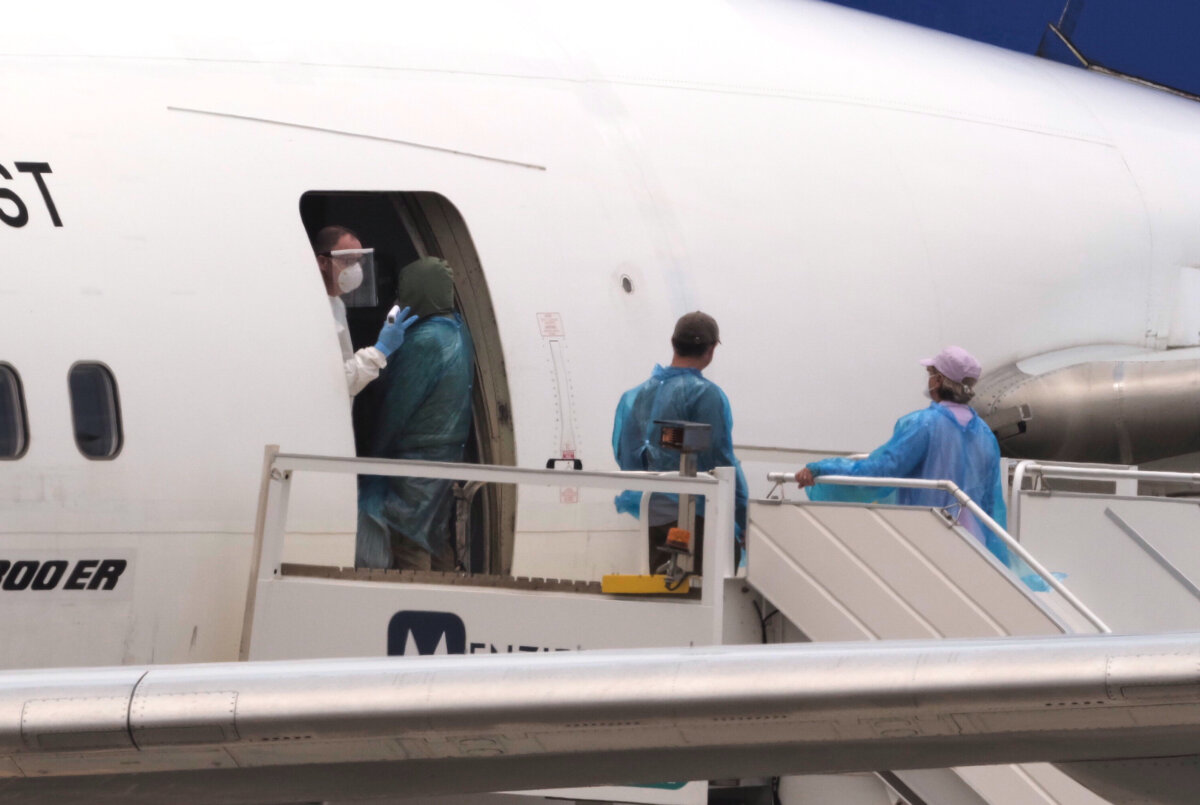
The Canadians disembarked wearing protective gear and made their way onto a plane bound for the Saguenay-Bagotville Airport, roughly two hours outside of Quebec City, the government has confirmed. They then boarded another plane to fly to British Columbia.
The four people will isolate in B.C. because they have connections with the province, said the province’s health officer Bonnie Henry.
Six other Canadians have also been instructed to isolate following their contact with infected passengers.
Canada’s Chief Public Health Officer Joss Reimer told reporters last week that the six Canadians who were exposed to the virus were asymptomatic but have been asked to self-isolate as a precaution.
Two of the six were passengers on the cruise ship, Reimer said during a May 8 press conference. The couple, who are from the Grey Bruce region of Ontario, left the ship on April 24 before the outbreak was officially announced, but after the first death had occurred. They exited the ship the same day that the body of the first person to die was removed.
The couple returned to Canada on April 26 and has not displayed any symptoms. Ontario Chief Medical Officer of Health Dr. Kieran Moore said the pair is being monitored daily for 45 days by Grey Bruce Public Health and the risk to the general public is very low.
A third Canadian, hailing from Quebec, arrived home on April 27 and is also in isolation following a possible exposure to a hantavirus-infected individual during an overseas trip, Quebec’s health minister has said.
Reimer said the three others—currently in Alberta and Ontario—were on the same flight as a Dutch woman who succumbed to the virus. This woman had disembarked to accompany the remains of her husband, who was the first individual to die during the cruise.
Peel Public Health confirmed on May 11 the person from Ontario is isolating in the Peel region in Southern Ontario. The health unit said the person is actually a visitor to Canada rather than an Ontario resident.
All remain asymptomatic.
Like the other six in isolation, none of the four arrivals in B.C. are showing any symptoms of illness, Henry told reporters during a May 10 press briefing.
The four were assessed as asymptomatic before they took off in the plane chartered by the Public Health Agency of Canada (PHAC) and Global Affairs Canada, with support from the Canadian Armed Forces. A PHAC officer ensured public health measures, including masking and physical distancing, were being followed on the flight.
B.C. public health officials provided the four with directions on all of the required public health measures, including the requirements for self isolation and monitoring, once they landed in the province, Henry said.
“Our primary concern is the health and well being of these four Canadians who have been through what can only be described as a harrowing situation,” Henry added, noting that the incubation period for this strain of the virus can be as long as six weeks.
“So we’re actually at a critical period,” she said. “We know the median incubation period is about 15 to 18 days, so we’re still in a period of time when we may see more cases arise.”
Is Transmission Likely?
The isolation periods and many other precautions being taken by health officials does not mean there is reason for Canadians to worry, Reimer said.
Hantavirus is a respiratory virus transmitted to humans primarily through contact with infected rodent urine, droppings, or saliva. The only variant of the virus that is transmitted through direct contact between individuals is the Andes virus, a strain of the virus that is found in South America and has been associated with the cruise ship outbreak.
Despite that, human-to-human transmission is rare and only occurs after extensive exposure to a person with symptoms, Reimer said.
“At this time, the overall risk to the general population in connection with this outbreak of the Andes Hantavirus is low,” she said. “Onward spread within Canada is not expected, even if an infected individual were to arrive here.”
That does not mean Canadians can’t be infected, however. While the Andes version of the virus is only in North America, rodents in Canada carry the sin nombre virus, the most common cause of hantavirus in North America. This strain has not demonstrated transmission from person to person.
“This can be a particular risk when people are cleaning rodent infested spaces,” Reimer said. “To reduce the risk of infection from all types of antivirus, we advise people to stay away from rodents and safely clean and disinfect areas contaminated by rodents.”
Rodent infestation in and around the home remains the leading risk factor for exposure to hantavirus, according to the Health Canada website. Infestations and possible exposures can happen wherever rodents are present, including cottages, trailers, and garden sheds.
As of May 1, the National Microbiology Laboratory has reported 168 cases of hantavirus infection in Canada, since the start of active surveillance in 1994.
New Cases
While there are no current cases of the hantavirus in Canada, two new passengers from the MV Hondius have tested positive, bringing the total number of confirmed cases to seven, although it is suspected a total of nine or 10 passengers have contracted the virus, the World Health Organization (WHO) has said.
A French woman tested positive for hantavirus and her condition deteriorated overnight while in the hospital, French Health Minister Stephanie Rist said on May 11. The woman was one of five French passengers who were repatriated the previous day. She began to exhibit symptoms during the flight to Paris, Rist told public broadcaster France-Inter.
One of the 17 American passengers who were evacuated from the ship and transported to Nebraska has also tested positive for hantavirus, but is not showing any symptoms, and another had mild symptoms, U.S. health officials said. The flight arrived in the early hours of May 11, and the passengers were then transferred to buses that were waiting to take them away from the airport.
People first began to fall ill aboard the ship between April 6 and 28, according to the WHO. The Dutch couple were the first casualties. A seriously ill British man was taken off the ship on April 27 to receive treatment in a Johannesburg hospital and a German woman died onboard on May 2.
Three additional people were transferred off the ship for medical care on May 6, Oceanwide Expeditions said in a press release. The company said one of the people was closely associated with the German woman who died on board on May 2.
WHO’s chief of epidemic and pandemic preparedness and prevention Maria Van Kerkhove told reporters it is believed those who fell ill were not infected on the vessel but during off-board trips.
Reimer confirmed the information during her May 8 press conference.
“At this point in the investigation, it is believed that the first case may have been exposed while travelling in South America before boarding the ship” in Argentina, she said.
The WHO said those who became ill on the ship developed a fever and gastrointestinal symptoms, with a “rapid progression to pneumonia, acute respiratory distress syndrome and shock.”
Andes hantavirus symptoms typically appear within one to eight weeks of exposure and often start with flu-like symptoms, according to the WHO. Fever, severe muscle aches, headache, and fatigue, can quickly progress to respiratory distress, including cough, shortness of breath, and low blood pressure.
Health Canada’s website says there are currently no treatments available for hantavirus, although care is given to treat symptoms. Helping patients to stay hydrated and maintain oxygen levels is key, the agency said.
“About 40 percent of those diagnosed with hantavirus pulmonary syndrome will not recover from their illness,” Health Canada said. “The sooner you get treatment, the better your chances for recovery.”
The Canadian Press and Associated Press contributed to this report.
 Friends Read Free
Copy
Facebook
Tweet
Friends Read Free
Copy
Facebook
Tweet