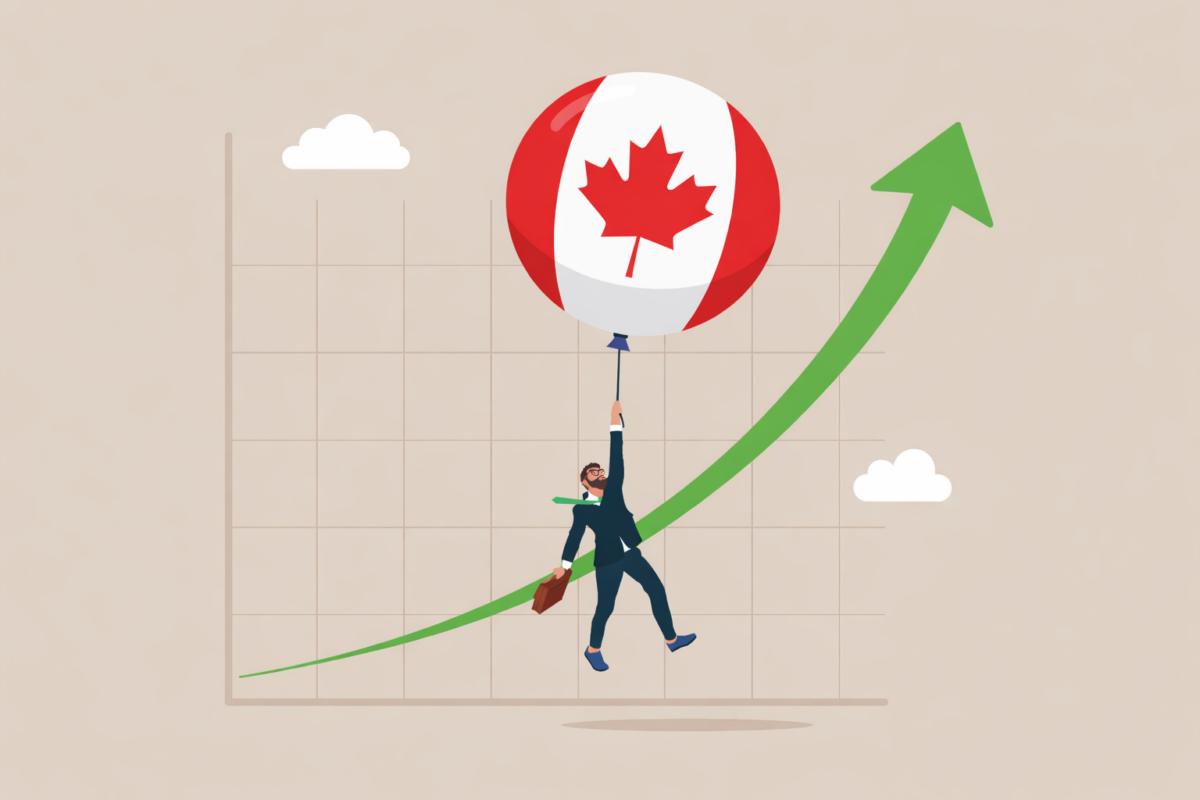

Canada is heading into a period of higher debt that could exhaust the federal government’s taxation and borrowing capacity, reduce its credit rating, and trigger a financial crisis similar to the one seen in the 1990s, according to Simon Fraser University economics professor Herbert Grubel.
“You can’t pile on debt forever. There must be a critical point at which people who are lending you money say, ‘we don’t trust that you can repay it,’ and you get into a crisis,” Grubel told The Epoch Times.
The emeritus professor recently warned in a Financial Post op-ed that Canada is heading into a “1990s-style fiscal reckoning” due to unsustainable debt levels. Grubel forecasted in his Dec. 4 article that if the trend continues, the government’s taxation and borrowing capacity will become exhausted and revenues won’t cover the cost of running the government and paying interest on the debt, and the situation could even lead to bankruptcy.
“As we approach this point, our credit rating will fall and the interest rate we pay will rise, worsening the problem. In the end, there will be no bids at our bond auctions. We will have no choice but to declare bankruptcy,” he wrote.
Other economists share Grubel’s concerns that Canada’s rising debt levels could become unsustainable and would eventually lead to problems with its credit rating, interest rates, and inflation levels, though they have diverging views on the issue of bankruptcy.
Carleton University business professor Ian Lee told The Epoch Times that while Canada cannot literally “declare bankruptcy” in a manner similar to businesses, the country could eventually see a fiscal crisis where the dollar devalues and the cost of imported goods rises.
University of Calgary economics professor Trevor Tombe also said the federal government’s debt-to-GDP ratio is unsustainable, “and something will have to give.” He said that with Canada committing to increasing its military spending to 5 percent of GDP by 2035 to meet NATO requirements, Ottawa will need to find a way to reduce its debts by either increasing taxes, reducing spending on items like transfers to provinces, or even raising the retirement age and making the requirements for applying for Old Age Security more stringent.

“We do need to have a longer-term perspective, really think a decade or two down the line, so that we can make choices today that secure our fiscal future. The long-term perspective is missing from a lot of fiscal policy debates in Canada today,” Tombe said in an interview.
University of New Brunswick political science professor Herbert Emery said Canada is facing a more “complicated” debt crisis than it did in the 1990s, as the country has fewer options to use economic growth as a way out. Emery noted that in the 1990s, Ottawa was saved by achieving a trade surplus through the North American Free Trade Agreement (NAFTA) and higher exports to the United States, and by the Bank of Canada lowering interest rates.
Emery said Ottawa may be forced to “pursue austerity budgets going forward,” with less room now for the Bank of Canada to further lower interest rates or for Canada to increase exports to the United States given its implementation of tariffs.
Livio Di Matteo, an economics professor at Lakehead University, said Canada needs to have a discussion on its rising yearly deficits, particularly given the large infrastructure spending outlined in the latest budget. However, he said a fiscal crisis comparable to the mid-1990s “does not appear imminent at this time” since debt servicing costs are currently much lower than they were during that time period.
Greece and Argentina
In his op-ed, Grubel notes that the combined gross debt of Canada’s various governments is 113.9 percent of GDP, whereas back in 1990 it was at just 73.7 percent, according to figures from the International Monetary Fund. With the latest federal budget projecting a $78.3 billion deficit, Grubel said this trend is “unsustainable.”
“There’s no movement to balance the budget,” Grubel said in an interview with The Epoch Times.
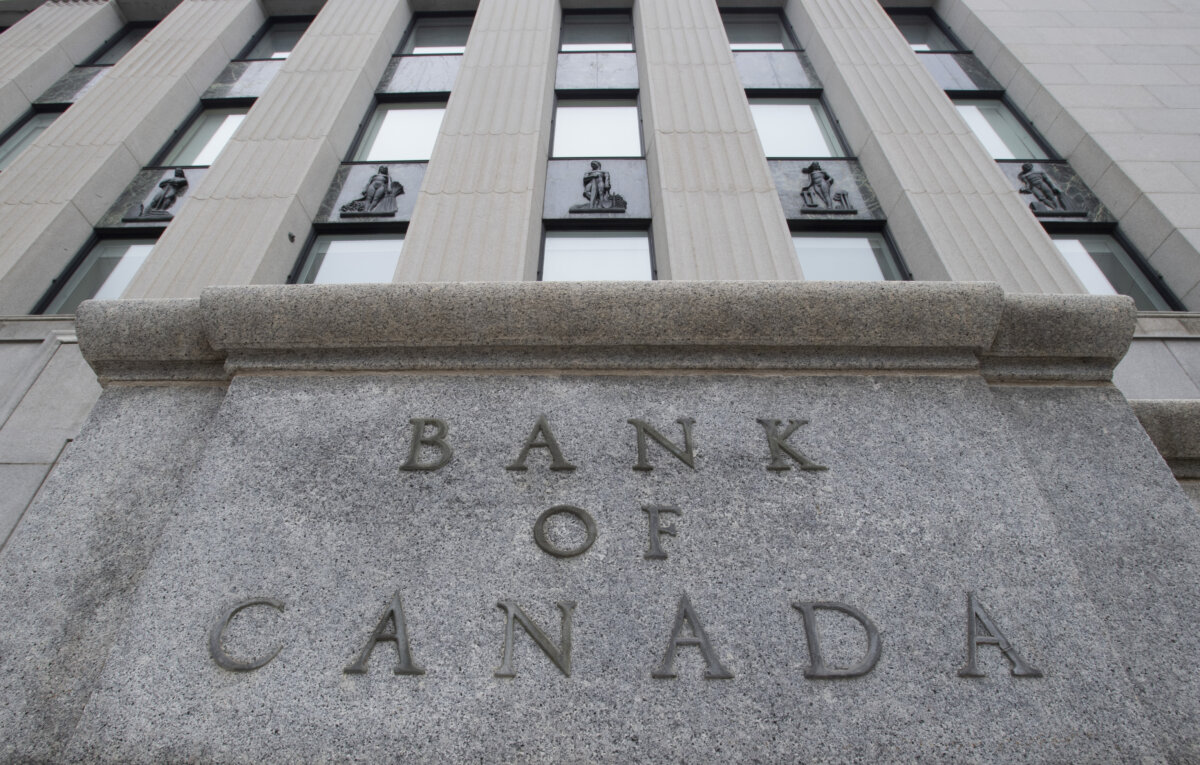 A Bank of Canada sign is seen in Ottawa on May 25, 2020. (The Canadian Press/Adrian Wyld)
Grubel said he doesn’t know when Canada’s debt levels will hit the critical point where bondholders lose trust that the debt can be repaid, but pointed to Greece as an example of runaway debt eventually causing problems for the country.
The Greek sovereign debt crisis that emerged in 2009 exposed structural weaknesses in Greece’s economy, including significantly higher debt and deficits than previously reported. A loss of market confidence led to widening bond yield spreads and soaring borrowing costs. As a eurozone member without an independent monetary policy, Greece was forced to implement strict austerity measures in exchange for EU-IMF bailout programs.
Unlike Greece, Canada has its own central bank and currency, which gives it more options to deal with its debt load and calm investors.
Lee noted that Argentina has also gone through a few economic crises over several decades that could serve as a lesson for Canada. He said the Argentinian government undertook massive spending in the 1970s while its productivity fell, which when combined with weak institutions, resulted in a falling credit rating and periods of hyperinflation.
Lee said it took 50 years for Argentina to “run down and destroy their economy,” noting that debt crises don’t happen “overnight.” Lee said many countries that have run into fiscal crises due to high debt levels have eventually seen the value of their currencies begin to decline “precipitously,” which then drives up the cost of imported goods and increases inflation.
He said Canada’s economy could hit a “wall” if it continues posting high yearly deficits of over $70 billion. “We’re not talking little trivial deficits of $2 billion or $5 billion. We’re talking very large deficits that are growing faster than the GDP growth rate of the economy. This is the bad news,” he said.
Canada in the 1990s
Persistent deficit spending caused Canada’s debt levels to rise during the 1980s, and the 1990s recession made the country’s fiscal situation worse. In response to this, Standard & Poor’s downgraded Canada’s credit rating in 1992 from AAA to AA+, while Moody’s downgraded it from Aaa to Aa1 in 1994 and then to Aa2 in 1995.
As Grubel noted in his op-ed, at one Bank of Canada bond auction in 1994 aimed at funding the federal government’s deficits, there were no bids until 30 minutes before closing. Former Prime Minister Jean Chrétien told Reuters in 2011 that if there had been no bids, “there would have been a day when [Canada] would have been the Greece of today.”
In response, Ottawa began shrinking the size of the federal government as opposed to merely limiting the pace of spending growth, while also bringing in small tax increases.
The 1995 budget implemented a series of spending cuts, amounting to a 19 percent reduction in program expenditures by 1997–98, a 60.4 percent cut in subsidies to business organizations between 1994–95 and 1997–98 that included eliminating railway subsidies, and multiple state-owned corporations being sold to the private sector.
Within four years, the federal government saw a budget surplus, and the government’s debt-to-GDP ratio fell from 94.2 percent in 1993 to 67.2 by 2007, Grubel stated in his op-ed.
However, Emery said other factors at the time helped Ottawa lower its debt levels that it likely will not have in 2026.
Emery said Canada’s 1990s debt crisis was amplified by the Bank of Canada raising interest rates in order to tame inflation, with rates rising to 20 percent by 1981 and falling to 7 percent by 1987, before again increasing to 14 percent in 1990.
“In 2025, we have got inflation back down and interest rates are low, so we don’t have the same monetary policy trigger for a debt crisis like we had in the 1990s,” he said. The Bank of Canada lowered interest rates to 2.25 percent in October 2025.
Emery also said the solution to Canada’s debt crisis in the ’90s had to do with Canada’s entry into NAFTA in conjunction with a weak dollar, “generating massive increases in exports and weaker increases in imports.” The professor said exports were no longer driving growth to the same extent after 2001, and in 2025 Canada is “looking at a loss of access to the U.S. market and a contraction in exports.”
Emery said if Canada is heading into a debt crisis, it is for “different reasons” from those in the 1990s, and that the country “likely won’t be rescued by trade” as was the case in the 1990s. He said if Canada’s GDP growth slows or contracts, then the country’s debts will “go from ‘no big deal’ to the kinds of conditions in bond markets professor Grubel describes for the 1990s,” and Ottawa may need to look at further austerity measures.
Di Matteo said Canada’s total government debt servicing costs are much lower than those in the 1990s, as interest rates are much lower. He noted that total general government debt service costs in 2024 by all levels of government were about 8 percent of total government expenditure, with interest rates at around 4 percent, while in 1995 they were 20 percent and interest rates rose to over 8 percent.
“However, given the total stock of debt, debt service costs have been rising and a spike in interest rates would be of concern and that could spike a renewed fiscal crisis, but we are not yet at that point,” Di Matteo said.
The Latest Budget
Budget 2025 included measures to shrink the size of the public service, with plans to cut the number of public servants by 40,000 positions from the 2023–24 peak by the end of the 2028–29 fiscal year. The budget states that the government will rein in spending under its current comprehensive expenditure review, saving $13 billion annually by 2028–29, for a total of $60 billion over five years along with other savings and revenues.
However, the 2025 budget still projected a $78 billion deficit for the current fiscal year and did not include a declining debt-to-GDP ratio as one of its fiscal anchors as the previous two budgets had outlined. The government says large portions of the spending are meant to stimulate the economy.
Budget 2025 has two fiscal guardrails: maintaining a shrinking deficit-to-GDP ratio and balancing day-to-day operating spending with revenues by 2028–29. Interim Parliamentary Budget Officer Jason Jacques has said it is unlikely that Ottawa will be able to meet these fiscal anchors.
Shortly following the budget’s release in early November 2025, the Fitch Ratings agency said it “underscores the erosion” of the Canadian federal government’s finances and that increasing debt levels could put “pressure” on its current AA+ credit rating. Fitch had downgraded Canada’s credit rating from AAA to AA+ back in June 2020, citing the effects of the pandemic on government finances.
Other ratings agencies like S&P and Moody’s currently rate Canada as AAA and Aaa respectively.
Tombe said that while the federal government could not declare bankruptcy, it could choose to reduce payments on its debt or stop paying them altogether, which is what the Alberta government did back in the 1930s.
“I don’t think that’s a reasonable future for the federal government, because at the end of the day, the federal government can always create currency to repay its debt obligations,” he said.
Tombe said he does not see “any realistic likelihood of us turning to monetizing the federal debt,” and that it is more likely the federal government would impose austerity measures to deal with the debt.
“I mean, that’s much better than messing with the inflation target and the money supply,” he said.
 Friends Read Free
Copy
Facebook
Tweet
Friends Read Free
Copy
Facebook
Tweet