
PARLIAMENT HILL—The Parliamentary Press Gallery is wrestling with the thorny issue of what to do with a Chinese state news outlet accused of espionage.
Chatter in the “Hotroom” on Parliament Hill, where some journalists have their desks, has it that some news outlets are concerned the Chinese state could retaliate against any media company involved in a decision to revoke Xinhua’s Parliament Hill Press credentials.
Statements made by gallery executives suggest the issue is being viewed as a personal dispute between a former Xinhua staffer and the news agency’s management. The board has been attempting to examine the issue but has faced difficulty getting Xinhua representatives to appear before it to answer questions.
The issue erupted in August when former Xinhua staffer Mark Bourrie came forward with allegations his Xinhua handlers had tasked him with collecting intelligence for Chinese Communist Party (CCP) officials rather than for the publication of any news story.
Bourrie quit Xinhua after a series of requests forced him to face the fact that he was being used as a spy. He lamented compromising his principles, saying many do so for the rewards and access the regime withholds from its critics.
“How many soul-selling experiences are we going to have with our Chinese overlords before we are completely compromised?” he asked.
Xinhua has been dogged by espionage allegations since its inception. More commonly though, as detailed by Reporters Without Borders (RSF), it is criticized for being the linchpin of censorship and media control in China.
Unlike the CBC and other public broadcasters, Xinhua is directly controlled by the Chinese Communist Party, charged with propagating the Party line and deciding the news agenda for other outlets.
“No news, especially on sensitive issues, should reach the media without the say-so of the all-powerful Xinhua,” reads RSF’s 2005 report, “Xinhua: the World’s Biggest Propaganda Agency.”
Espionage Allegations
But RSF also noted that heavily indoctrinated Xinhua reporters also produce special reports for internal reference only, read exclusively by officials with the Chinese regime.
The job of collecting information for select officials is part of Xinhua’s lesser-discussed espionage role, alleges a former diplomat.
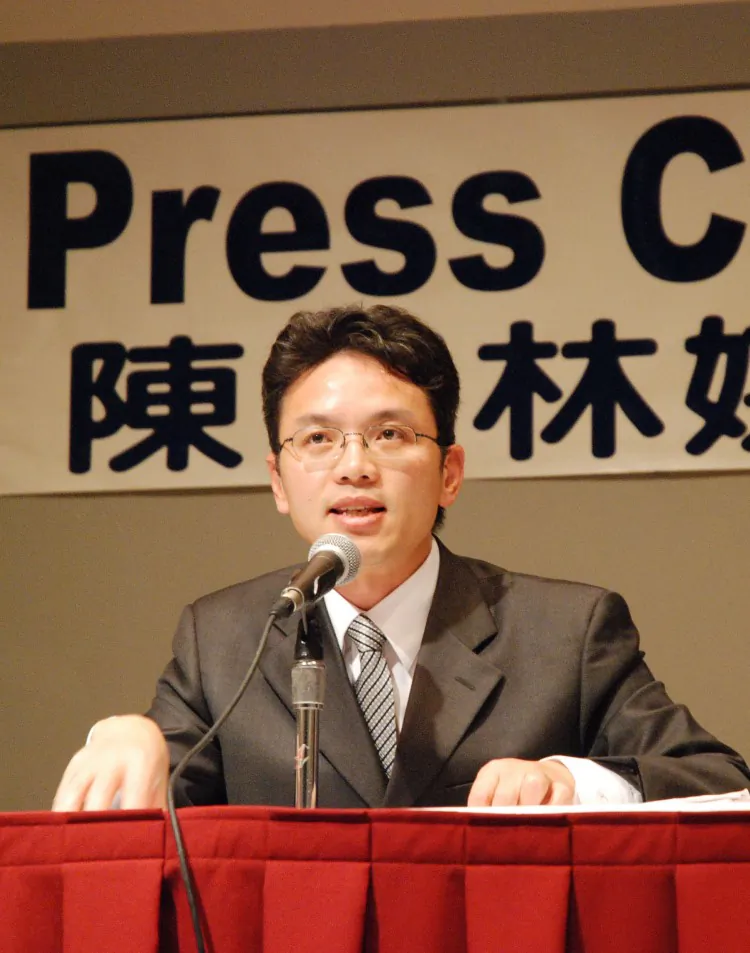
Chinese defector Chen Yonglin, who held a senior diplomatic post in Australia for the Chinese regime, told The Epoch Times last year that Xinhua reporters continue to be tasked with espionage duties.
“They play the role of a spy because Xinhua is actually an outreach organ of the CCP’s intelligence agencies. The nature of their work means they must use all means to infiltrate and obtain intelligence,” he said.
Last week, Blacklock’s Reporter, a new online news outlet covering Parliament Hill, detailed how the Department of National Defence has blacklisted Xinhua from attending technical briefings open exclusively to members of the Parliament Hill Press Gallery.
Blacklock’s reported that Xinhua confirmed it was barred from an Oct. 17 news conference where Defence Minister Peter MacKay introduced Sapphire, Canada’s first military satellite.
Threat of Retaliation
News outlets that stray beyond the Party line as spelled out by Xinhua face threats in China.
The Epoch Times has had over 10 China-based staff arrested and imprisoned in China. But even foreign reporters in the country face censure, according to documents The Epoch Times obtained through Access to Information laws.
Briefing notes prepared for Foreign Affairs Minister John Baird before his 2011 visit to Beijing and Shanghai note that even foreign journalists face crackdowns in China due to the regime’s concerns over a public uprising against its rule.
Some outlets have been ejected from China for coverage unflattering of the Beijing regime.
Melissa Chan of Al Jazeera was barred from China for coverage of black jails and other sensitive issues. The Epoch Times has spoken with another highly awarded reporter who remained silent after being barred for exposing human rights abuses in China.
Reports from the U.S. Congress, Council on Foreign Relations and RSF note that the regime places strict restrictions on foreign press operating in China. RSF says foreign correspondents are also arrested in China.
Canadian outlets have also faced retaliation for challenging the Party line.
The CBC had its website blocked in China after airing a documentary detailing the plight of Falun Gong adherents in 2007.
The public broadcaster had cancelled airing the documentary “Red Wall” hours before its scheduled airtime on Nov. 6. Two weeks later, it aired a slightly edited version of the documentary after trimming the most pointed criticisms of the regime, much of it dealing with organ harvesting in China.
A CBC spokesperson told The Epoch Times the broadcaster had been repeatedly harassed by the Chinese regime over the documentary. CBC reporters in China were also harassed, The Epoch Times was told.
The Epoch Times publishes in 35 countries and in 19 languages. Subscribe to our e-newsletter.
 Friends Read Free
Copy
Facebook
Tweet
Friends Read Free
Copy
Facebook
Tweet