NEW YORK—Plucking an apple off a tree while on a jaunt down 23rd Street; walking in a park on a Manhattan rooftop; or shopping for new clothes on a floating patch of land off of the West Side—these are ideas conceived on the occasion of the 200th anniversary of the conception of Manhattan’s grid as part of The Unfinished Grid: Design Speculations for Manhattan, a new exhibit running at the Museum of City of New York.
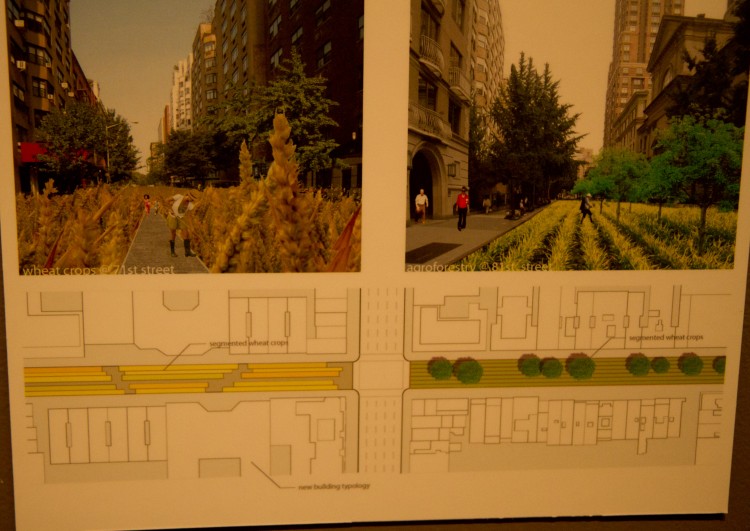
Tearing up pavement in cross streets and replacing it with swaths of farmland, orchards, and gardens is part of Green Streets a plan that seeks to help Manhattan produce more of its own food.
Glocal Grid, proposes boosting local food production with new vertical parks along Second and 10th avenues that “could combine recycling, farmer’s markets, social spaces, and agriculture for the benefit of local communities,” reads a plaque at the exhibit.
Manhattan may face environmental challenges, which Remediating Manhattan, another section seeks to address. An entry titled Gridscape would put “a new green skin of grass and vegetation” on all of the city’s rooftops, to increase alternative energy production, agriculture, and green space.
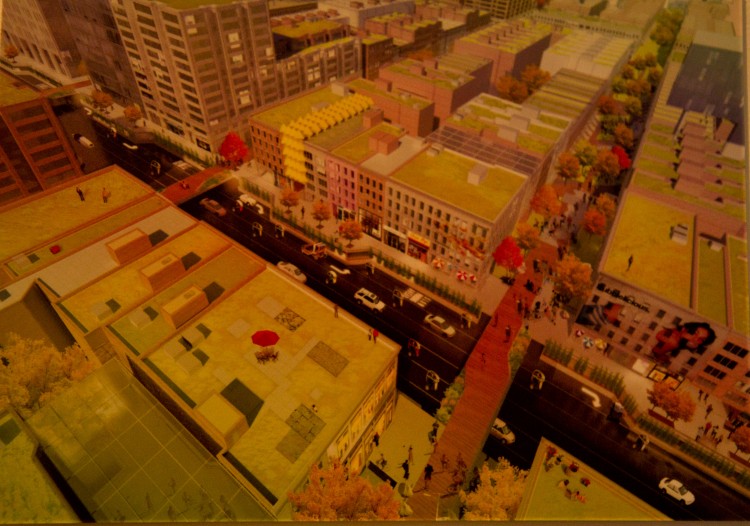
Another idea, deCentral Parks, would reclaim interior spaces of residential blocks, transforming the streetscape into public parks.
Triumph of the Pedestrians is a section that asks, “How the city could be reconfigured in favor of pedestrians?” One entry, Footprints+, would elevate pedestrian pathways above city streets, separating foot and automobile traffic to “free up intersections and reduce travel times.”
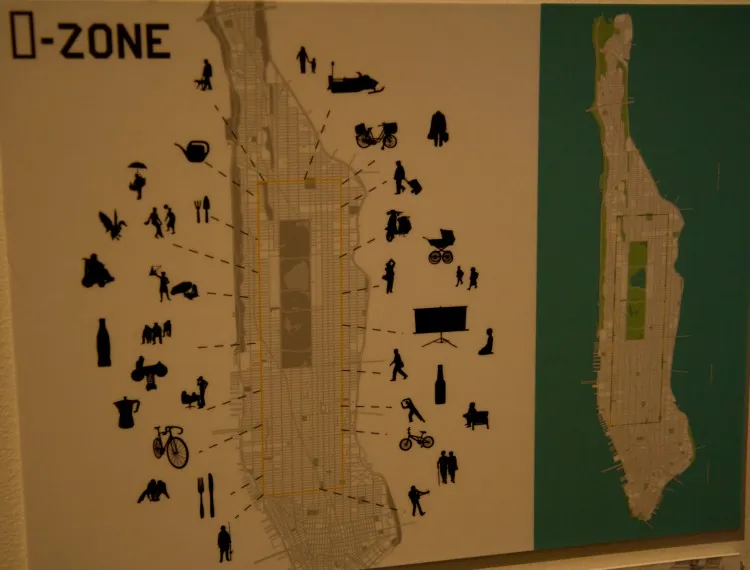
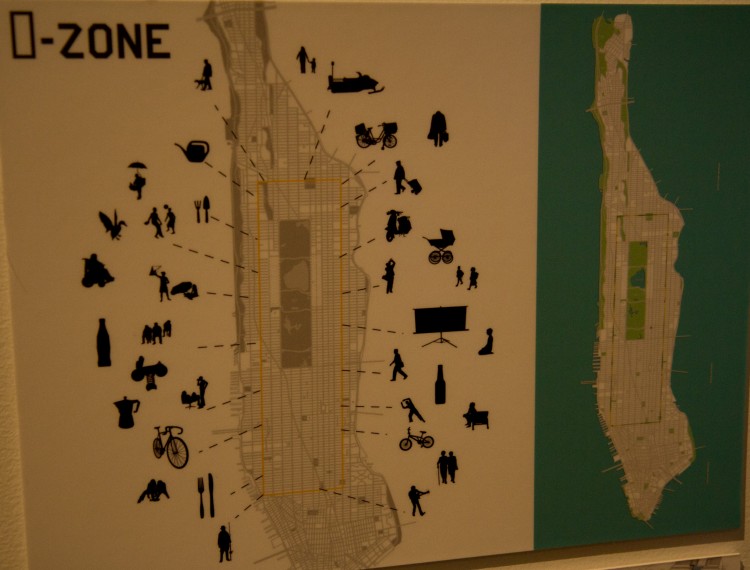
O-Zone would close off an “O” shaped area in Manhattan by closing 23rd Street, 10th Avenue, 125th Street, and 2nd Avenue, to cars, for the enjoyment of walkers, runners, and cyclists. Public spaces for New Yorkers to relax and meet would be along the O.
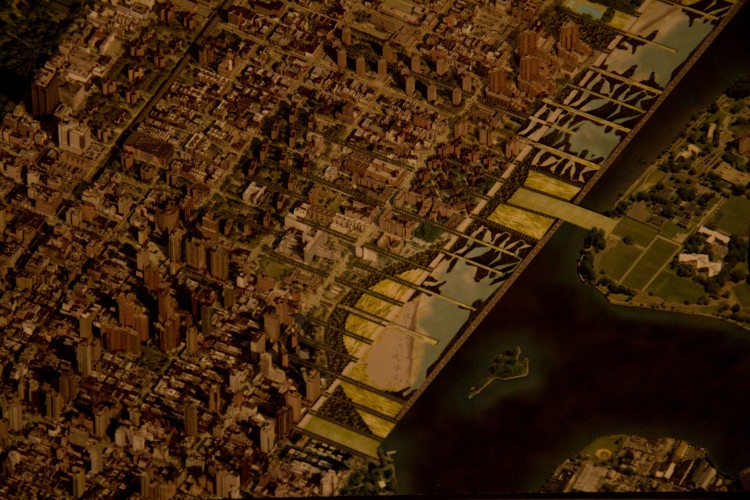
Another section includes ideas for Extending Manhattan’s Edge, including a plan to extend the grid east into the Harlem River, offering opportunities to repair Harlem’s deteriorated waterfront with new ecologies and filtration systems.
The submission Gutter Grid would turn “the fringe of Manhattan’s grid” into “a permeable park zone to create a buffer between rising sea levels and the city.”
The exhibit will run through April 15.
 Friends Read Free
Copy
Facebook
Tweet
Friends Read Free
Copy
Facebook
Tweet