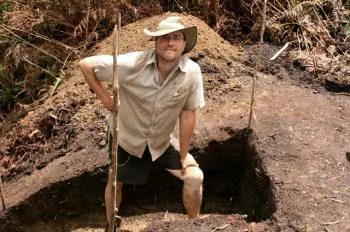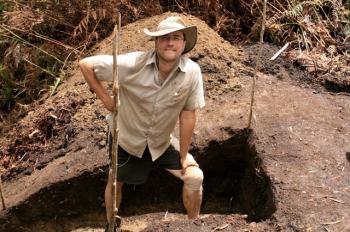
A team of archaeologists, which included the University of Queensland’s Dr. Andrew Fairbairn, discovered the campsites, estimated to be 44,000-49,000 years old, in the Owen Stanley Ranges that tower over Papua New Guinea’s capital, Port Moresby.
The sites, discovered at around 2,000 meters (1.25 miles), are estimated to have been settled during the last ice age, when Papua New Guinea was joined to Australia as part of the continent of Sahul. They are the highest altitude sites occupied by Homo sapiens ever recorded.
The findings were published this week in the respected journal Science.
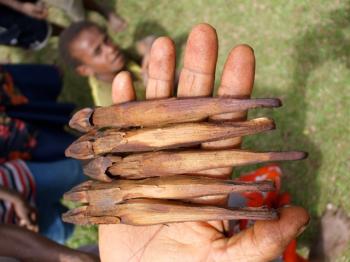
“The volcanic ash layers seem to have produced a unique microenvironment that has fought off the rain and cold to preserve nutshells and yam leftovers, which are present in large quantities and gives us exciting and unique evidence of the diet of the first New Guineans,” he said.
Archaeology team leader professor Glenn Summerhayes, from New Zealand’s University of Otago, says the mountain campsites reveal that the early colonizers of Sahul, who crossed the open ocean from Southeast Asia, were able to push rapidly beyond the coastal areas to inhabit interior mountain regions.
“The sites are among the oldest and best preserved for this key period in Sahul’s past, and show that as humans were moving north into the colder climate regions of Europe from their ancestral home of Africa, they were also able to colonize upward into the cold of the high altitude zone,” he said.
 Friends Read Free
Copy
Facebook
Tweet
Friends Read Free
Copy
Facebook
Tweet