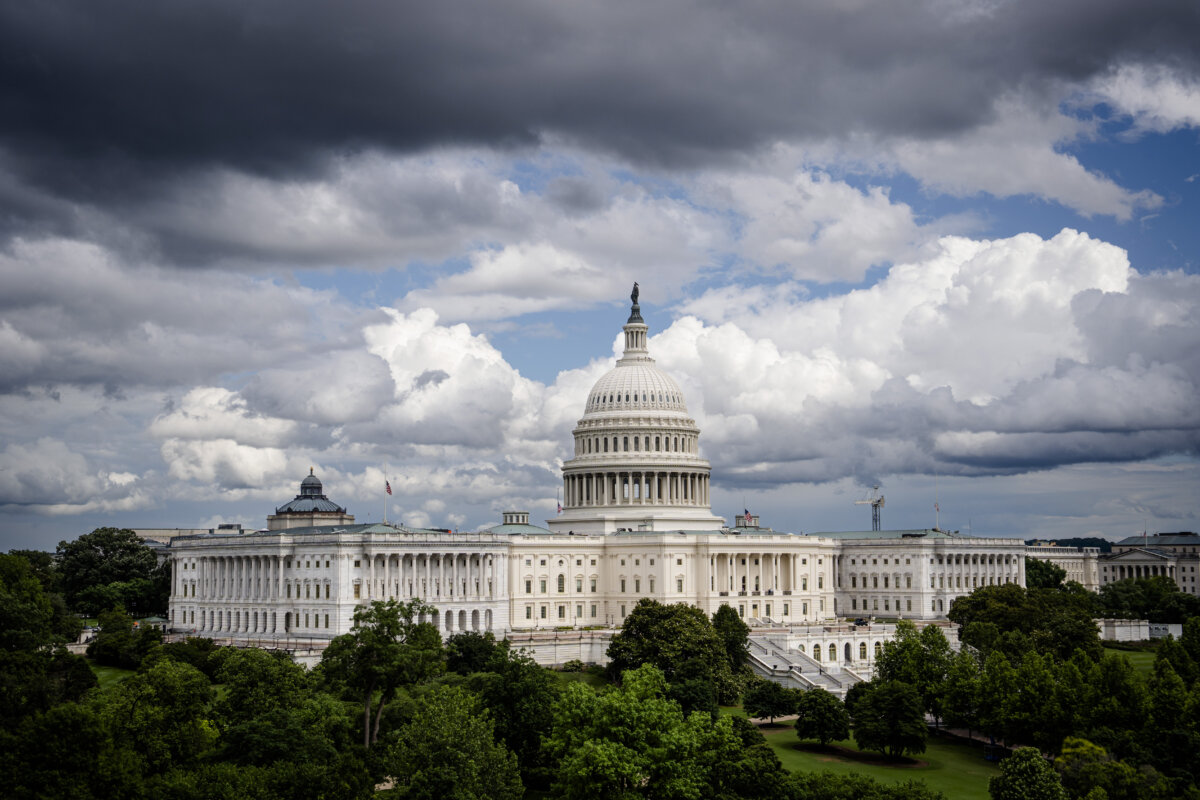

The Senate Finance Committee has released a revised draft of its section of President Donald Trump’s One Big Beautiful Bill Act.
House Speaker Mike Johnson (R-La.) had asked the Senate to limit any changes to the bill—it was already tough to pass the first time around—but the proposal includes some major revisions and omissions that could cause trouble when the bill returns to the House.
Let’s take a peek inside what we have so far:
$5 Trillion Debt Ceiling Bump
As directed by the Senate’s budget blueprint, passed earlier this year to begin the process of crafting the bill in the House, the legislation would raise the federal debt ceiling by $5 trillion.
That provision is likely to irk several House conservatives, including members of the House Freedom Caucus who have set a red line against such a steep increase. The House’s version of the bill would raise the ceiling by $4 trillion, already a concession for some budget hawks.
Sen. Rand Paul (R-Ky.) has said this provision makes it impossible for him to support the legislation.
The Treasury Department is currently using “extraordinary measures” to keep the government afloat, but those are expected to run out around August. Congress will need to increase the debt ceiling to avoid a default.
Medicaid
The Senate’s bill would go further than the House in making cuts to Medicaid by restricting the rate that states can tax health care providers to pay for Medicaid. Currently, the rate is 6 percent; it would gradually be lowered to 3.5 percent by 2031.
The House version would also impose new work requirements and increase states’ burden in funding Medicaid.
This latter provision had already alienated Sen. Josh Hawley (R-Mo.), who addressed his GOP colleagues in a New York Times op-ed titled “Don’t cut Medicaid.”
SALT Cap and Child Tax Credits Reduced
One of the fiercest debates in the House is over the State and Local Tax (SALT) deduction, which allows voters to deduct state taxes from their federal tax burden.
Some House Republicans from blue states sought—and won—a bump in the cap to $40,000.
That concession was essential to the bill’s passage through the lower chamber.
The Senate’s draft would drop it back to $10,000, a figure that is extremely unlikely to pass muster in the House if it’s retained.
The House version of the bill would also have increased the Child Tax Credit to $2,500 per child, but the Senate bill will reduce that to $2,200.
Medicaid-Funded Transgender Procedures Banned
The bill would also ban the use of Medicaid funds for any type of transgender-related procedures, such as prescribing estrogen or testosterone at levels that go beyond what an individual of the same age and sex would produce naturally.
Limited exceptions are provided for treatment of medically verified disorders of sexual development, including intersex conditions.
Green Energy Tax Credits
The legislation would phase out all Inflation Reduction Act green energy tax credits by 2036, with many expiring by 2028.
Wind and solar tax credits will begin phasing out in 2026 and will receive no federal funding by 2028. Nuclear, hydropower, and geothermal tax credits won’t be fully phased out until 2036.
—Joseph Lord; Lawrence Wilson; Stacy Robinson
BOOKMARKS
In the wake of shootings that killed Minnesota House Speaker Melissa Hortman and her husband, and wounded state Sen. John Hoffman and his wife, some Democrat lawmakers are asking for increased security funding. House Minority Leader Hakeem Jeffries (D-N.Y.) and House Administration Committee Ranking Member Joe Morelle (D-N.Y) have called on Speaker Mike Johnson (R-La.) to increase dollars for Capitol police, and for security in their local offices.
Donald Trump says he will probably push back the deadline for TikTok’s China-based parent company, ByteDance, to divest itself of the social media giant. The deadline had already been extended, and is set to expire on June 19.
The cost of eating healthy feels out of grasp to many Americans, according to a Pew Research Center study. Unsurprisingly, the study also found that the taste of food was an even more powerful driver of eating choices.
Israel’s air strikes aimed to completely demolish Iran’s nuclear program, but it’s not clear they have succeeded. While two sites were hit, there is no clear assessment of the damage done, and several other sites remain untouched.
The newly-minted trade deal between the United States and the United Kingdom has caused agricultural and food processing practices, like the use of hormones in livestock, to come into focus. The Epoch Times’ Beige Luciano-Adams examines the two countries’ differing food standards in his latest report.
—Stacy Robinson
 Friends Read Free
Copy
Facebook
Tweet
Friends Read Free
Copy
Facebook
Tweet