
Yields on U.S. Treasury securities pushed higher as the United States hosted G20 central bank leaders and finance ministers on Aug. 31.
The yield on the benchmark 10-year government bond—a key rate that influences business and consumer borrowing costs—rose to 4.77 percent, from the previous close of 4.71 percent. This is the highest level since January 2025.
Longer-dated yields also edged higher to kick off the trading week, with the 20- and 30-year bonds topping 5.26 percent.
Absent economic data, Middle East tensions and the G20 meeting were the chief focus for investors on Aug. 31.
Global officials gathered in Asheville, North Carolina, to address a series of economic challenges, including rising interest rates and persistent war-driven inflation.
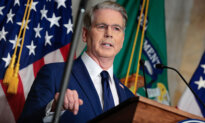
Bessent, as well as Federal Reserve Chairman Kevin Warsh, commenced the two-day event focused on growth.
“The new period is one of secular growth,” Warsh said in brief introductory remarks. “If I were to try to characterize this moment, it would be one of a global investment surge.”
The major technology companies—Alphabet, Amazon, Microsoft, and SpaceX, for example—are spending up to $1 trillion this year on artificial intelligence-related capital expenditures.
These capital investments are bolstering U.S. growth prospects as firms invest more in data centers, semiconductors, and the broader AI infrastructure.
But Big Tech has been tapping into capital markets to fund the AI buildout. The billions in corporate debt issuance are at odds with the sale of U.S. government bonds.
To put pressure on long-dated yields, the Treasury has been repurchasing government bonds this year, and officials plan to double the pace of debt buybacks in September.
While the announcement initially sent yields lower, they have been ticking up again.
Best in the World
Still, according to the Treasury secretary, the U.S. bond market is the best in the world.
“The U.S. bond market is the most resilient in the world,” Bessent said in an interview with CNBC’s Sara Eisen on Aug. 31.
“Everyone’s talking about the U.S. bond market. U.S. bond market this month will have been the best-performing bond market.”
The 30-year yield is down, and the 10-year yield is flat since President Donald Trump returned to the White House for a second term, Bessent added.
Since the president’s inauguration in January 2025, Treasury yields have been volatile and steadily climbing. The 10‑year was at 4.57 percent on Jan. 21, and the 30‑year traded at 4.8 percent.
The curve had been drifting lower until the U.S.–Iran conflict erupted in late February, but yields have accelerated over the past six months amid renewed inflation concerns.
The August Consumer Price Index will be released next week, and the Cleveland Federal Reserve’s early estimate suggests little improvement in headline inflation.
The annual inflation rate could hold steady at 3.4 percent. Excluding food and energy, the 12-month core inflation rate could remain tame at 2.4 percent.
It is not only the United States witnessing climbing rates amid stubborn and sticky inflation.
The United Kingdom’s 30-year is inching closer to 6 percent, the German 30-year bund is eyeing 4 percent, and the Japanese 30-year is firmly above 4 percent.
Looking ahead, all the trends point to higher-for-longer interest rates, says Torsten Slok, chief economist at Apollo.
“The fiscal outlook, a Fed considering a rate hike, and hyperscaler issuance crowding out demand for Treasuries all point the same way,” Slok said in a note emailed to The Epoch Times.
“The bottom line for investors is that interest rates are going to stay higher for longer.”
Oil and Jobs
In the coming days, inflation and the jobs report will be critical for markets, says Joe Tigay, portfolio manager of the Rational Equity Armor Fund.
“This week starts with inflation and interest rates, because that remains the key to the entire market,” Tigay said in a note emailed to The Epoch Times.
“Two major stories feed directly into that conversation: the war with Iran and Friday’s jobs report. Oil is back above $90, which creates another potential inflationary shock.”
A barrel of West Texas Intermediate—the U.S. benchmark for oil prices—is above $85 on the New York Mercantile Exchange. Global Brent crude returned to $90 again in overseas trading.
The U.S. Central Command confirmed that the United States struck two rocket launchers on Iran’s Larak Island, the first publicly acknowledged American strike on Tehran since late July.
Trump, in an interview with Fox News, said the United States will respond to Iran’s attacks on U.S. forces in Jordan.
“We’re going to hit them hard. There will be a response,” Trump said.
Meanwhile, the Bureau of Labor Statistics will publish the August jobs report on Sept. 4. The consensus forecast suggests the economy added 58,000 jobs this month and that the unemployment rate held steady at 4.1 percent.
Timothy Fudd contributed to this report.
 Friends Read Free
Copy
Facebook
Tweet
Friends Read Free
Copy
Facebook
Tweet