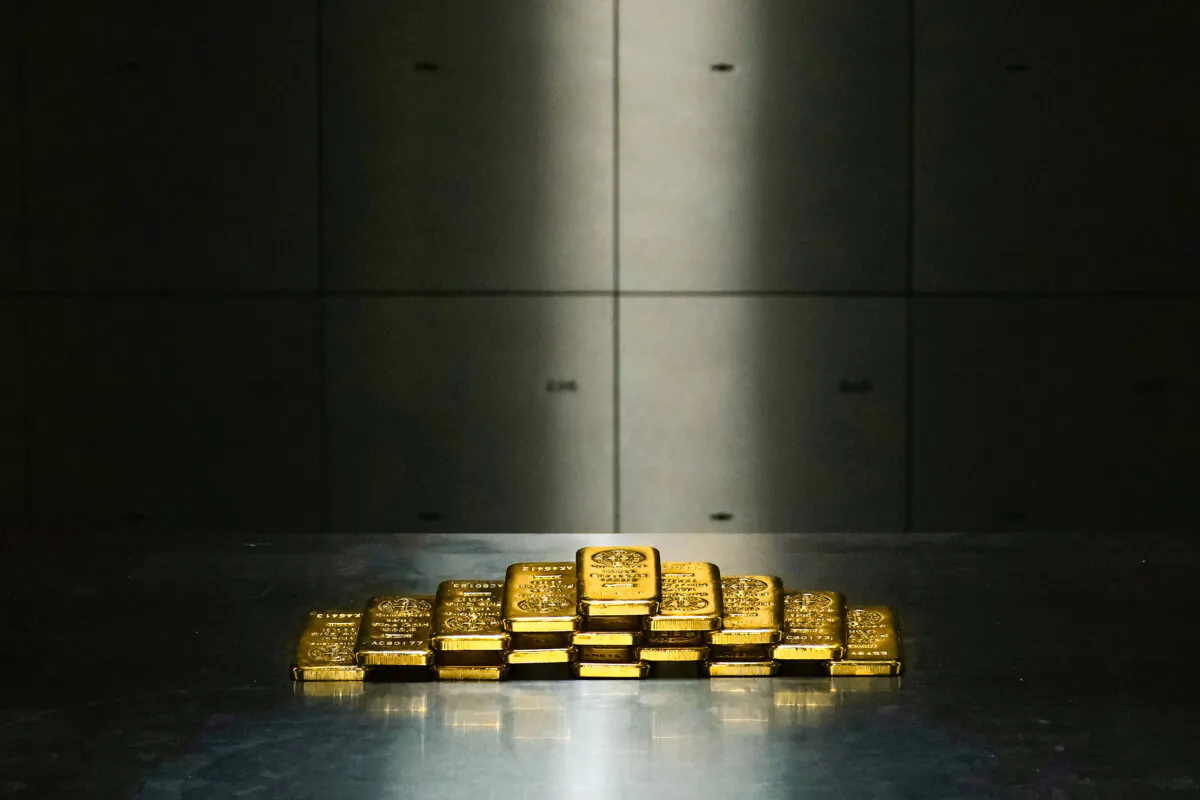

The appetite for gold remains strong among central banks worldwide, and many of these institutions want to store their precious-metal holdings on home soil.
Over the past four years, central banks have purchased an average of 1,000 tons of gold, up from the 500-ton average registered in the previous decade.
Demand has been fueled by a broad array of factors: economic uncertainty, geopolitical tensions, inflation hedging, and portfolio diversification.
With these factors still persistent on the world stage, monetary authorities might continue to be buyers.
In its latest annual Central Bank Gold Reserves survey, released on June 17, the World Gold Council found that global central banks “continue to hold favorable expectations” on the yellow metal.
Eighty-nine percent of respondents expect gold reserves will increase over the next 12 months, and a record 45 percent said their own gold reserves will also accelerate.
Gold prices have stabilized since their meteoric ascent late last year.
Despite its status as a haven asset, gold prices have dropped nearly 10 percent during the Iranian conflict.
Additionally, the yellow metal has fallen more than 22 percent since its January peak of $5,626 an ounce.
As of June 17, gold prices have been trading above $4,300 per ounce—and they could strengthen on the other side of the war.
“Gold continues to benefit from several structural forces that monetary policy alone cannot undermine,” John Murillo, chief business officer of fintech solutions provider B2BROKER, told The Epoch Times in an emailed note.
“Central banks remain significant buyers as they diversify reserves, geopolitical tensions surrounding Iran continue to sustain demand for defensive assets, and persistent concerns over U.S. fiscal deficits encourage long-term allocation to hard assets.”
Half of the central banks, meanwhile, plan to rely on a domestic purchasing program in local currency, and more than a third (38 percent) say they may sell existing reserve assets.
Health of King Dollar
De-dollarization could also remain a considerable factor for central banks.
The World Gold Council reported that a majority of respondents (74 percent) anticipate “moderate” or “significantly” lower U.S. dollar holdings over the next five years.
“Respondents also believe that the share of other currencies, such as the euro and renminbi, will remain unchanged over the same period, while gold holdings will increase,” the report stated.
In the past quarter century, the dollar’s share of foreign exchange reserves has been steadily declining, although the greenback still accounts for about 57 percent, according to the International Monetary Fund.
The euro and Chinese renminbi represent approximately 20 percent and 2 percent of central bank holdings.
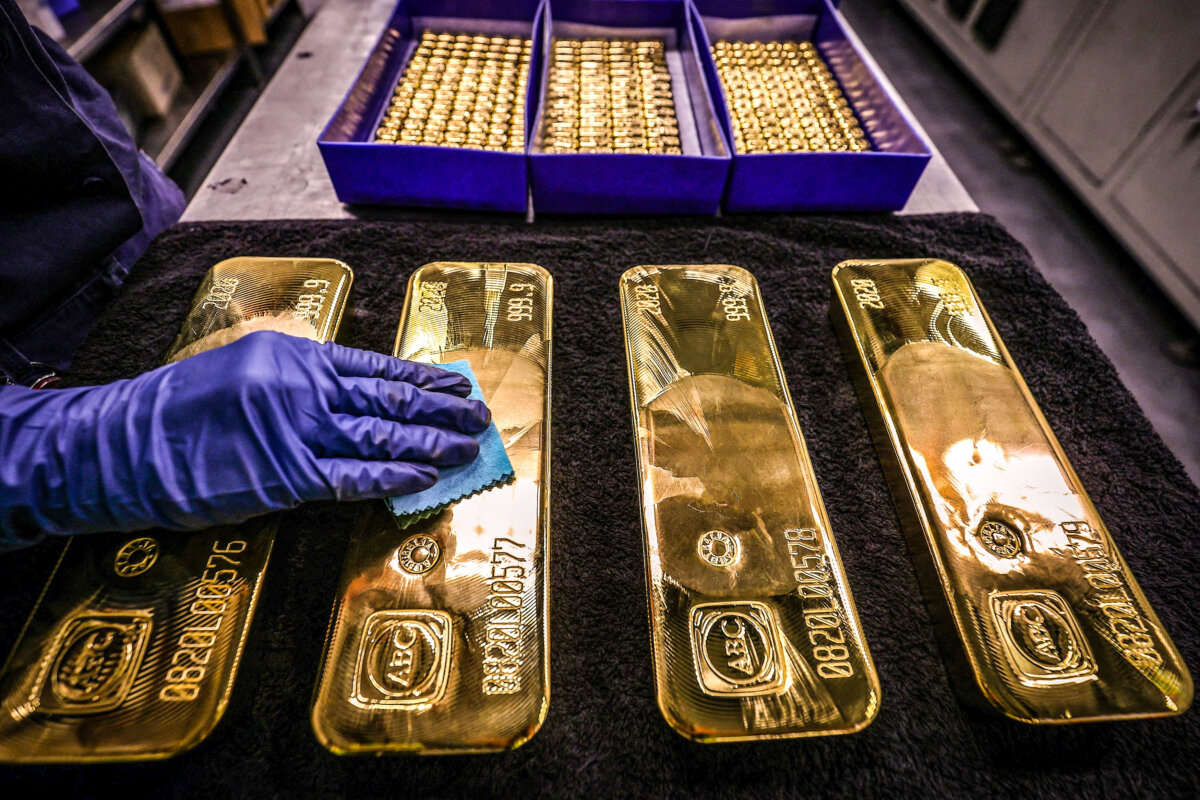
China and Russia have led an anti-dollar crusade over the past 20 years, encouraging a plethora of nations to settle bilateral trade in local currencies and diversify their reserves.
While these efforts to dethrone the king dollar have slowed since President Donald Trump threatened 100 percent tariffs on countries threatening greenback hegemony, economic observers say de-dollarization will eventually happen in the coming decades.
Staying Home
More central banks want to keep their bullion at home, the World Gold Council noted.
In recent years, many institutions have repatriated their bars and coins from vaults at the New York Federal Reserve or the Bank of England.
Officials have expressed concern that their assets would be inaccessible due to geopolitical fragmentation or sanctions.
Still, the Bank of England remains the most popular destination among central banks, with 57 percent storing their gold in the United Kingdom.
At the same time, domestic storage was a close second at 49 percent, followed by the Bank for International Settlements (16 percent).
Nine percent of respondents said they have increased domestic storage, and 10 percent noted they have diversified foreign storage locations in the past 12 months.
“The trend is also observed in future plans for vaulting, with 7 percent saying they plan to increase domestic storage and 9 percent saying they plan to diversify overseas storage locations in the coming 12 months,” the group stated.
A growing number of countries—Austria, Hungary, the Netherlands, and Poland, for example—have been repatriating gold from New York and London over the past decade.
Central banks placing their gold in New York and London dates to the Bretton Woods System—1944 to 1971—due to the dollar peg and the settlement of international transactions.
Institutions continued to leave their gold in these financial hubs following the end of Bretton Woods and the United States’ suspension of gold convertibility, with Cold War-related military and security threats among the top reasons.
Now that the world and the global economy are vastly different, countries want their gold back.
 Friends Read Free
Copy
Facebook
Tweet
Friends Read Free
Copy
Facebook
Tweet