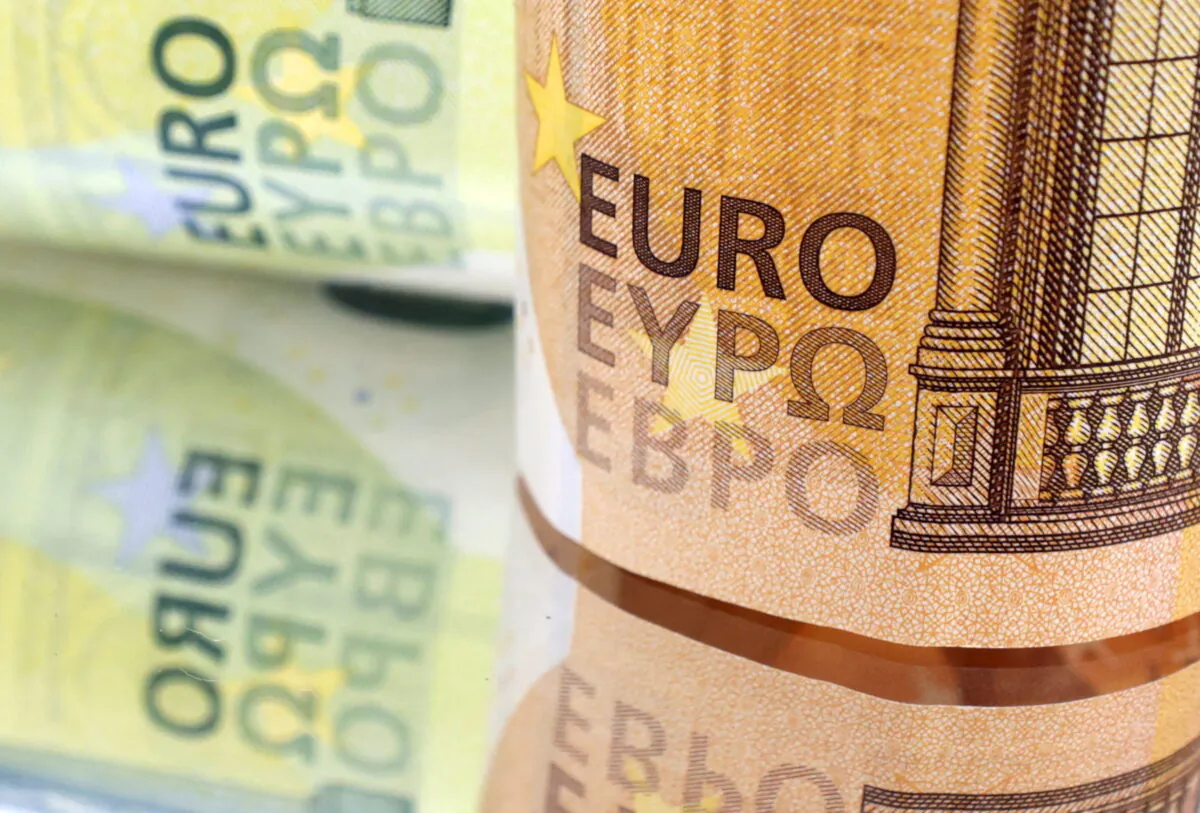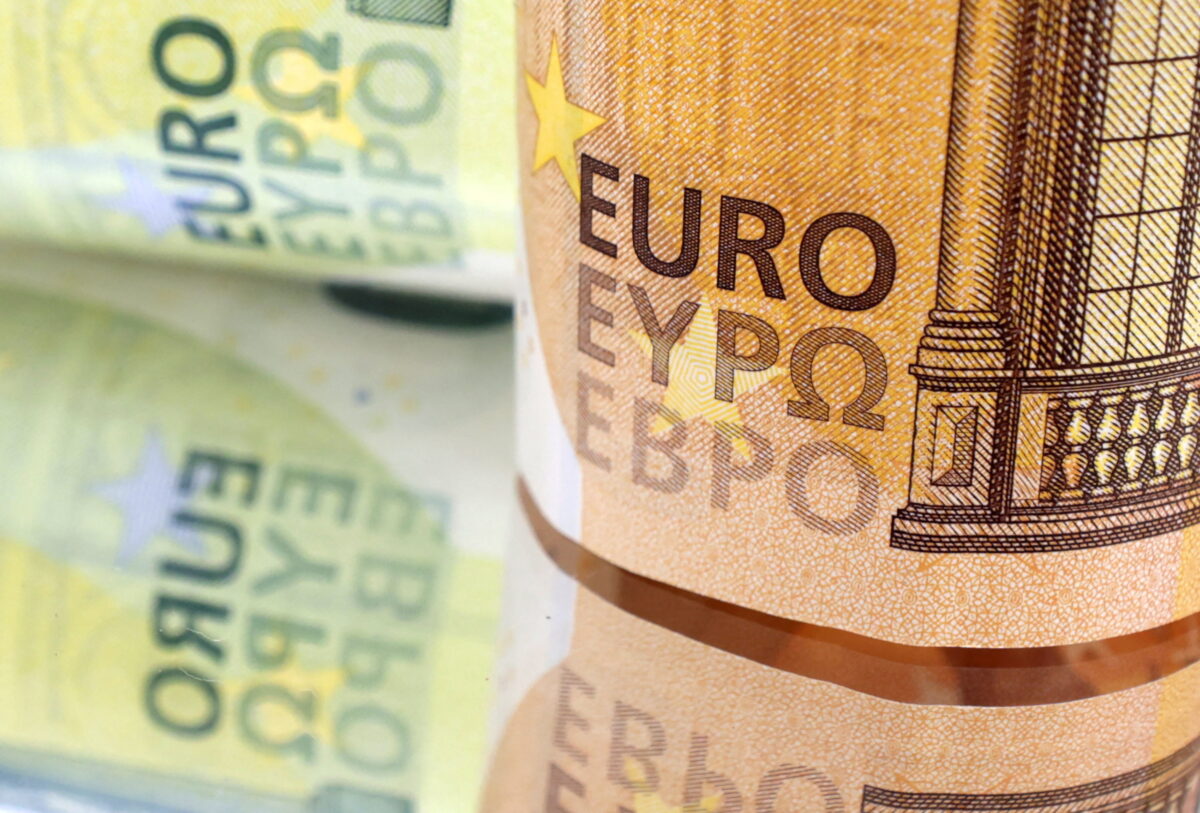

SINGAPORE/LONDON—The euro fell for a fifth successive session on Tuesday as evidence of a slowdown in Europe builds, the pound steadied, and China’s yuan strengthened after the country’s leaders pledged to step up policy support for the flailing economy.
Markets have plenty more to watch this week as the Federal Reserve concludes a rate-setting meeting on Wednesday followed by the European Central Bank (ECB) a day later and the Bank of Japan on Friday, as well as earnings from heavyweight companies. Both Google-owner Alphabet and Microsoft are due Tuesday.
The euro was last 0.15 percent lower on the day at $1.10455, down 2 percent from its 17-month high of $1.1276 hit a week ago.
Monday’s Purchasing Manager Indexes came in below expectations for the eurozone as a whole, and on Tuesday an ECB survey showed demand for loans in the eurozone hitting a record low in the second quarter, and separate data showed deterioration of business confidence in Germany this month.
“It may be that tighter credit conditions are starting to bite,” Nomura analysts said of the German confidence data. “The ECB will be closely monitoring this because it would indicate that its policy hikes are starting to have the intended effects.”
Anything other than a 25-basis-point increase at Thursday’s ECB meeting would come as a major surprise, but traders have been trimming expectations of a further rate hike later in the year, particularly after Monday’s PMIs.
Earlier on Tuesday, China’s yuan firmed by more than 0.5 percent in both the onshore and offshore markets as investors cheered comments at the closely watched Politburo meeting, though many were still seeking specific details on greater stimulus measures.
The yuan traded offshore was last at 7.1455 per dollar and in the onshore market it was at 7.147 per dollar. Chinese stocks, especially property names, also surged.
“Overall, the sheer range of issues that the meeting touched upon goes beyond what the markets had anticipated,” said Tommy Xie, head of Greater China research at OCBC.
“While the sweeping breadth of the topics was appreciated, the execution and depth of these policies will be the real test.”
The positive sentiment from China lifted the Australian dollar, often used as a liquid proxy for the yuan, which rose 0.4 percent to $0.6766.
Japan’s yen remained under pressure at 141.40 per dollar.
“(BOJ) Governor Ueda has held his cards close to his chest, seemingly unpersuaded by the recent run up in Japanese prices and especially workers’ wages, and he has dropped few hints about an impending YCC tweak,” said Aninda Mitra, head of Asia macro and investment strategy at BNY Mellon Investment Management.
Back in Europe the pound rose 0.12 percent to $1.2840, its first day of gains after seven straight sessions of losses, its longest such streak since March 2020, and the Swiss franc was steady at 0.8692 per dollar.
 Friends Read Free
Copy
Facebook
Tweet
Friends Read Free
Copy
Facebook
Tweet