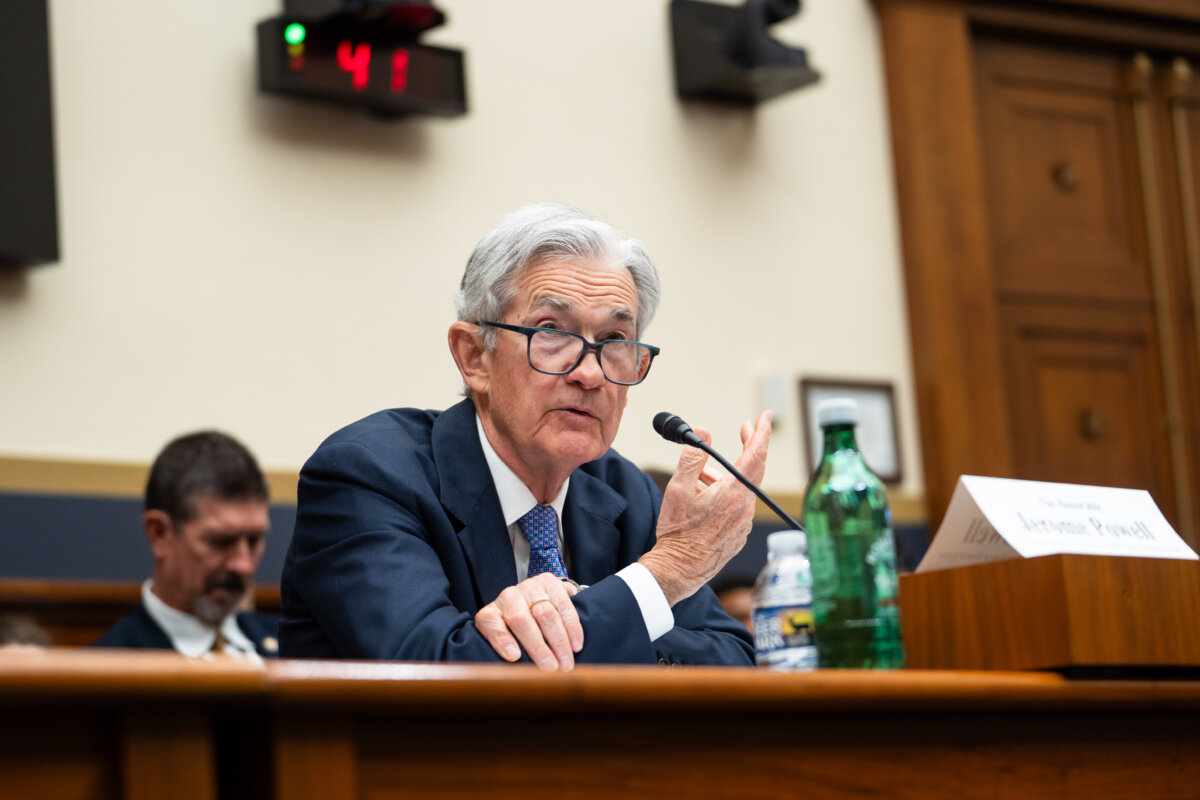

Federal Reserve Chair Jerome Powell appeared on Capitol Hill for his semi-annual monetary policy report to Congress.
Powell kicked off the first day before the House Financial Services Committee, facing questions on tariffs, inflation, interest rates, and more.
Here are key takeaways from Powell’s appearance.
Tariffs and a July Rate Cut
Hopes of a rate cut at the July Federal Open Market Committee policy meeting may have been dashed.
The central bank chief told lawmakers that the Federal Reserve will wait until there is more certainty and clarity from the administration’s policy changes.
“Policy changes continue to evolve, and their effects on the economy remain uncertain,” Powell said in his prepared testimony. “For the time being, we are well-positioned to wait to learn more about the likely course of the economy before considering any adjustments to our policy stance.”
Powell and his colleagues are waiting to determine if President Donald Trump’s sweeping global tariffs will result in consumer inflation.
While data over the last three months indicate that price pressures have yet to materialize, Powell stated that any tariff-related inflation could appear in the June or July data.
“As we go through the summer, we should start seeing this,” he said. “If we don’t, I think we’re perfectly open to the idea that the pass-through will be less than we think.”
“If it turns out inflation pressures are contained,” Powell continued, “we will get to a place where we cut rates.”
He stopped short of specifying a month.
Tariff-driven price increases might reflect a one-time price shift, “but in the meantime, it’s a decision we want to approach with some care,” Powell said.
Last week, the Fed left the benchmark policy rate unchanged for the fourth consecutive meeting, maintaining a target range of 4.25 to 4.5 percent.
CME FedWatch Tool data highlight that the futures market widely anticipates a quarter-point reduction in September. Two central bank officials—Fed Vice Chair for Supervision Michelle Bowman and Fed Gov. Christopher Waller—have advocated for a potential rate cut in July.
Early estimates, such as from the Cleveland Fed’s Inflation Nowcasting Model, suggest that inflation could rise between 0.2 and 0.3 percent this month.
Cuts Would Have Happened
Defending the initial super-sized half-point rate cut in September 2024, Powell stated that the institution would have continued to follow in the footsteps of other central banks and kept easing monetary policy.
The Fed pressed the pause button in January, even as inflation hovers slightly above its 2 percent target and economic activity remains robust.
According to Powell, if the new administration had not conducted significant trade policy changes, the Fed would still have lowered interest rates.
“If you just look at the basic data and don’t look at the forecast, you would say that we would have continued cutting,” Powell told Rep. Scott Fitzgerald (R-Wis.). “The difference, of course, is that at this time, all forecasters are expecting pretty soon that some significant inflation will show up from tariffs.”
The updated Summary of Economic Projections indicates two rate cuts by year’s end, the Fed chair said, “so it’s just a question of being prudent and careful.”
Housing in Focus
The U.S. housing market was a notable subject during the hearing.
Rep. Rashida Tlaib (D-Mich.) questioned whether the Federal Reserve’s restrictive monetary policy stance is undermining the institution’s long-term price stability objectives, particularly in terms of housing affordability.
Powell disputed that higher interest rates will impact the long-term supply of housing.
“We think the very best thing we can do is to fully restore price stability at the aggregate level,” the Fed chief responded. “That will be the best thing for homeowners and for homeowners and everybody else in the long run.”
The congresswoman also requested definitions for supply-driven inflation and demand-driven inflation.
“We’re talking about a housing crisis that is getting worse right now because we’re not paying attention to future instability” that current interest rates may be bringing, Tlaib said.
In a separate exchange with Rep. Nikema Williams (D-Ga.), Powell stated that over the long run, interest rates do not impact housing supply.
“Interest rates really affect housing demand,” Powell said. “With lower rates, you see more demand, and higher rates, maybe less demand.
Mixed numbers have been emerging from the U.S. real estate market this year.
In May, the median sale price rose 1 percent year-over-year to $441,738, and home sales decreased 5.9 percent from the same period a year ago, according to data from Redfin.
Mortgage rates have also remained elevated, staying slightly below 7 percent.
Dollar Hegemony
The U.S. Dollar Index, a widely watched gauge of the greenback against a weighted basket of currencies, has declined 10 percent this year to its lowest level since early 2022.
Market watchers have questioned whether the U.S. dollar’s role as the chief international reserve currency is under threat.
Lawmakers probed Powell to determine what tools are at his disposal to preserve the dollar’s status as a reserve currency.
While he noted that it is the Treasury Department’s responsibility to manage the dollar, Powell agreed that the Federal Reserve also has a role to play.
He pointed to the importance of democratic institutions, open capital markets, price stability, and the rule of law. “Those are the things that make you the reserve currency. And you can keep that status as long as you maintain those things,” Powell said.
“Of those things, the thing that we contribute is price stability over the long run,” he continued. “So people who want to invest in or use the dollar, they can be confident in the value of the dollar over time.”
Despite the dollar’s weakness in 2025, the currency is still king of global reserves and international payments.
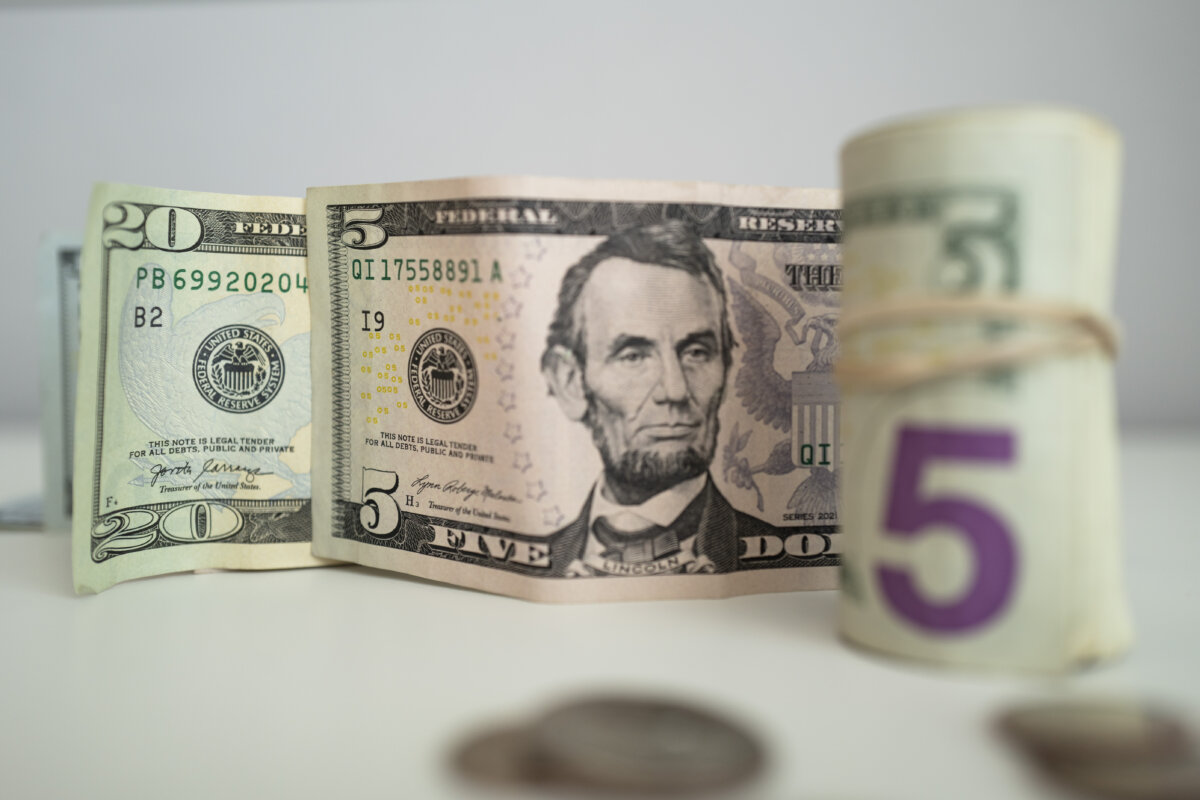
According to the International Monetary Fund, the U.S. dollar accounts for 58 percent of global reserves. Additionally, SWIFT data indicate that the U.S. dollar accounted for a 50 percent share of international payments in April.
Relying on the Data
U.S. government data collection methodology has come under scrutiny.
In recent years, the monthly jobs report has registered sizable downward revisions from previous numbers. This has led to questions about the dependability and quality of employment data.
A challenge for the federal agency has been a declining response rate for its various reports, whether the nonfarm payroll report or the consumer price index (CPI).
The Bureau of Labor Statistics announced on June 16 that it would be “reducing sample collection in areas across the country” for the CPI. The federal agency said that the change would not affect the accuracy of the monthly inflation readings, but it might lead to volatility in item-specific indexes.
Torsten Slok, chief economist at Apollo Wealth Management, wrote in a research note that federal staff had guessed a significant portion of the current CPI reports.
“When data is not available, BLS staff typically develop estimates for approximately 10% of the cells in the CPI calculation. However, in May, the share of data in the CPI that is estimated increased to 30 percent,” Slok said.
“In other words, almost a third of the prices going into the CPI at the moment are guesses based on other data collections in the CPI.”
Powell asked about the latest developments in data collection efforts. He stated that the figures, such as employment data, are becoming more volatile due to shrinking survey sizes.
“We should be getting better and better and better,” Powell said, noting that the central bank relies more on big private sector data sets.
But U.S. government data has been “the gold standard,” he added.
“I will say generally, the Fed is a big fan of good data collection.”
 Friends Read Free
Copy
Facebook
Tweet
Friends Read Free
Copy
Facebook
Tweet