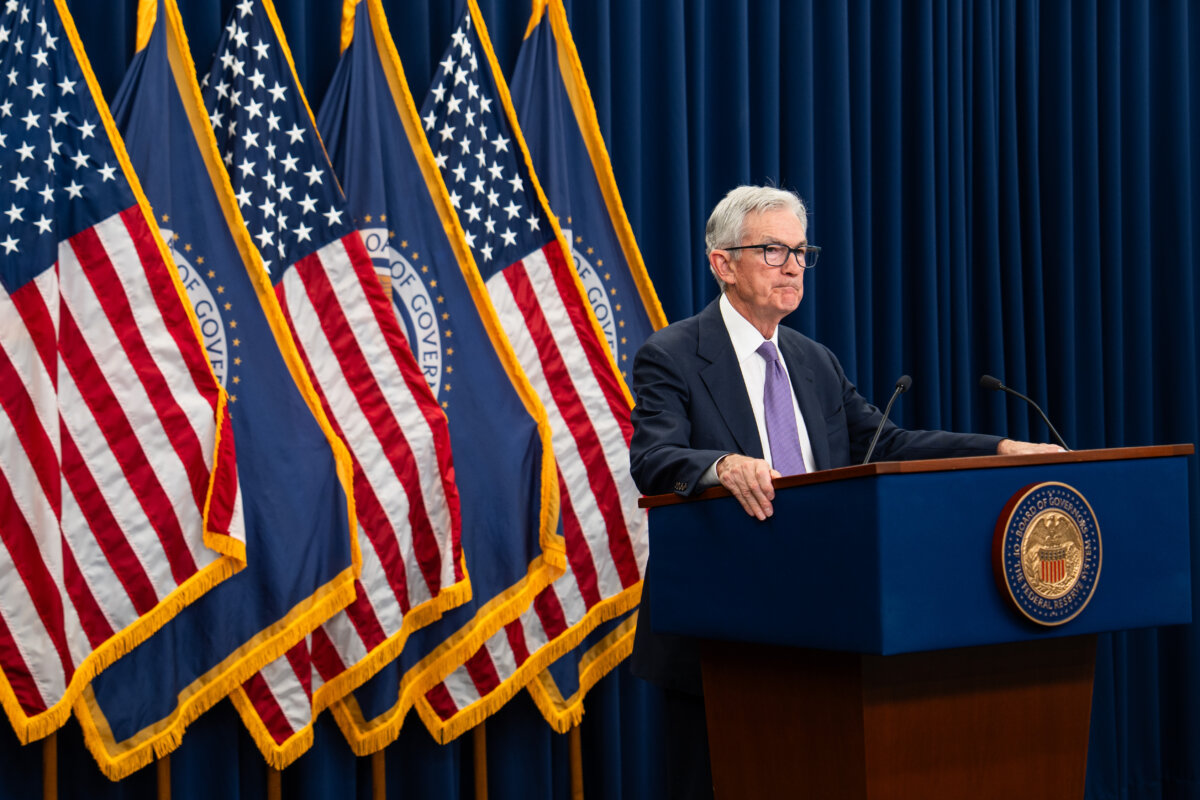

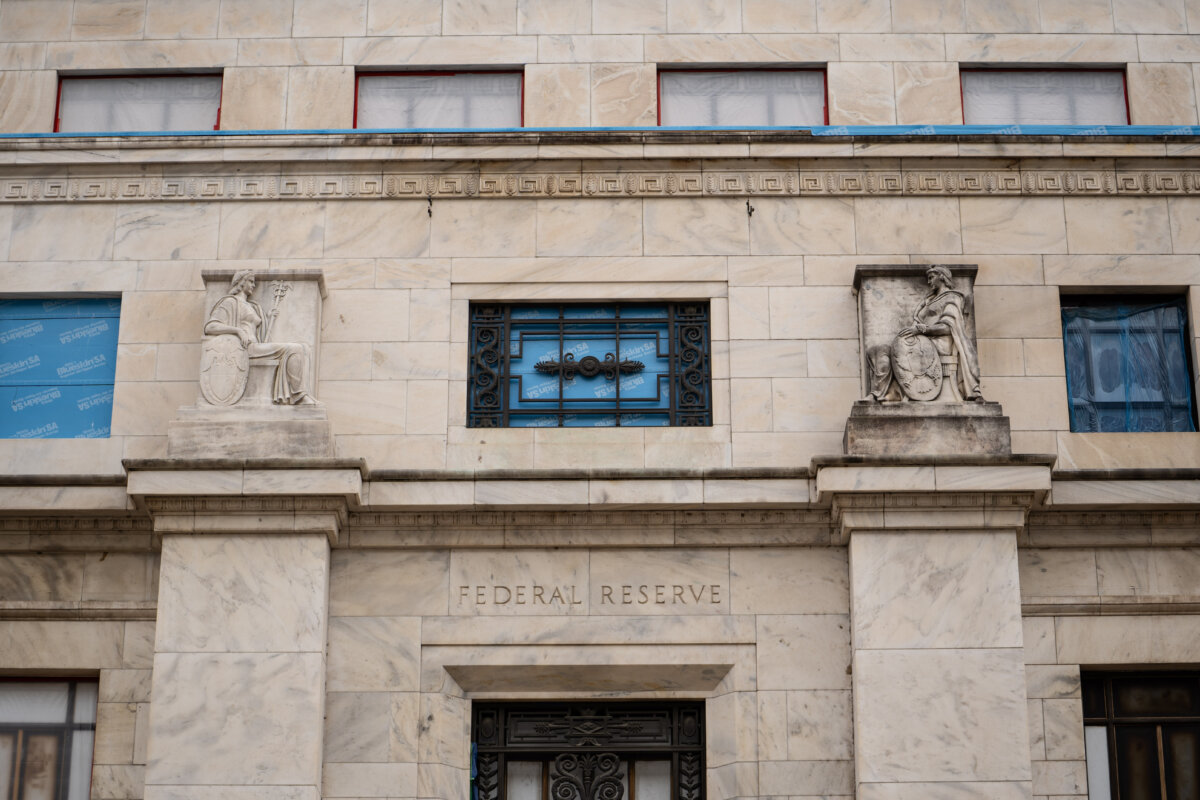
Federal Reserve officials were divided at last month’s policy meeting over the path of interest rates, according to minutes released on Feb. 18.
Although the Fed voted 10–2 to leave interest rates unchanged—Fed board members Christopher Waller and Stephen Miran preferred a quarter-point rate cut—members expressed divergence on where the benchmark federal funds rate is headed.
The division reflects that one side is continuing to fight inflation and the other to support the U.S. labor market.
Several participants said that if inflation keeps inching closer to the institution’s 2 percent target, it would be appropriate to support “further downward adjustments.”
Other officials said that it would be best to keep interest rates intact “for some time” to examine incoming data.
“A number of these participants judged that additional policy easing may not be warranted until there was a clear indication that the progress of disinflation was firmly back on track,” the minutes from the Jan. 27–28 meeting stated.
Despite that Fed Chair Jerome Powell told the media that rate hikes were not in the central bank’s baseline scenario, the document noted that participants would support a two-sided description.
This stance, the meeting summary stated, would reflect “the possibility that upward adjustments to the target range for the federal funds rate could be appropriate if inflation remains at above-target levels.”
“All participants agreed that monetary policy was not on a preset course and would be informed by a wide range of incoming data, the evolving economic outlook, and the balance of risks,” the summary stated.
Still, participants anticipate that inflation will ease throughout the year as the effects of tariffs pass through the market and lead to a one-time price adjustment. But progress toward restoring 2 percent could be slower, the document stated.
“Most participants, however, cautioned that progress toward the committee’s 2 percent objective might be slower and more uneven than generally expected and judged that the risk of inflation running persistently above the committee’s objective was meaningful,” the minutes read.
Another Waiting Game
Following last month’s post-meeting press conference, Powell told reporters that there had been “broad support”—including from non-voters—to leave interest rates unchanged in the current range of 3.5 percent to 3.75 percent.
Powell also stated that monetary policymakers would take a “meeting-by-meeting” approach to interest rates, relying on incoming data to make their decision.
By the time the Federal Open Market Committee convenes next month, officials will have received a hefty batch of economic data, including employment and inflation data.
Last week, the Bureau of Labor Statistics reported a hot January jobs report and a softer-than-expected consumer price index report.
January’s annual inflation rate sharply slowed to 2.4 percent, and the economy added 130,000 new jobs.
Chicago Fed President Austan Goolsbee suggested there could be “several more” rate cuts this year if inflation continues to ease towards the central bank’s 2 percent target.
“If this proves to be transitory and we can show that we’re on the path back to 2 percent inflation, I still think there are several more rate cuts that can happen in 2026,” Goolsbee told CNBC’s “Squawk Box” on Feb. 17.
“But we’ve got to see it. So far, I think we’ve been basically stalled at around 3 percent with some positive signs, but also some warning signs.”
Fed board member Michael S. Barr suggested a rate pause could be in place for some time because of the upside inflation risks.
“Based on current conditions and the data in hand, it will likely be appropriate to hold rates steady for some time as we assess incoming data, the evolving outlook, and the balance of risks,” Barr said in a Feb. 17 speech at a New York Association for Business Economics event.
However, Waller reiterated his call for his peers to lower rates.
Waller, writing in a Jan. 30 statement, stated that the Fed needs to be in rate-cutting mode to support the U.S. labor market.
“Last year’s data will be revised downward soon to likely show that there was virtually no growth in payroll employment in 2025. Zero. Zip. Nada,” Waller said.
“Let this sink in for a moment—zero job growth versus an average of almost 2 million for the 10 years prior to 2025.”
The bureau reported that in addition to January’s gains, payrolls were revised downward by 862,000 in the 12 months preceding March 2025. Additionally, 2025 employment gains were adjusted downward to 181,000.
Despite upbeat economic data, investors overwhelmingly expect the central bank to keep rates unchanged next month, according to the CME FedWatch Tool.
The futures market is penciling in a 50 percent chance of a quarter-point rate cut at the June policy meeting—the first time the new chairman gathers the rate-setting committee.
The next two-day policy meeting will take place on March 17 and March 18.
 Friends Read Free
Copy
Facebook
Tweet
Friends Read Free
Copy
Facebook
Tweet