
President Donald Trump’s first full quarter in the White House resulted in the lowest budget deficit in six years, says Treasury Secretary Scott Bessent.
In an Oct. 22 post on X, Bessent stated that the federal shortfall had declined in the second quarter of 2025 “when there was no overlap with the Biden administration.”
From April to September, the cumulative budget deficit was $468 billion—the lowest reading since 2019 and down almost 40 percent compared to the same time a year ago.
Bessent also criticized Democratic lawmakers over the government shutdown, now in its third week.
“Revenues are soaring and government spending is under control,” he said. “Democrats think they can undo the important progress the President has made by shutting down the government. But they will not succeed.”
This comes soon after the Treasury Department reported that the U.S. government posted a budget surplus of $198 billion in September—the largest of any surplus in September on record.
“Strong private sector led growth alongside constrained federal spending means the deficit to GDP will take care of itself,” Bessent said in an Oct. 16 post on X.
“FY 2025’s deficit to GDP is now projected to be under 6%. And with continued fiscal restraint, we can reach 3% by 2028.”
For fiscal year 2025, Washington registered its second consecutive $1.8 trillion budget deficit.
Since joining the Trump team last year, Bessent has repeatedly advocated bringing the deficit-to-GDP ratio to around 3 percent—a key tenet of his “Three Arrows” strategy—by growing the economy and stabilizing the federal government’s finances. The senior administration official recently highlighted the latest progress on this front.
Citing the Congressional Budget Office’s latest Monthly Budget Review earlier this month, Bessent announced the deficit ratio declined to 5.9 percent from the previous year’s 6.4 percent. In recent years, the deficit has been the highest when the United States was not in a war or in a recession.
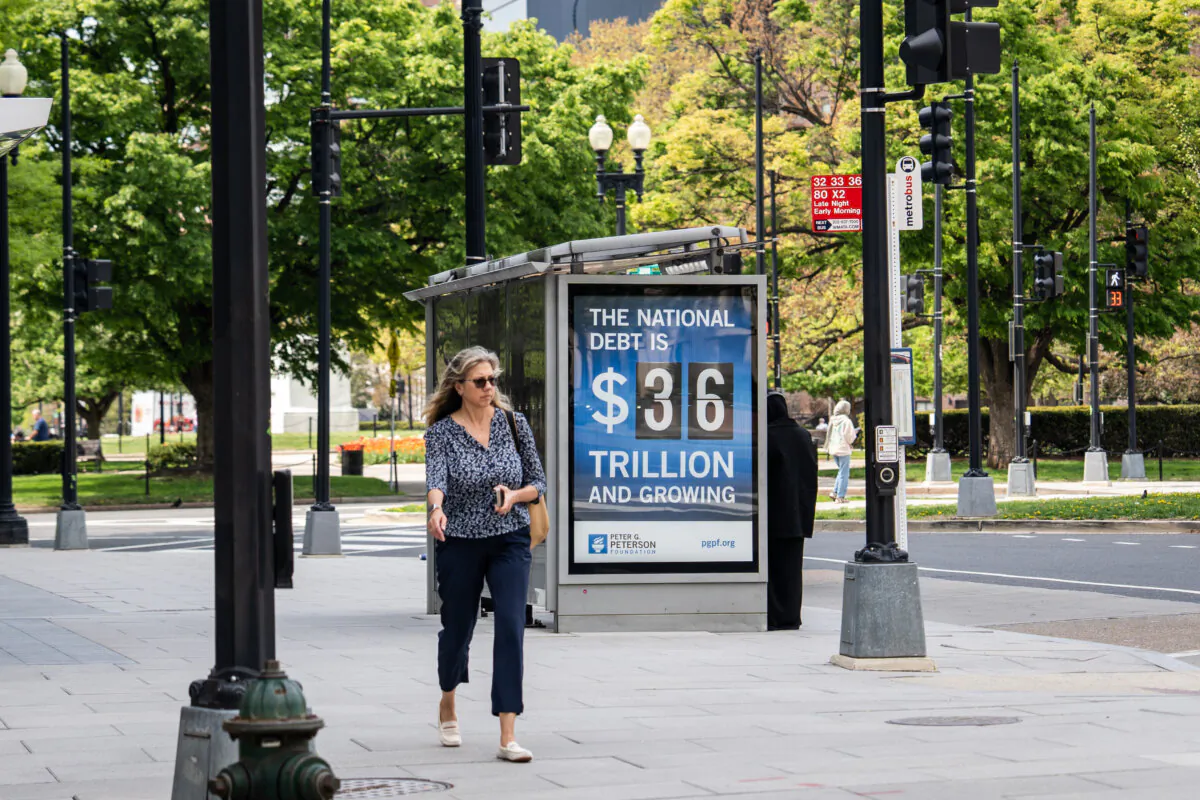
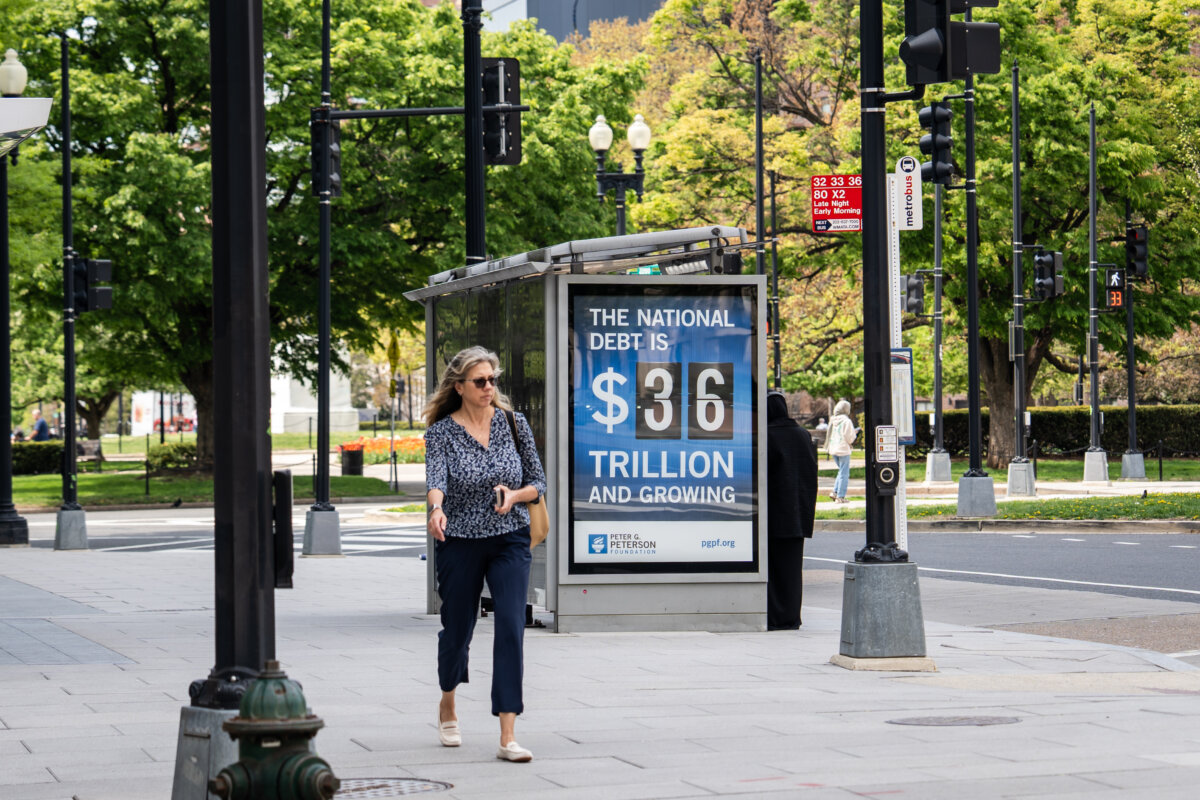
But a challenge remains for the White House: the $38 trillion national debt.
National Debt Reaches New Milestone
Just two months after hitting $37 trillion, the federal government added another $1 trillion to the national debt.
According to new Treasury data, the national debt reached $38,019,813,354,700.26 on Oct. 21.
“Something has to give,” says Maya MacGuineas, president of the Committee for a Responsible Federal Budget.
“Debt held by the public – economists’ preferred measure of debt – is already as large as our entire economy, beyond any point outside of a world war,” the head of the independent policy organization said in a statement.

“The reality is that we’re becoming distressingly numb to our own dysfunction. We fail to pass budgets, we blow past deadlines, we ignore fiscal safeguards, and we haggle over fractions of a budget while leaving the largest drivers untouched.”
With lawmakers unable to improve the nation’s fiscal health and the federal government struggling to keep the lights on, there is concern that the United States could face another credit downgrade.
In May, Moody’s Ratings downgraded the U.S. ratings from Aaa to Aa1 and revised the outlook from negative to stable, pointing to ballooning deficits.
The Peter G. Peterson Foundation wrote that such a downgrade could make it more expensive for the United States to borrow.
“If market observers, including the ratings agencies, continue to lose faith in the safety of Treasury securities, the United States will have to offer higher rates of return to attract investors, which would put upward pressure on interest rates,” the group wrote.
According to the September Monthly Treasury Statement, the federal government spent $970 billion on net interest payments for fiscal year 2025. This was slightly below Medicare ($997 billion) and health care ($979 billion) but higher than national defense ($917 billion) and income security ($702 billion).
One focus for the current administration has been to lower interest rates to reduce debt-servicing payments.
The benchmark 10-year Treasury yield has fallen below 4 percent, down from the mid-January peak of 4.8 percent. This has been fueled by the Federal Reserve lowering a key benchmark policy rate, investors seeking shelter amid economic and geopolitical uncertainty, and strong foreign demand.
Despite interest rates heading in the White House’s preferred direction, the non-partisan budget watchdog forecasts that even with the 10-year hovering around 4 percent, net interest costs will accelerate in the coming years.
In the CBO’s long-term budget and economic outlook, released in January, interest costs are seen as outpacing growth in revenues.
“Federal outlays in 2025 total $7.0 trillion, or 23.3 percent of GDP. They remain close to that level through 2028 and then rise, reaching 24.4 percent of GDP in 2035,” the report stated. “The main reasons for that increase are growth in spending for Social Security and Medicare and rising net interest costs.”
 Friends Read Free
Copy
Facebook
Tweet
Friends Read Free
Copy
Facebook
Tweet