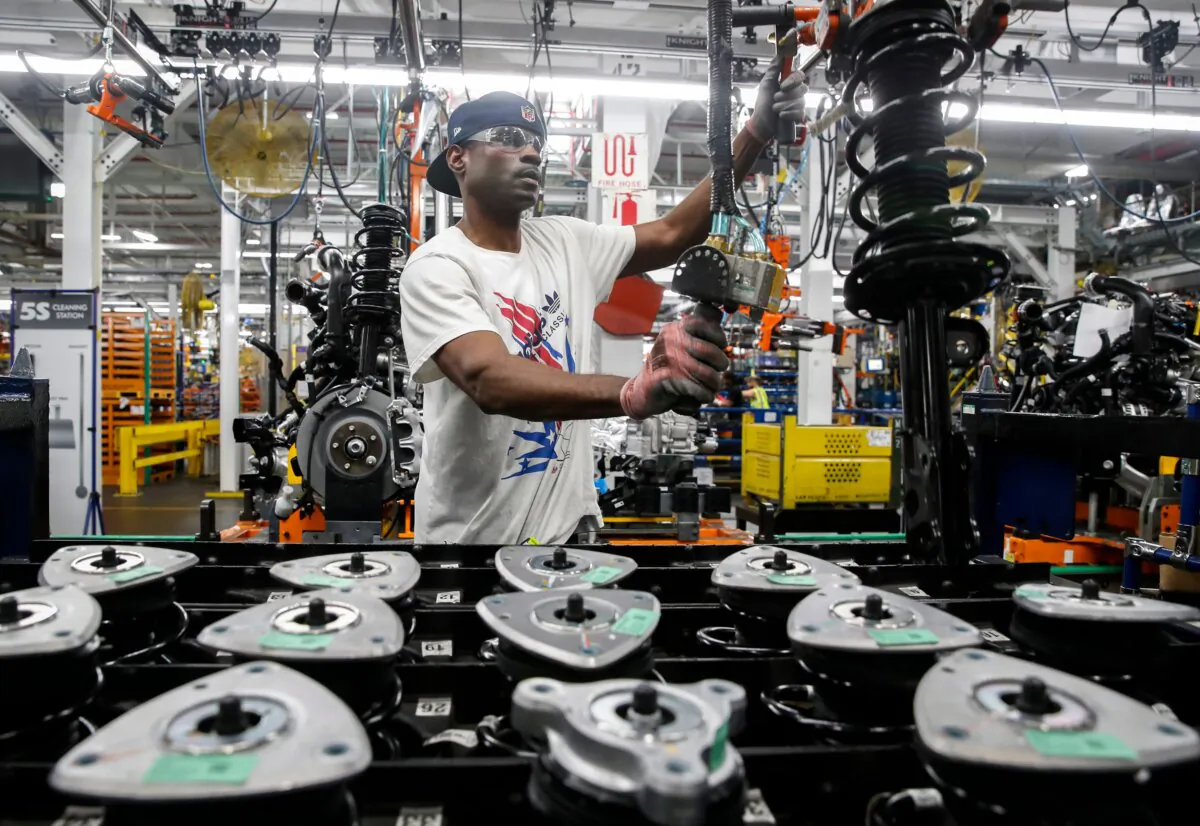

U.S. manufacturing activity expanded for the eighth consecutive month in August, a major trade association said.
According to a Sept. 1 report by the Institute for Supply Management, last month’s manufacturing purchasing managers’ index (PMI)—a monthly survey that reflects the industry’s prevailing economic direction—came in at 54.6, from July’s four-year high of 55.6.
This came in slightly below the market estimate of 55.2.
Despite August’s modest deceleration, the Institute for Supply Management’s reading marked the eighth straight monthly expansion in factory activity, suggesting that manufacturing contributed positively to third-quarter economic growth prospects.
Five out of the six largest manufacturing industries registered growth.
The widely watched Atlanta Federal Reserve GDPNow Model suggests the July–September expansion will be 4.8 percent, fueled by consumer spending, business investment, and changes in private inventories.
“The sentiment among U.S. manufacturers improved in August, continuing the improving trend this year,” RSM economist Tuan Nguyen said in a Sept. 1 note.
“Tariff refunds, rising business and government spending on defense and AI-related products have been the main tailwinds for overall manufacturing demand.”
Still, last month’s easing was driven by a sharp decline in new orders and a dip in output. Input prices were unchanged and elevated but down from their April peak.
The employment sub-index, meanwhile, also eased, indicating upcoming softness in the sector’s job creation.
New data from the Bureau of Labor Statistics—a government agency tracking jobs, inflation, and wages—suggest that job vacancies in durable goods manufacturing accelerated, supporting July’s rebound in openings.
Similarly, S&P Global’s manufacturing PMI remained in expansion territory, and August’s reading was revised higher from the flash estimate earlier this month.
It was a tug-of-war for U.S. companies as they grappled with input-cost inflation and slowing growth in new orders and output. At the same time, higher production, stronger employment, and a better business outlook lifted factory activity.
“Growth in the US manufacturing economy remained welcome, but the August data point to some cracks in the sector’s health,” Usamah Bhatti, economist at S&P Global Market Intelligence, said in a statement attached to the report.
Data Centers
Construction spending unexpectedly fell in July, according to the U.S. Census Bureau.
Residential construction spending tumbled by more than 1 percent, accounting for the entire decrease. Business spending ticked up 0.1 percent, driven almost entirely by office construction, which rose almost 3 percent.
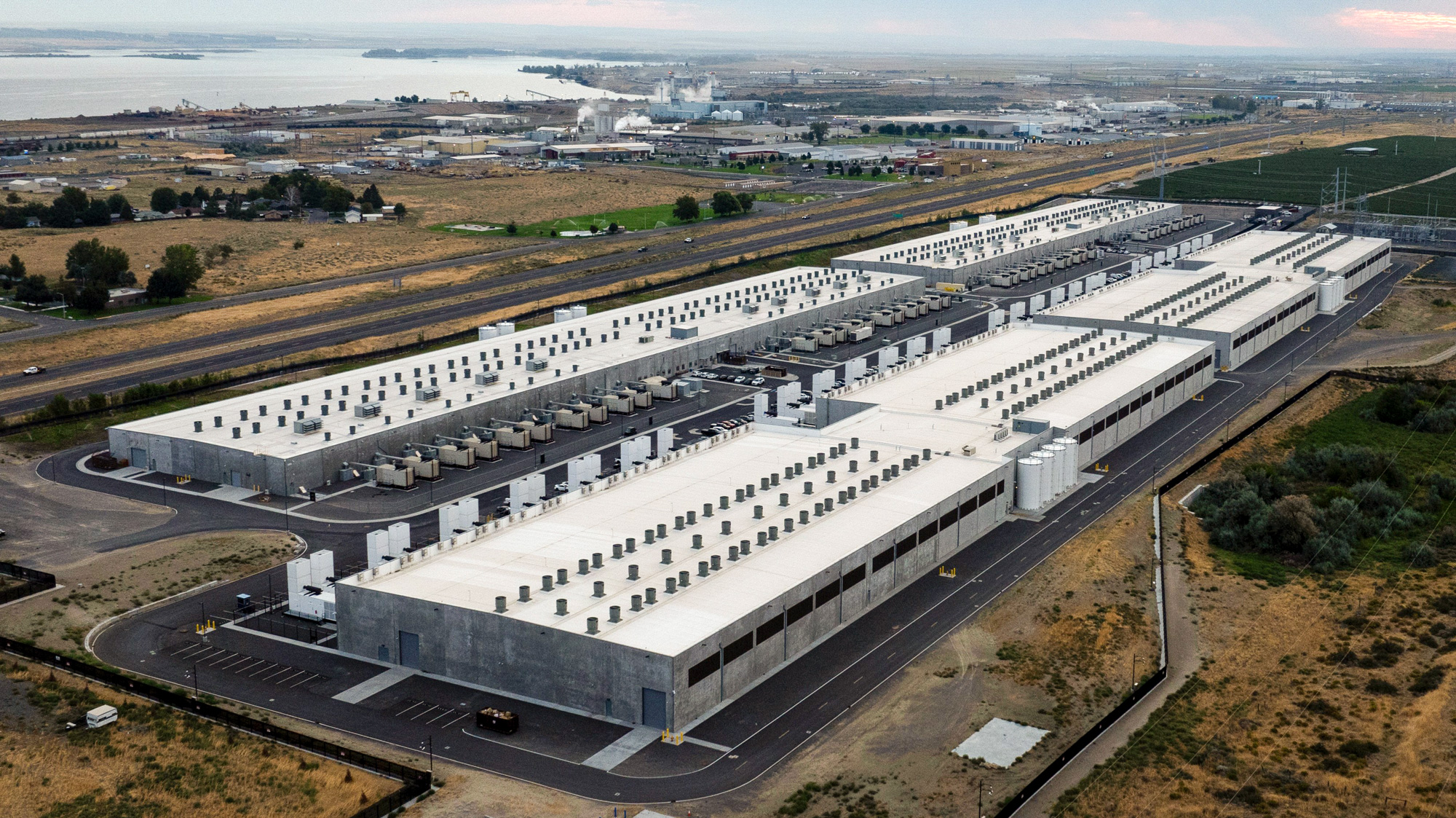 An Amazon Web Services data center in Boardman, Ore., on Aug. 22, 2024. (Jenny Kane/AP Photo)
“Data center construction spending growth is astronomical. For the second consecutive month, annual growth on data center construction is over 50%,” Roach told The Epoch Times in an emailed note.
Investment is largely concentrated in this area, while construction spending on education and healthcare is down annually.
Scores of companies are enjoying the fruits of the artificial intelligence (AI) infrastructure buildout, and industry leaders say the AI-data center boom is bringing manufacturing back to the United States.
“AI is bringing manufacturing back to America and reindustrializing the nation after decades of offshoring, Nvidia CEO Jensen Huang said in an Aug. 30 post on X.
“AI is creating demand that drives investment in our aging power grid and sustainable energy, powered by market forces, not subsidies.”
But many Americans, based on a wide range of polls, are apprehensive about data centers.
A July Fox News poll found that 70 percent of voters oppose the construction of data centers in their communities. A June Reuters-Ipsos survey found that 57 percent of U.S. adults oppose building a data center within 10 miles of their homes.
Much of the opposition stems from concerns surrounding water and electricity usage.
Data centers could be one of the driving issues heading into November’s midterm elections. But President Donald Trump has encouraged the public to accept data centers.
In an Aug. 31 Truth Social post, the president said the only reason communities should not want data centers is if they want to be “backwards and poor.”
“If they want to be successful and rich, with far lower taxes and jobs all over the place, let Data Reign,” Trump said on his social media platform.
“If we kill the Golden Goose, you will only have yourselves to blame.”
 Friends Read Free
Copy
Facebook
Tweet
Friends Read Free
Copy
Facebook
Tweet