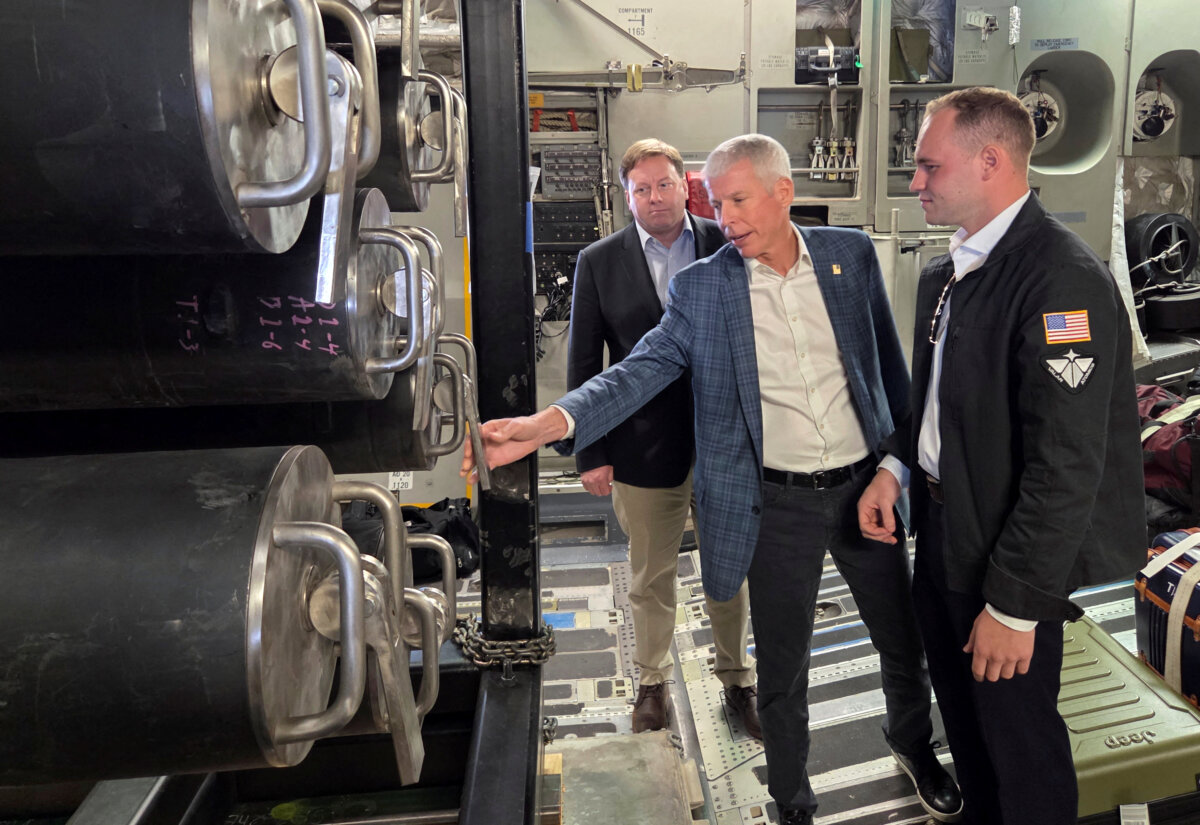

The Pentagon stated that it airlifted a next-generation nuclear reactor from California to Utah on Feb. 15 to boost energy security and reduce the military’s reliance on the civilian power grid.
The reactor was airlifted from March Air Reserve Base in California to Hill Air Force Base in Utah aboard a C-17 Globemaster aircraft. It will later be transported to the Utah San Rafael Energy Lab for testing and evaluation, the Pentagon said in a statement.
The Pentagon stated that the reactor is small and can generate up to 5 megawatts of electricity, sufficient to power about 5,000 homes.
According to the War Department, the reactor will ensure a reliable energy supply for U.S. military bases and protect U.S. forces stationed overseas from potential fuel-supply disruptions by an enemy.
Michael P. Duffey, undersecretary of the War Department for acquisition and sustainment, said the move will advance President Donald Trump’s executive orders seeking to modernize the U.S. nuclear energy landscape.
Duffey said the Pentagon aims to build its own energy infrastructure to support future warfare demands that may include “AI data centers, directed-energy weapons, and space and cyber infrastructure.”
“Powering next-generation warfare will require us to move faster than our adversaries, to build a system that doesn’t just equip our warfighters to fight, but equips them to win at extraordinary speed,” he said.
“Today is a monumental step toward building that system. By supporting the industrial base and its capacity to innovate, we accelerate the delivery of resilient power to where it’s needed.”
The Pentagon partnered with the Energy Department and nuclear energy company Valar Atomics to airlift the reactor.
In a post on X, Valar Atomics founder and CEO Isaiah Taylor said the airlift marked the first time a nuclear reactor has been transported aboard a C-17 aircraft as part of “Operation Windlord,” with two more flights expected at a later date.
Energy Secretary Chris Wright said the department expects to have three small reactors operational by July 4 to achieve the government’s push for “a nuclear energy renaissance.”
“The American nuclear renaissance is to get that ball moving again, fast, carefully, but with private capital, American innovation and determination,” Wright said in the statement.
Last May, Trump signed four executive orders to accelerate commercial nuclear energy development by reducing industry regulations and fast-tracking new reactor and power plant licenses.
One of the orders directed the departments to reinvigorate the nation’s nuclear energy industrial base “by increasing fuel availability and production, securing civil nuclear supply chains, improving the efficiency with which advanced nuclear reactors are licensed, and preparing our workforce to establish America’s energy dominance and accelerate our path towards a more secure and independent energy future.”
 Friends Read Free
Copy
Facebook
Tweet
Friends Read Free
Copy
Facebook
Tweet