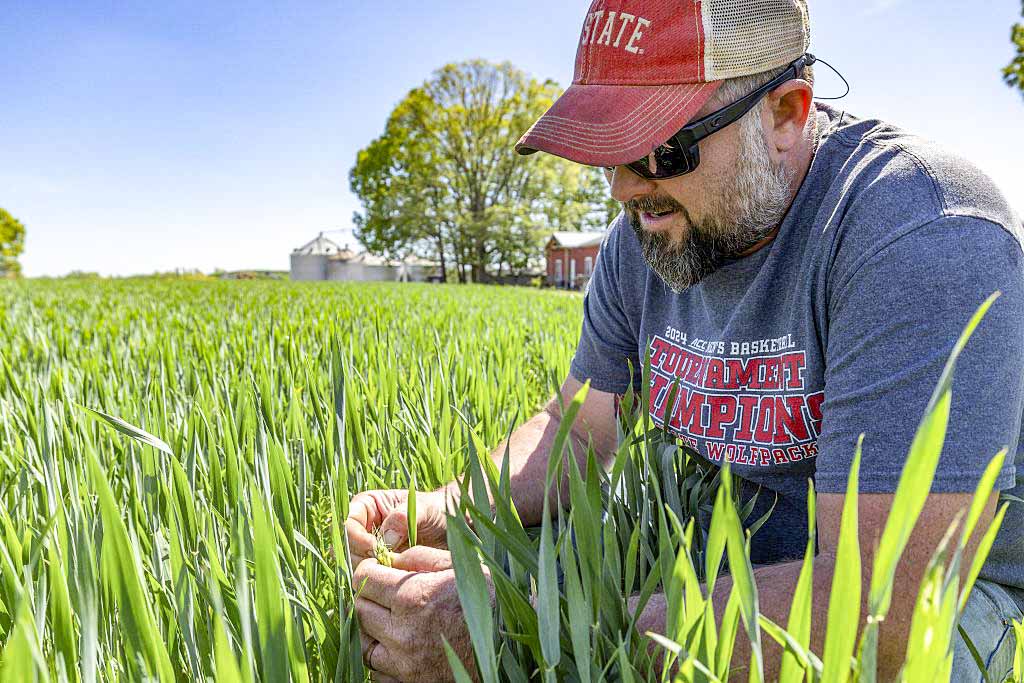

Sandwiches remain a staple for families heading back to work and school, but the classic go-to lunch option may get pricier as wheat trades at its highest level since December 2022.
Front-month wheat futures erased $0.08, or 1.12 percent, to $7.75 per bushel on Aug. 31 on the Chicago Board of Trade.
But the agricultural commodity posted a 19 percent gain in August, bringing its year-to-date increase to 53 percent.
The ongoing Russia-Ukraine war and El Niño worries have been the two catalysts driving wheat’s rally in 2026.
Moscow and Kyiv escalated their attacks this summer, with both sides targeting each other’s grain terminals in the black Sea.
Since Russia is the world’s largest wheat exporter and Ukraine is one of the largest grain-producing countries, the conflict has disrupted international grain supplies.
Ukrainian President Volodymyr Zelenskyy has proposed sitting down with Russian officials to facilitate the resumption of grain exports. Moscow has yet to accept the offer.
Russia’s August grain exports are projected to fall toward 2 million tons, according to Ole Hansen, head of commodity strategy at Saxo Bank.
This would be firmly below the country’s five-year average of approximately 5.7 million tons.
“Ukraine faces a longer-term supply risk amid blocked Black Sea ports and congested Danube routes restricting exports, squeezing farmer cash flow and potentially affecting planting and next year’s production,” Hansen said in an Aug. 26 research note.
Eyes on El Niño
Looking ahead to the rest of the year and into 2027, market watchers and the global agricultural sector will assess the impact of El Niño.
El Niño—a climate pattern that warms the Pacific Ocean and shifts global weather patterns—is expected to be one of the strongest on record.
The Climate Prediction Center predicts a 69 percent chance of this season’s El Niño being larger than previous events.
This could have a severe impact on global food supplies, says Dr. Sarah Kapnick, global head of climate advisory at JPMorgan Chase.
Agricultural output typically declines by 2 to 4 percent during El Niño events.
Meanwhile, the global economy faces tighter fertilizer supply amid the war in Iran, which has shuttered the Strait of Hormuz.
The narrow waterway handles 20 percent of oil and gas supply, but it is also a crucial channel for a broad array of capital and consumer goods, including fertilizer and pharmaceuticals.
“A brewing El Niño could layer on additional seasonal climate and weather stress, shifting rainfall and temperature patterns, and bringing weather extremes,” Kapnick said in a May research report.
“At the same time, fertilizer supply is tighter, increasing the risk of lower output and added food inflation pressure.”
Put together, worldwide food inflation could reach 5 percent next year.
Other market watchers are less concerned, citing new technologies that have made El Niño less disruptive to agricultural output than in previous years.
Seed technology, satellites, and broader irrigation coverage can mitigate the adverse effects of weather patterns.
“Looking at global agri output changes for some key crops during El Niño periods does not scream crop shortages,” agriculture strategists at Dutch bank ING said in a July 20 research note.
“That said, the effects on some perennial crops, such as palm oil and sugar cane, can become more apparent in subsequent years.”
Domestically, conditions are mixed for wheat production, according to Jack Scoville, market analyst at The Price Futures Group.
The winter wheat harvest is near completion, while spring wheat is being harvested and is rated 51 percent good to excellent, he said.
“Conditions are mixed in the U.S. Midwest, but Europe has been too hot. The weather is now featuring scattered showers for parts of the Midwest along with moderate temperatures after a hot week last week. The Great Plains should stay hot and dry,” Scoville said in an Aug. 31 research note.
A recent AccuWeather outlook shared with The Epoch Times warns that the lingering effects of El Niño could persist in key growing areas of the United States for another two to three years.
Extreme drought conditions are already being seen from Texas and into the Dakotas, and the stronger El Niño is, the longer it will take for weather patterns to normalize.
A mini-Dust Bowl is also an increasing concern, says Dr. Joel Myers, founder and executive chair at AccuWeather.
Dust bowls are when severe drought dries out farmland so much that winds blow the soil into dust storms—and this can harm food production.
“If the long-term drought is as bad as it could be, and you are starting off already with severe drought, this raises the real possibility of a ‘mini-Dust Bowl,'” Myers stated.
“Soybeans will be stressed further in the months and years ahead, and yields on some of these crops will be reduced in parts of the country. If that happens, it will have a negative impact on food production, leading to price inflation. Furthermore, water supplies will be harmed, as well.”
Soybean prices have also been steadily rising this year, surging 23 percent to $12.88 per bushel.
Corn is up 22 percent year-to-date to almost $5.38 a bushel.
Reuters contributed to this report.
 Friends Read Free
Copy
Facebook
Tweet
Friends Read Free
Copy
Facebook
Tweet