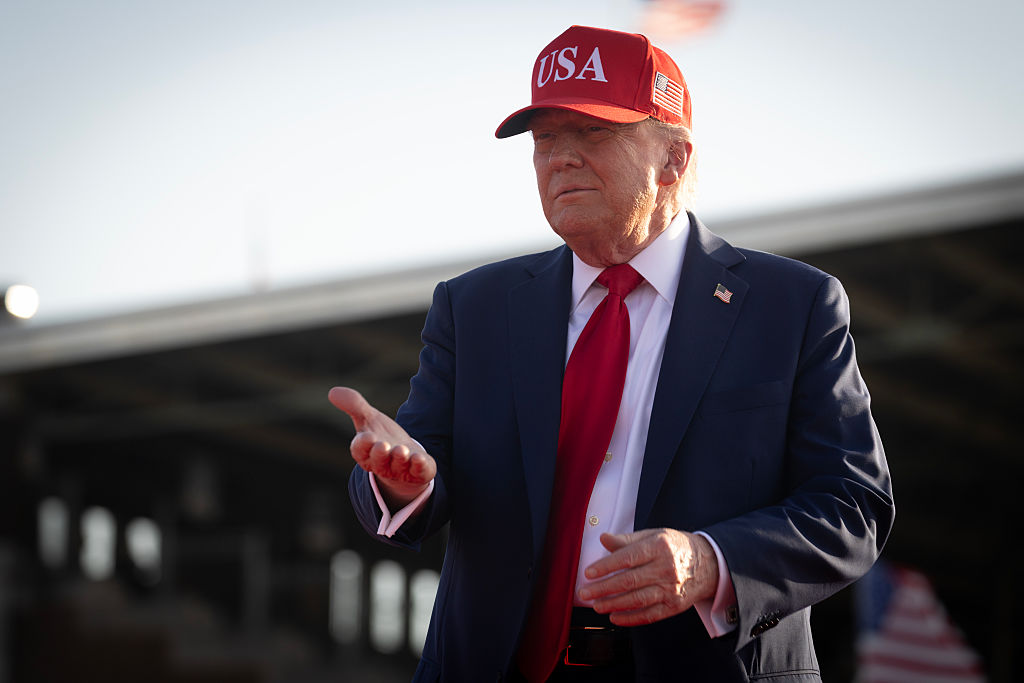

After a months-long standoff on Capitol Hill, President Donald Trump’s One Big Beautiful Bill Act has successfully traversed through Congress and will go into law.
Observers say the reconciliation package will be positive for the financial markets because it will deliver certainty—something Wall Street always craves.
The legislation will be a victory for several sectors but also frustrating to a few industries.
Winners
Manufacturing and industrial firms are poised to be among the primary beneficiaries.
Bonus depreciation would provide a significant tax advantage, as companies are permitted to deduct all or part of the cost of equipment and property in the year that it is put into service. While there was a discrepancy in the length of the bonus depreciation, lawmakers settled on a permanent 100 percent deduction for itemized expenses.
Companies are now permitted to expense 100 percent of their research and development costs permanently.
The Big Beautiful Bill will make it cheaper for semiconductor manufacturers to construct facilities in the United States. The legislation will raise tax credits for semiconductor firms to 35 percent from 25 percent. Various chipmakers, both domestic and international, would be eligible, including Intel, Micron, and Taiwan Semiconductor Manufacturing Co.
Improvements to the tax code and extending provisions of the 2017 Tax Cuts and Jobs Act will prove to be significant for the U.S. steel industry, according to Kevin Dempsey, president and CEO of the American Iron and Steel Institute (AISI).
“AISI welcomes final passage of this critical pro-growth legislation, which will promote capital investment and job creation in the American steel industry and across the manufacturing sector,” Dempsey said in a statement emailed to The Epoch Times.
Small businesses are the other beneficiaries. In addition to the expanded expensing provisions for capital investments, the bill makes the 20 percent income deduction for pass-through entities—where profits and losses flow directly to the owners—permanent. It also makes permanent and boosts the small business estate tax exemption to $15 million for individual filers and $30 million for joint filers.
Certainty is another significant component that the legislation will bring to the small business community.
“By making the Small Business Tax Deduction permanent, Congress has delivered the certainty that Main Street needs, freeing small business owners to continue to create jobs, grow their business and invest in their communities,” Brad Close, president of the National Federation of Independent Business, said in a statement.
Defense contractors also stand to gain from the bill, as the legislation increases defense spending by $150 billion to purchase additional missile defense systems, drones, and other equipment, thereby further modernizing the U.S. military.
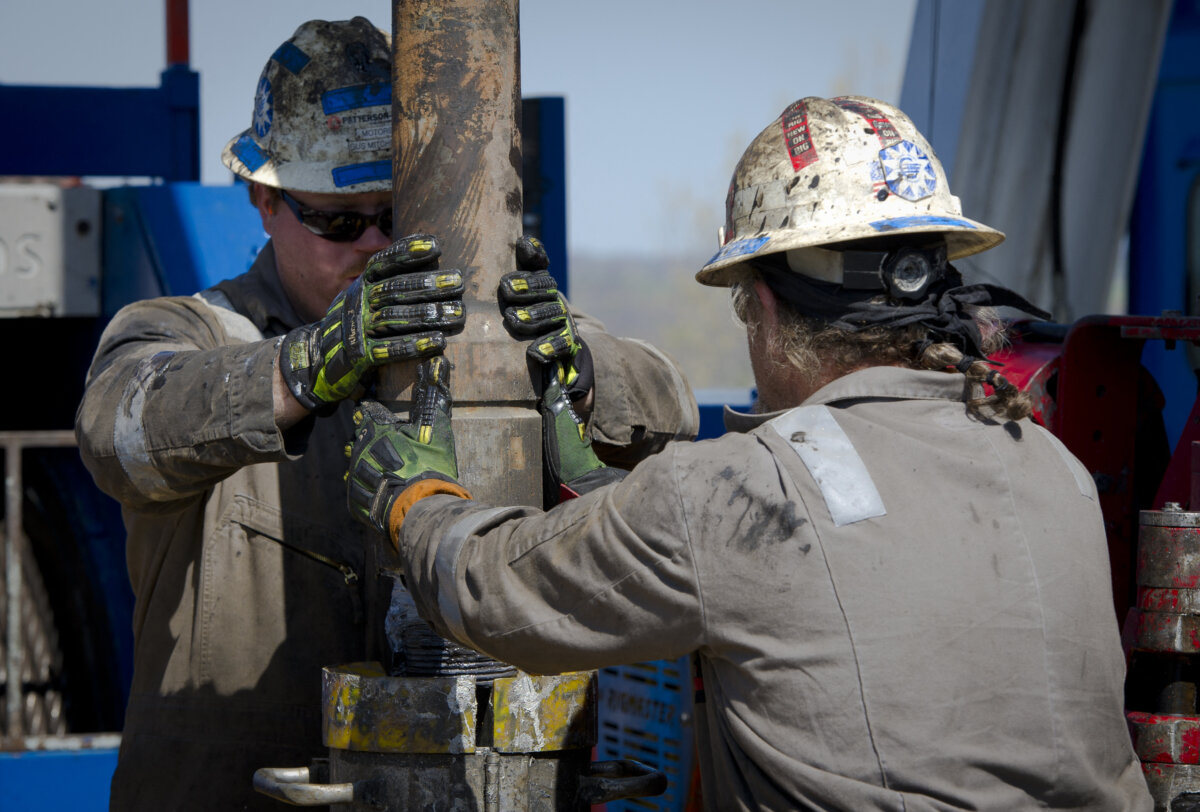
Energy production by businesses in the fossil fuel industry will become easier. As part of the president’s efforts to boost domestic production, producers will experience an accelerated permitting process for crude oil and natural gas projects.
In the coal industry, for example, the advanced manufacturing tax credit will apply to metallurgical coal, which is used in the steelmaking process. However, this will be gradually phased out beginning in 2031.
Other energy firms can also receive beefed-up carbon capture tax credits to extract more oil and gas. Royalty cuts for oil, gas, and coal on federal lands will also potentially increase profits.
“This is the most important energy bill in a generation,” Mike Sommers, president and CEO of the American Petroleum Institute, said in a statement.
The legislation will boost investment opportunities, open lease sales onshore and offshore, and ensure that the United States remains competitive in global energy markets, according to Sommers.
“We applaud President Trump and Congress on this historic legislation that cements American energy leadership for years to come and ushers in a new era of energy development,” he said.
Losers
The one industry that is poised to lose the most is the renewable energy sector.
Solar and wind tax credits will be phased out by 2027, and lawmakers introduced provisions to make eligibility rules stricter. Clean hydro and fuel credits will be cut short, ending in 2027 and 2029, respectively. Solar and wind projects relying on Chinese parts will also face import taxes of 30 percent and 50 percent, respectively.
Experts say the moves could affect thousands of renewable energy projects nationwide.
Ray Long, president and CEO of the American Council on Renewable Energy, called it a “missed opportunity” to enhance U.S. energy security and reduce costs for businesses and families.
“We are in a global race—not just for clean energy leadership, but for dominance in the technologies that will define the future, including artificial intelligence,” Long said in a statement.
“China is aggressively investing in clean energy and digital infrastructure because they understand that energy security and economic competitiveness go hand in hand. This bill should have matched that urgency.”
Automakers focused on manufacturing electric vehicles could also face a substantial hit, as the $7,500 EV tax credit will be eliminated by Sept. 30, five years earlier than Washington initially planned.
The Electrification Coalition, a nonprofit group aiming to promote electricity as the main transportation fuel, said killing EV tax credits is “a major blow to U.S. manufacturing.”
“As EVs secure a growing share of the global automotive market, it is obvious that the future of transportation is electric,” the group said in a statement.
While Tesla Motors and other EV makers will likely be affected by its elimination, CEO Elon Musk, also former leader of the Department of Government Efficiency, an advisory body created by Trump to identify wasteful federal spending, has welcomed the tax credit’s removal. Musk has criticized the bill for its potential fiscal impact.
“Keep the EV/solar incentives cuts in the bill, also cut all the crazy spending increases in the Big Ugly Bill so that America doesn’t go bankrupt!” Musk said in a June 5 post on the social media platform X.
 Friends Read Free
Copy
Facebook
Tweet
Friends Read Free
Copy
Facebook
Tweet