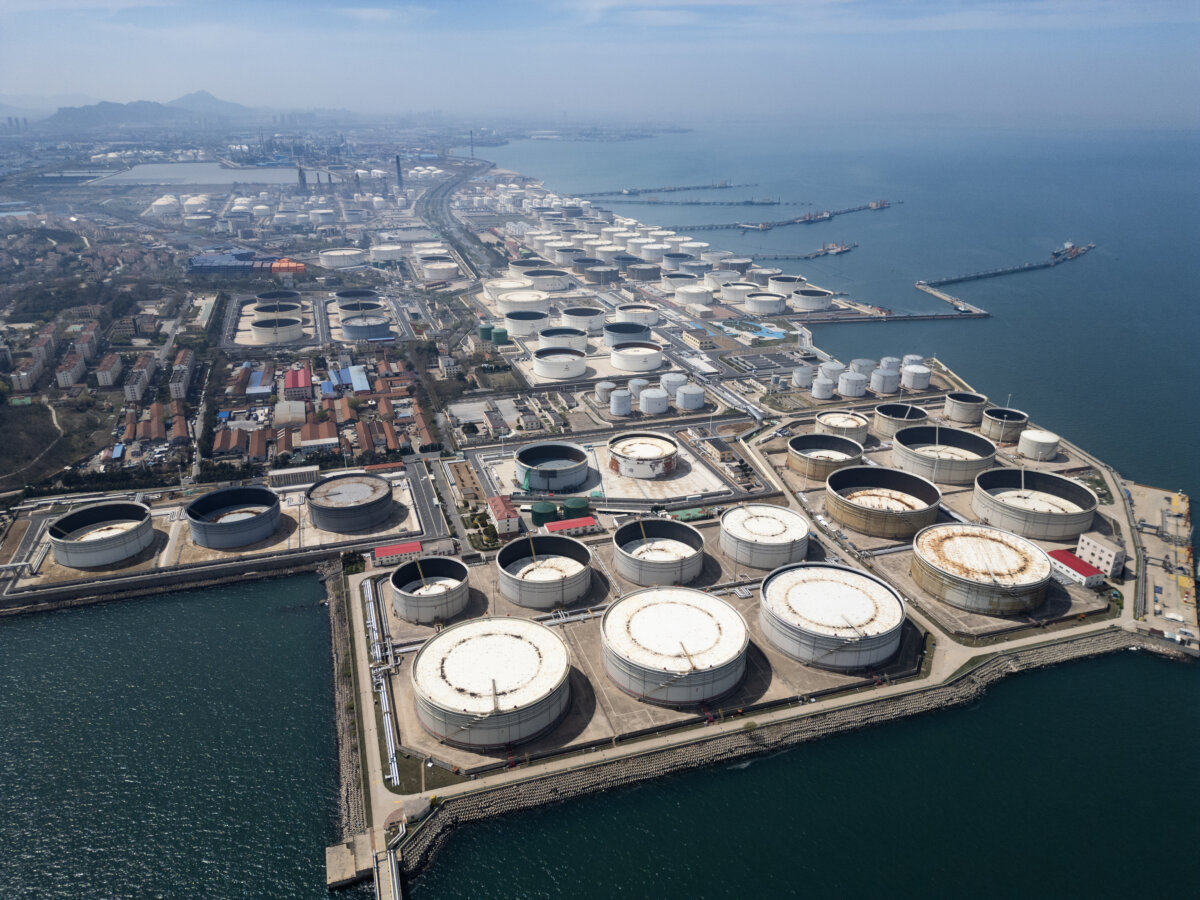

China’s crude oil imports fell to an eight-year low in May, as refineries in the world’s largest oil-buying nation pulled back sharply during the war that began when the United States and Israel launched air strikes against Iran on Feb. 28.
The country brought in 33.08 million metric tons of crude last month—about 7.79 million barrels a day, and 29 percent less than a year earlier—according to figures from China’s General Administration of Customs. That was down from roughly 9.3 million barrels a day in April and about 11 million before the war, and the lowest monthly level since 2018.
The drop came amid the closure of the Strait of Hormuz, now more than three months old, as Beijing drew on oil it had stockpiled over years to cushion the blow.
The strait, a narrow channel between Iran and Oman, normally carries about a quarter of the world’s seaborne oil trade. Iran shut it to most traffic after the strikes began. In its latest monthly oil market report, the International Energy Agency (IEA) said output from Gulf producers hit by the closure was running 14.4 million barrels a day below prewar levels, and that global oil supply had fallen by 12.8 million barrels a day since February.
The agency said the world’s oil stocks were being drawn down at the fastest pace on record—by 129 million barrels in March and another 117 million in April.
China is unusually exposed to that chokepoint. As the world’s largest crude importer, it relies on the Strait of Hormuz for about 40 percent to 50 percent of its seaborne oil, Rush Doshi, director of the China Strategy Initiative at the Council on Foreign Relations, told CNBC.
Analysts with Morgan Stanley has put the same range on the share of oil demand that passes through the strait for big Asian economies such as China and India.
To absorb the shock, Beijing has leaned on stockpiles it spent years building. The U.S. Energy Information Administration (EIA) estimates China held about 1.4 billion barrels of crude in strategic and commercial storage at the end of 2025—more than three times the size of the U.S. Strategic Petroleum Reserve.
With less crude coming in, Chinese refiners have cut back on how much they process, the IEA said, and Beijing has leaned on those stored barrels to make up the difference.
The pullback has rippled through global markets. The IEA has said that lower crude imports—led by China—along with draws on oil stocks, stronger U.S. exports, and shifting trade routes have softened the blow from the lost Gulf supply.
Brent crude, the global benchmark, has stayed below $100 a barrel, far short of the spikes many analysts had predicted when the war began.
The relief may be temporary. Morgan Stanley analysts argued that the oil market is tighter than it looks, and that the cushions holding prices down—ample inventories and rising U.S. exports—will weaken the longer the strait stays shut.
 Friends Read Free
Copy
Facebook
Tweet
Friends Read Free
Copy
Facebook
Tweet