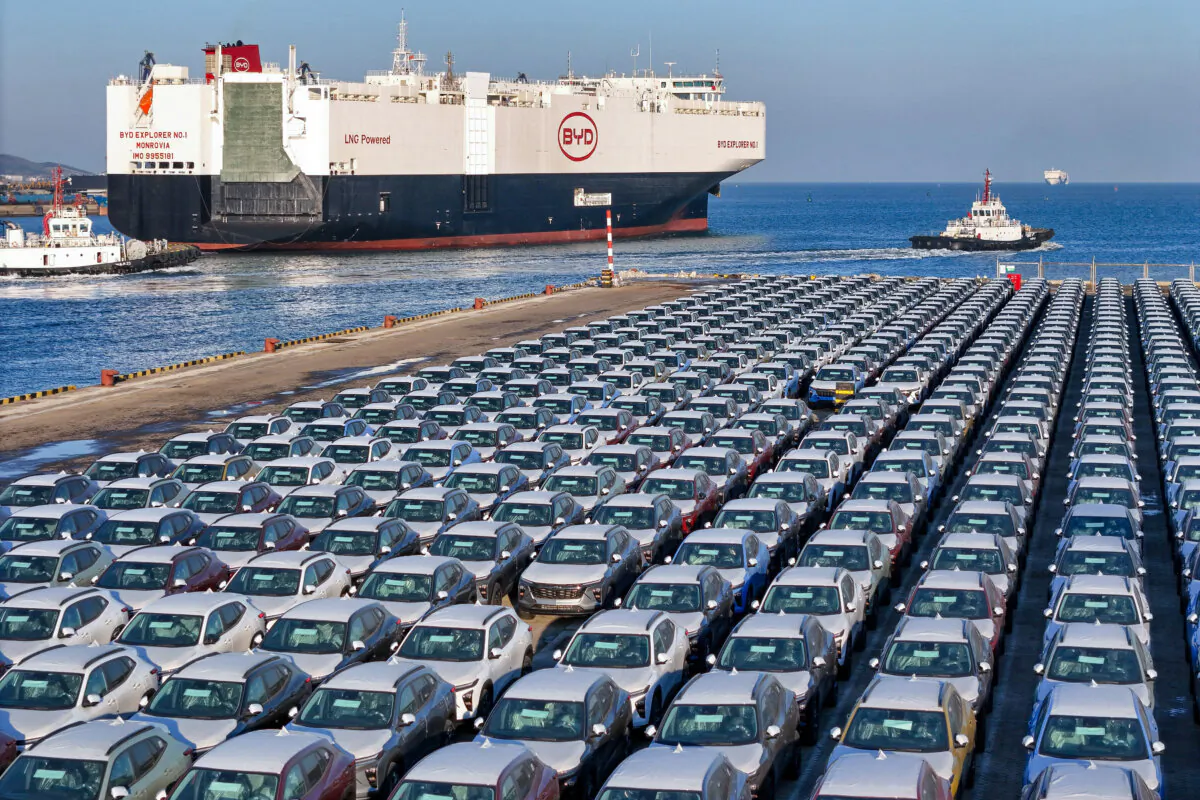

China’s electric vehicle exports rose 40 percent year-on-year in April to 278,081 units, according to data compiled by Bloomberg from China Customs.
Brazil was the largest destination, receiving 38,144 units—a 221 percent increase from April 2025—as Chinese automakers continue expanding their presence in overseas markets.
In Brazil, where the government is seeking to encourage local EV manufacturing and investment, authorities are gradually restoring higher tariffs. Duties on fully electric vehicles are scheduled to reach 35 percent by mid-2026.
Several Chinese automakers have responded by expanding production plans inside Brazil. BYD has said it aims to source 50 percent of components locally at its Bahia factory by the end of 2026, part of a broader push by Chinese manufacturers to establish production bases in key export markets.
China has become the world’s largest producer of electric vehicles and batteries, accounting for nearly 75 percent of EVs produced and more than 80 percent of battery cell production last year, according to the International Energy Agency.
A 2025 Reuters investigation found that some Chinese automakers, with support from local governments, have registered new vehicles as “used” before exporting them. This practice of exporting zero-mileage used cars has been used to clear excess inventory amid overcapacity in China’s auto sector and bypass trade restrictions. The practice was most common in exports to Russia, Central Asia, and the Middle East.
Years of Chinese government subsidies and industrial policies have enabled rapid EV industry growth but also created severe overcapacity. Chinese automakers have factory capacity to produce roughly twice the number of vehicles sold domestically. This mismatch between production and demand has led to intense price competition and pressure to export surplus stock.
This overcapacity-driven export push can harm industries in importing countries by flooding markets with low-priced vehicles, making it difficult for local manufacturers to compete, threatening jobs, and slowing the growth of domestic EV production.
In response to China’s export push, the European Union has imposed additional tariffs of up to 35.3 percent on Chinese-made EVs after an anti-subsidy investigation found unfair state support.
A similar pattern occurred in China’s steel sector, where heavy state support, rapid capacity expansion, and weak domestic demand led in prior years to large-scale exports and widespread anti-dumping measures by trading partners.
Brazil has emerged as one of the most important destinations for Chinese vehicle exports. Trade data show that the value of Chinese vehicle shipments to Brazil nearly tripled in the first quarter of 2026 from a year earlier, reaching approximately $2.16 billion, according to Brazilian newspaper Valor International.
Chinese industry representatives, including the China Chamber of Commerce for Import and Export of Machinery and Electronic Products, reject claims that export growth is primarily driven by subsidies or overcapacity. They argue that lower costs stem from intense domestic competition, advances in battery technology, and highly integrated supply chains.
Reuters contributed to this report.
 Friends Read Free
Copy
Facebook
Tweet
Friends Read Free
Copy
Facebook
Tweet