
As the Games cast an international spotlight on China, the country’s largest social media platform Weibo scrubbed tens of thousands of posts “related to the Beijing Winter Olympic,” in an effort to stem an onslaught of online abuse directed at underperforming Chinese athletes.
Weibo, China’s equivalent of Twitter, deleted over 41,000 posts and suspended or permanently blocked 850 accounts on Feb. 9, citing “relevant guidelines and policies.”
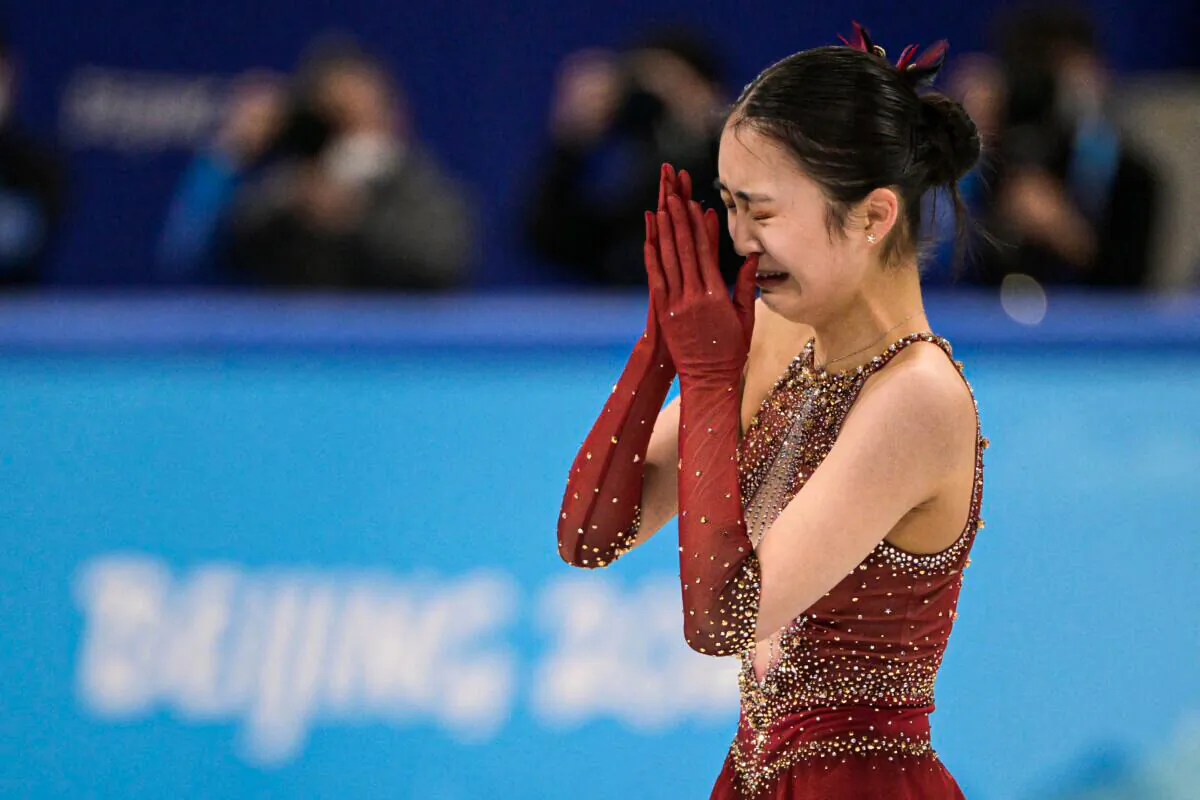
Weibo’s move comes after Chinese figure skater Zhu Yi, who fell several times on her Olympic debut, became the target of a torrent of criticism on the Chinese internet.
Born in Los Angeles, Zhu gave up her U.S. citizenship to skate for China in 2018, one of the country’s many naturalized athletes of these Olympics. She also changed her name from Beverly Zhu to Zhu Yi.
[morearticles mode=”false”]4265514[/morearticles]
However, the 19-year-old athlete fell on the ice and finished last in the women’s short program team event on Feb. 6. During her second performance on Feb. 7, she fell again, and the Chinese team fell from third to fifth place.
She was savaged online for her mistakes, and some users told her to “go back to America.” The hashtag #ZhuYiHasFallen was viewed more than 230 million times within hours before it was banned.
Chinese netizens questioned why the foreign-born Zhu was picked at the expense of another home-born athlete. Some posts mocked also her for not being able to speak fluent Chinese.
The overwhelming criticism was quickly reported by Western media. Some observers suggested that athletes representing China face enormous pressure as the communist regime views the medal tally as a showcase of its strength.

The vitriol directed at Zhu sharply contrasted with the universal praise received by freestyle skier Eileen Gu, another U.S.-born athlete representing China. Fans rushing to congratulate Gu on her gold medal in the women’s freestyle big air event on Feb. 8 temporarily overloaded Weibo.
Gu won more praise from state-backed media after she said in an Instagram post that over 90 percent of comments on Chinese social media platforms are “positive and uplifting.”
[morearticles mode=”false”]4157726[/morearticles]
On Feb. 8, Weibo removed over 30,000 posts and took action against more than 1,000 accounts. Weibo, in a statement posted on its official accounts, said some users were “causing trouble, attacking athletes with insulting language and spreading false information.”
Douyin, the Chinese version of short video app TikTok, said on Wednesday it had intercepted or scrubbed 6,780 related videos or comments, and banned 331 user accounts. Other platforms such as social networking forum Douban and video sharing site Bilibili also put out similar statements on their efforts.
The Winter Olympic Games runs from Feb. 4 to Feb. 20.
Reuters contributed to this report.
 Friends Read Free
Copy
Facebook
Tweet
Friends Read Free
Copy
Facebook
Tweet