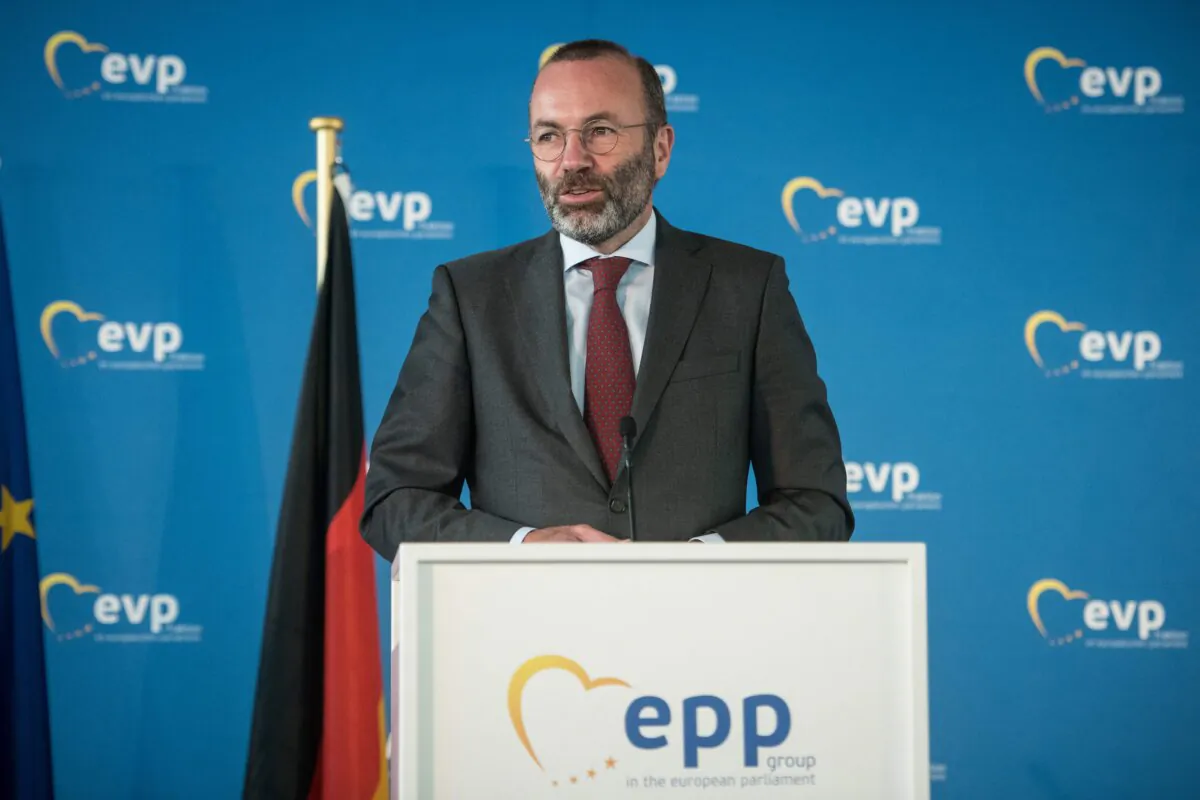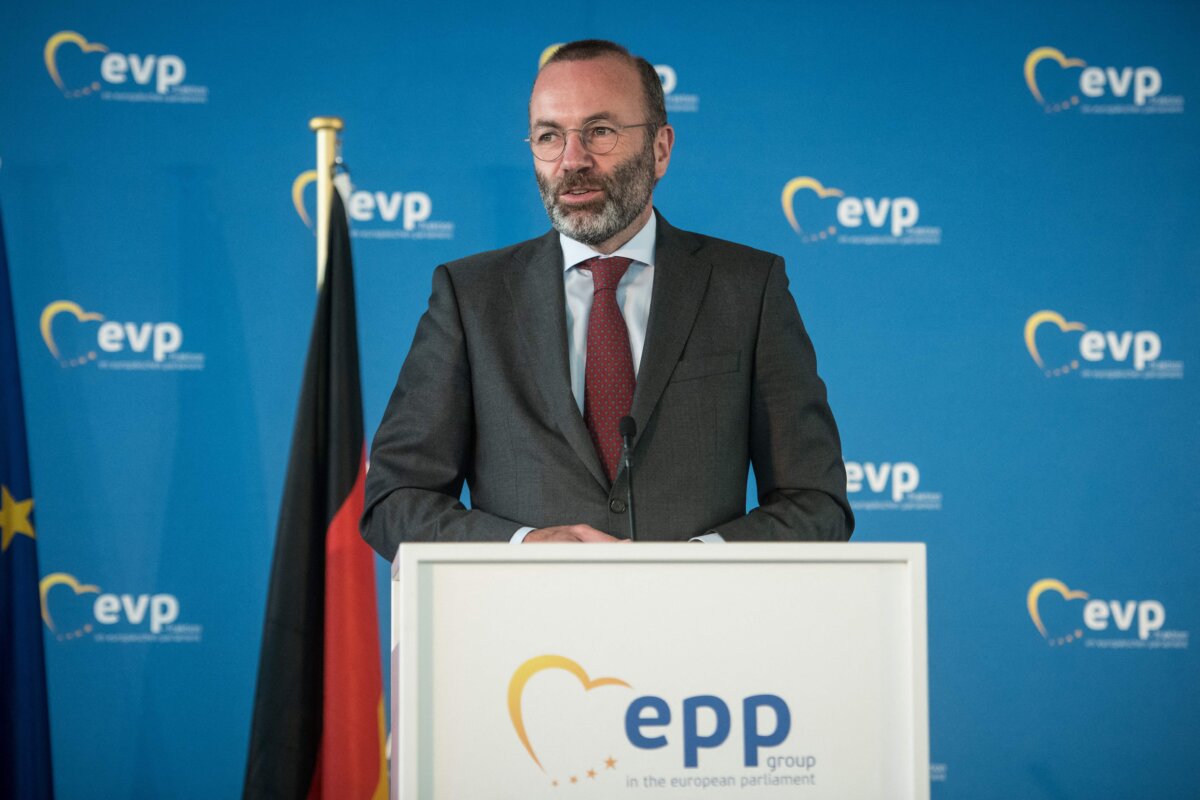

Manfred Weber, leader of the European Parliament’s largest political group, called for the European Union to take a tougher trade stance toward China, warning that Beijing’s industrial overcapacity threatens Europe’s manufacturing base.
“The time of naivety is over,” Weber told German newspaper Bild am Sonntag on June 7. “We must defend European interests more clearly, more firmly, and more consistently.”
Weber is chairman of the Group of the European People’s Party, the center-right bloc that is the largest political group in the European Parliament. He is also a vice chairman of Germany’s Christian Social Union.
His remarks add pressure from Europe’s center-right before a June 18–19 meeting of EU leaders in Brussels, where the European Council’s provisional agenda includes global economic challenges.
Deficit Nears $1.3 Billion a Day
Official EU data show the imbalance Weber cited.
The EU’s goods deficit with China reached 98 billion euros (about $114 billion) in the first quarter of 2026, the highest since the 107 billion euro (about $125 billion) deficit recorded in the third quarter of 2022, according to Eurostat.
This year’s first-quarter deficit works out to roughly 1.1 billion euros (about $1.3 billion) per day.
Imports from China rose to 145 billion euros (about $169 billion) in the first quarter, up from 121 billion euros (about $141 billion) in the first quarter of 2024. Over the same period, the EU goods deficit with China widened from 65 billion euros (about $76 billion) to 98 billion euros (about $114 billion), Eurostat said.
In the first quarter of 2026, imports from China rose 3.4 percent from the previous quarter, while EU exports to China fell 4.8 percent.
Weber told Bild am Sonntag that the imbalance threatens Europe’s industrial base and high-quality jobs.
“Either we defend ourselves or China will flatten parts of our industry,” he said. “The EU must now use its trade-policy instruments decisively and without hesitation.”
For 2025, EU exports to China totaled 199.5 billion euros (about $232 billion), while imports from China reached 559.5 billion euros (about $651 billion), leaving a goods deficit of 359.9 billion euros (about $419 billion), according to the European Commission’s China trade profile.
Market Access as Leverage
Weber cited EU tariffs on Chinese electric vehicles as a model for further action, noting they were imposed despite criticism from Germany.
“Today we see that we need even more of these protective measures,” he told Bild am Sonntag.
The European Commission imposed definitive countervailing duties on imports of battery-electric vehicles from China in 2024 following an anti-subsidy investigation. The Commission said the duties were aimed at what it described as unfair subsidization of Chinese-made electric vehicles.
Weber said Brussels should use China’s access to the EU single market as leverage.
“China needs us,” he told Bild am Sonntag. Access to Europe’s internal market is of enormous importance to China, he said. “We must use that leverage to enforce fair competition.”
Trade policy is handled by the European Commission and EU member states, not by Weber’s parliamentary group.
The European Commission says China is the EU’s second-largest goods trading partner and the EU’s largest source of goods imports. It also says China’s industrial policies have produced overcapacity, export-control risks, and supply-chain vulnerabilities for other World Trade Organization members.
Aid Contracts, Compliance Pressure
Weber also criticized cases in which EU money supports Chinese companies outside Europe.
Bild am Sonntag cited the purchase of 380 natural-gas buses for Senegal using EU development aid funds, saying a Chinese manufacturer beat the Swedish truckmaker Scania with a lower bid.
“European development aid from taxpayers’ money must not benefit Chinese companies,” Weber told the newspaper.
He said any company that wants to sell in Europe must comply with European rules.
The dispute has also moved into corporate investigations. The European Commission opened an in-depth investigation into Nuctech, a Chinese security equipment company, in December, citing preliminary concerns that the company may have received foreign subsidies that could distort competition in the EU market for threat-detection systems.
Beijing later issued a prohibition order tied to the Nuctech investigation after China’s State Council adopted regulations that give Chinese authorities tools to block or punish cooperation with foreign measures Beijing rejects.
The order could put companies operating in China in a compliance bind if EU investigators seek information that Beijing says cannot be provided.
EU leaders are scheduled to meet in Brussels on June 18 and 19.
 Friends Read Free
Copy
Facebook
Tweet
Friends Read Free
Copy
Facebook
Tweet