

A bipartisan group of senators has introduced a bill that would expand cooperation between the United States and Taiwan in drone system development and production, as policymakers consider ways to strengthen American national security and support the self-governing island’s efforts to boost its defenses.
The Blue Skies for Taiwan Act of 2026, introduced by Sens. Jeff Merkley (D-Ore.), Ted Cruz (R-Texas), John Curtis (R-Utah), and Andy Kim (D-N.J.), aims to build an unmanned aerial systems (UAS) supply chain free from the control of the Chinese Communist Party (CCP).
Lawmakers said in the bill that the majority of commercially available drone products contain components sourced from China, which they said pose “significant cybersecurity, supply chain, and operational risks” to the United States and its allies such as Taiwan, according to the text of the bill, which was released on April 1.
Meanwhile, the CCP has routinely deployed drones to pressure Taiwan, as part of its campaign to undermine the democratic island’s security, according to the seven-page bill.
“The Chinese Communist Party expends countless resources to erode the status of our Taiwanese allies and isolate them globally,” Cruz said in an April 1 statement.
The Chinese regime views Taiwan as part of its territory and has threatened to take the island by force. The United States, like many other nations, does not have formal diplomatic ties with Taiwan, and instead maintains a stance of strategic ambiguity. However, it is bound by law, specifically the Taiwan Relations Act of 1979, to provide Taiwan with tools to defend itself.
Merkley, a senior member of the Senate Foreign Relations Committee, said Washington’s long-standing partnership with Taiwan requires it to use “all the tools” at its disposal to strengthen Taiwan’s security and “counter China’s coercive tactics.”
“As Beijing escalates its pressure campaign, American support for Taiwan will remain ironclad,” he said.
The bill would give the State Department and Pentagon a period of 180 days from enactment to form a working group tasked with assessing Taiwan’s capacity in drone manufacturing, including research and development, testing, and production. The working group would identify opportunities and barriers to incorporating Taiwanese UAS and other drone components into the Pentagon’s Blue UAS program and associated lists, which guide federal agencies toward approved drones and parts that meet cybersecurity and supply chain requirements.
Under the bill’s plan, a “cooperative framework” would be established to promote a China-free drone supply chain among Indo-Pacific allies and international partners.
It would also direct the secretary of state and secretary of war to develop a fast-track certification process for Taiwanese drone suppliers.
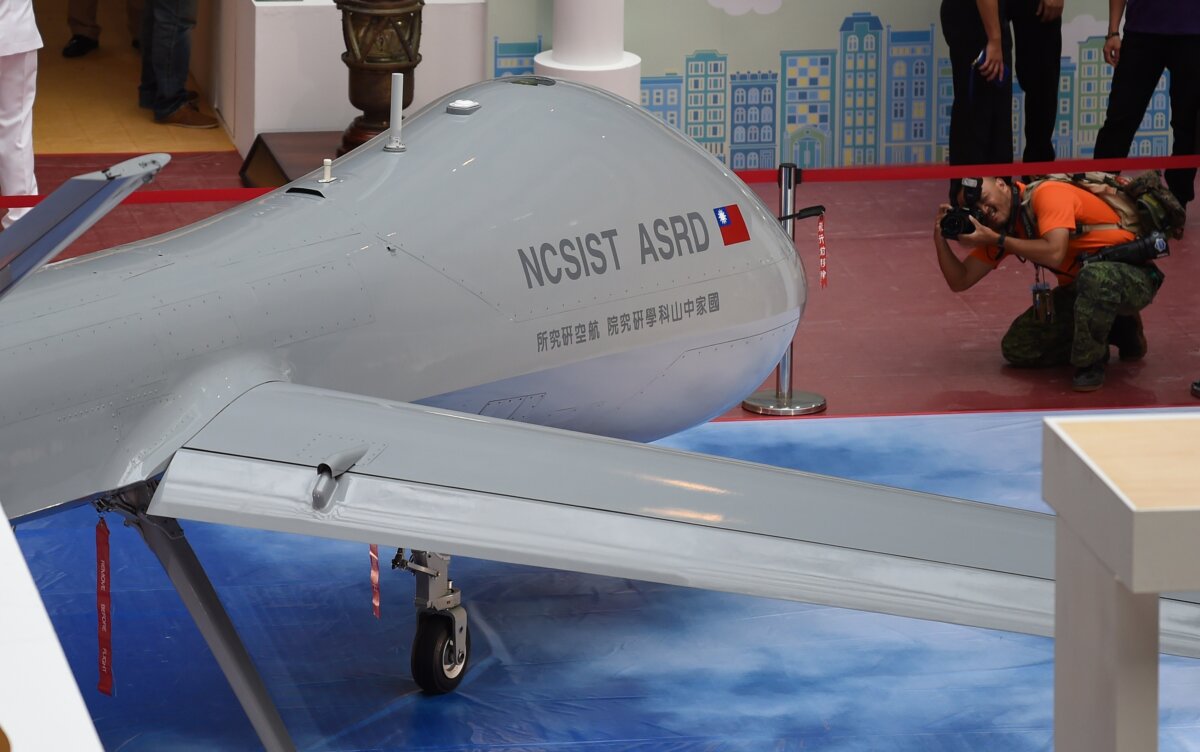
Kim, in the statement, highlighted the vital role of drones in global defense, saying that the United States and its partners are “unprepared to produce them at the necessary scale.” He said that supporting Taiwan’s drone manufacturing capability aims to close that gap and ensure stability for the United States and its allies.
The legislative proposal comes as Taiwan accelerates a program to improve domestic drone-making capability and build what the government calls “non-red supply chains”—free from drone components sourced from communist China—as part of its efforts to bolster defense against threats from the CCP.
Curtis, who visited Taiwan along with other U.S. senators last week, called strengthening the U.S.–Taiwan partnership critical for American security and the stability of the Indo-Pacific.
“Our bipartisan legislation expands cooperation between the U.S. and Taiwan to build secure, resilient drone systems—cutting China out of the supply chain and reinforcing deterrence in the region,” he said.
 Friends Read Free
Copy
Facebook
Tweet
Friends Read Free
Copy
Facebook
Tweet