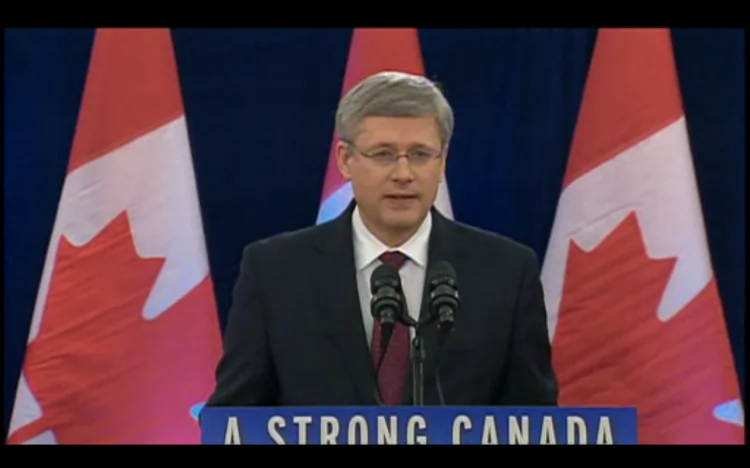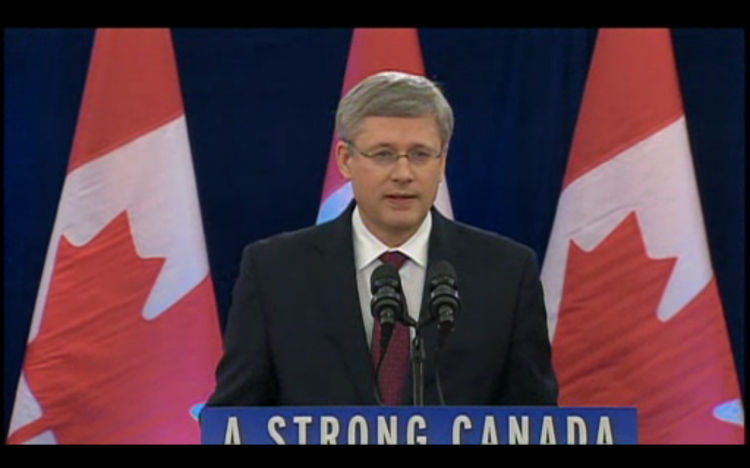

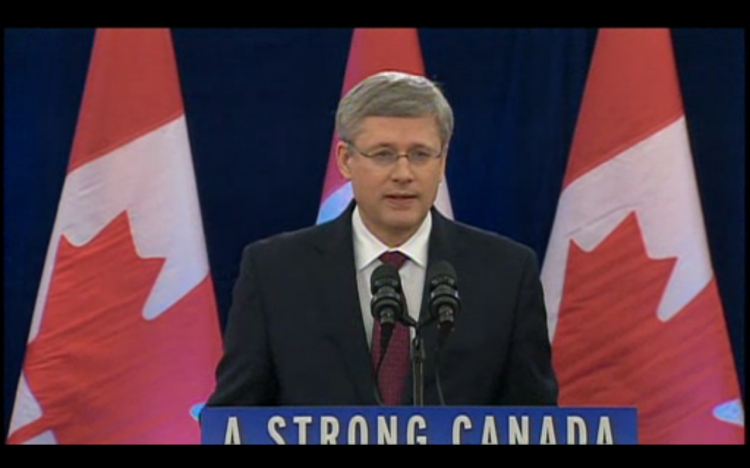
Prime Minister Stephen Harper approved Chinese state-owned CNOOC’s takeover of Calgary-based Nexen Inc. Friday afternoon but said he was increasingly concerned about the presence of state-owned enterprises (SOEs) in Canada’s oil sands.
The approval came in tandem with new guidelines for foreign takeover of Canadian companies by SOEs.
The NDP, however, said those guidelines suffer the same ambiguity as the net benefit test already used for foreign takeovers.
NDP natural resources critic Peter Julian described Harper’s tough talk on SOEs taking over Canada’s oil sands as sugarcoating for an unpopular decision to approve the CNOOC takeover.
But Harper said the decision to allow CNOOC’s takeover of Nexen and Malaysia’s Petronas to takeover Progress Energy Resources were the end of a trend rather than a beginning, noting he won’t allow Canada’s oil sands to be nationalized by foreign governments.
Harper said the oil sands need special consideration because they are dominated by 15 companies and could quickly be transformed by foreign investment by SOEs.
The government has grown increasingly uncomfortable as large SOEs directly controlled by foreign governments made big plays for controlling stakes in Canadian companies, he said.
“That tendency, if it continues, would raise enormous concerns, which is why we will make sure we do not find ourselves in that position.”
The concern was that these large-scale transactions could rapidly transform the industry from one that is free market to one that is effectively under the control of a foreign government.
“That is obviously not something that we think would be desirable,” said the PM.
“The oil sands have to be developed in the interest of Canadians and in a way that preserves the essential market-based nature of that business.”
From now on, Harper said only under “exceptional circumstances” would SOEs be permitted to gain controlling interests of oil sands companies and the government will watch to make sure other industries also don’t fall under the control of a foreign government.
But despite any limitations on SOE takeovers, Harper said investment will continue to flow into the country because Canada is a “boy scout” when it comes to rule of law and has a stable economy that is attractive to investors.
Harper said he expected the Chinese regime would understand that Canada is protecting its interests, something all countries must do.
By laying out the governments dim view on SOE acquisitions in the oil sands, the PM said he was signalling the market so that future decisions would not come as a surprise.
But NDP natural resources critic Peter Julian says Harper’s tough words is little more than an effort to sugarcoat an unpopular decision.
“The reality is, not much has changed in the process itself.”
The review still ignores reciprocity, does not have a clear definition of net benefit, and leaves the process relatively untouched, he said.
“There is a sense of improvisation here,” added Hélène LeBlanc, the NDP’s industry critic.
She said it looks as if the government made its changes only after approving the deal.
“It’s an afterthought. That should have been a transparent process.”
The Epoch Times publishes in 35 countries and in 19 languages. Subscribe to our e-newsletter.
 Friends Read Free
Copy
Facebook
Tweet
Friends Read Free
Copy
Facebook
Tweet