
Commentary
In periods of crisis for this country, when class division and partisanship become palpable and seemingly destructive, there emerges a temptation among an exasperated intellectual class. They are sometimes drawn to a solution that seems viable in theory but does not work out in practice.
That is, they propose some form of mandatory national service. This is happening now. I will decline to name names—with the hope that this article changes minds—and instead try to make the best case for and against the idea.
These voices look at the structure of national and military service now. They see an overrepresentation of minorities relative to the population and many serving out of economic need because it seems like the best option. Another group heavily overrepresented are military families themselves such that it can seem like a professional guild rather than a slice of the civilian population.
These people imagine that a broad draft of the general population would change the character of the armed forces and give everyone a stake in war, perhaps reducing its likelihood.
Another standout factor today is broad revulsion at how it appears that the young are wasting these precious years in dead-end jobs and college that grants a years-long vacation in which people are schooled in anti-American ideology and taught to despise this country and its history. It would be so much better, they say, if they were given rigorous experience in real-world physical training and mental discipline so that young people can learn that life is not always about themselves. It would build character, we are told.
Further, such advocates point out how in countries like Switzerland, Germany, and Israel the mandate for some form of national and military service helps to create a social solidarity that serves the nation by instilling a service ethic and a robust civic culture. If everyone served, people would have a common experience to bring people together in a way in which we are all so deeply separated now.
That is the case in broad outline. It applies to a peacetime draft. That is something this country has never had. Not even once. We’ve had wartime drafts but not peacetime civilian mobilization by force. The exception of 1940 is not really that because it was pretty obvious that war was coming, which was the entire point. More precisely, the United States has never had a prolonged period of peacetime conscription apart from mere registration. Why might that be? Because conscription for purely nationalist purposes is inconsistent with the idea of individual freedom, the primacy of which this country has enshrined in law.
Still, the romance of the idea keeps it alive. My old friend William F. Buckley, Jr., came around to the idea and wrote about it in his book “Gratitude: Reflections on What We Owe to Our Country.” The year was 1990. The Cold War was clearly over and it has been a rallying point of unity over which he had presided as a leading interpreter. With that ending, he worried there would be nothing remaining to bring the country together around a common theme.
There is another case that fascinates me. It is of my hero Ludwig von Mises. In 1940, living in Geneva in exile from Vienna due to the Nazi military takeover, and preparing for migration to the United States, he wrote a large book on economics that included a critique of totalitarianism. He named the Great War as the beginning of the modern Total State of which conscription was a necessary part. It treats the whole of society as soldiers in national wars, a notion that is inherently despotic and fatal to liberty.
When in 1949, that same book was reprinted, the section on conscription was dropped. This was published just after the Cold War had begun. There was no particular reason to think he had changed his mind and we have no indication as to why he dropped the section. However, when the second edition came out in 1962, he had reversed his position. When a nation faces a threat as existential to freedom as communism, it is wholly justified to draft people into military service. It could mean the difference between freedom and permanent tyranny.
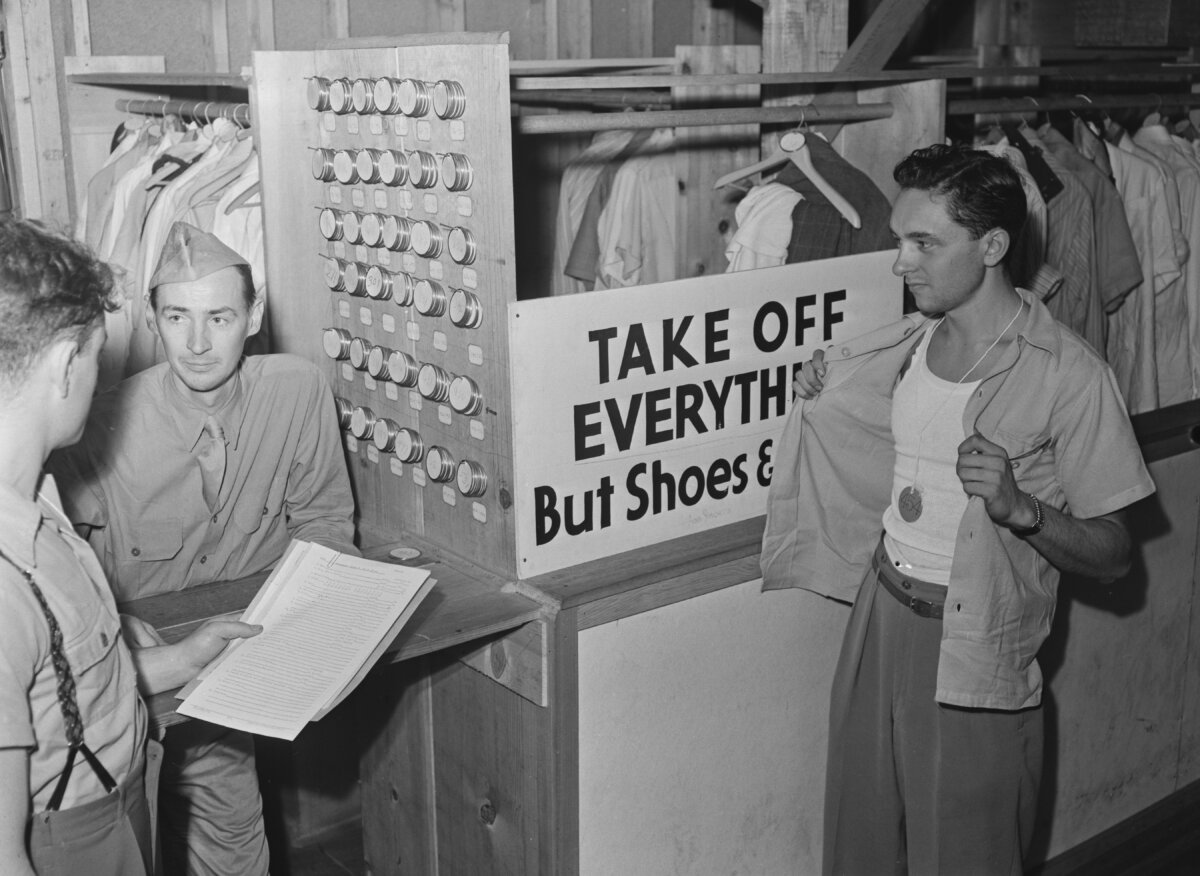
At the time, the U.S. government had already drafted people for the Korean conflict and would do the same in the coming years for the Vietnam War. That experience was the end for conscription due to mass waves of protest and many voluntary exiles who fled. An entire generation came of age in fear and loathing of the draft due to that deeply unpopular conflict. The result was the all-voluntary military that began in 1973, even if registration for such a possibility has existed since 1980.
The case was made at the time—and it stands true today—that volunteers make better service members than those forced to be there. The reason is the same that governs the general principles that wages and salaries are better for inspiring workers than whips and chains. The military is necessarily going to be of higher quality, and is entirely workable provided there are enough recruits to get the job done. That prediction has proven correct. There is really no case for drafting today other than 1) a belief that it would be good for social solidarity, and 2) the expectation that otherwise there will be a shortage of enlisted men and women.
I will say that the timing of the new interest in national military service today seems suspicious. As I write the United States is involved in a war in Iran that is less popular at its outset than any war since the Second World War. The reality of what’s going on contrasts with campaign promises and is not taking an easy course that has been promised at the outset. So one wonders why the sudden new interest in conscription, unless someone believes there won’t be enough recruits to meet the demands of a protracted conflict.
All of these points are interesting, but I would like to offer the most salient observation that should pretty much wreck all romantic dreams of the good conscription will do. The core problem is that the government will run it. That means it will be as inefficient, subject to waste and fraud, captured by industrial interests and manipulated, and messed up as anything else government does. The track record is not a good one.
Some countries are better than average at running government services. Switzerland, Germany, and Israel come to mind—not that everyone loves the government but that there is a greater degree of cultural integration between the public and private sectors than we have in the United States.
The United States was founded on the promise of individual liberty and limited government. That necessarily—for better or worse—means that we are just not very good at doing government-based things. Given that, the single worst idea is something like a universal conscription for all young men and women as administered by the federal government. Just think realistically, are there any conditions under which this could possibly turn out well? I don’t think so.
There is also the matter of our long struggle against slavery that resulted in the 13th Amendment: “Neither slavery nor involuntary servitude, except as a punishment for crime whereof the party shall have been duly convicted, shall exist within the United States, or any place subject to their jurisdiction.” National service is involuntary servitude and it would never survive a Constitutional challenge, especially in peacetime, not if the justices were being honest.
I’ve tried to make the case against the notion of universal mandatory military service as calmly and rationally as I can. In the end, it really does come down to whether you want to live in a country that would forcibly snatch your children at the age of 18 to ship off to fight in overseas wars. I’m doubtful that many people are willing to go along with that idea. Those who are are now free to enlist by their own choice. This system works and we should keep it.
Views expressed in this article are the opinions of the author and do not necessarily reflect the views of The Epoch Times.
 Friends Read Free
Copy
Facebook
Tweet
Friends Read Free
Copy
Facebook
Tweet