Commentary
A former teacher recounts witnessing rape, torture, sterilization, and fabricated crimes inside a so-called reeducation camp in China.
Sayragul Sauytbay, an ethnic Kazakh from the Ili Kazakh Autonomous Prefecture of East Turkestan, which the Chinese Communist Party (CCP) calls Xinjiang, described the years she spent working as a Mandarin instructor at a reeducation camp in the region.
“I witnessed rape, including gang rape, and other inhumane atrocities with my own eyes,” Sauytbay told this author.
Originally, she had been the director of five kindergartens. In 2016, amid a CCP mass-internment campaign, she was forced to work as a Chinese-language instructor inside one of the reeducation camps.
Sauytbay said the camps were officially referred to as vocational training centers, but detainees were locked inside and not allowed to leave. Unlike a prison sentence, there was no judicial process, no charges, and no fixed term. People had no idea how long they would be held, or if they would ever be released. She said this uncertainty created constant fear.
“That’s the most tragic part,” she said. In a normal prison system, even someone sentenced to many years knows when their term will end and lives with that hope.
“But in the camps, nobody knows when you are going to be released,” she said.
Many people died in detention, and others lived daily with the fear that they might die the next day, Sauytbay said.
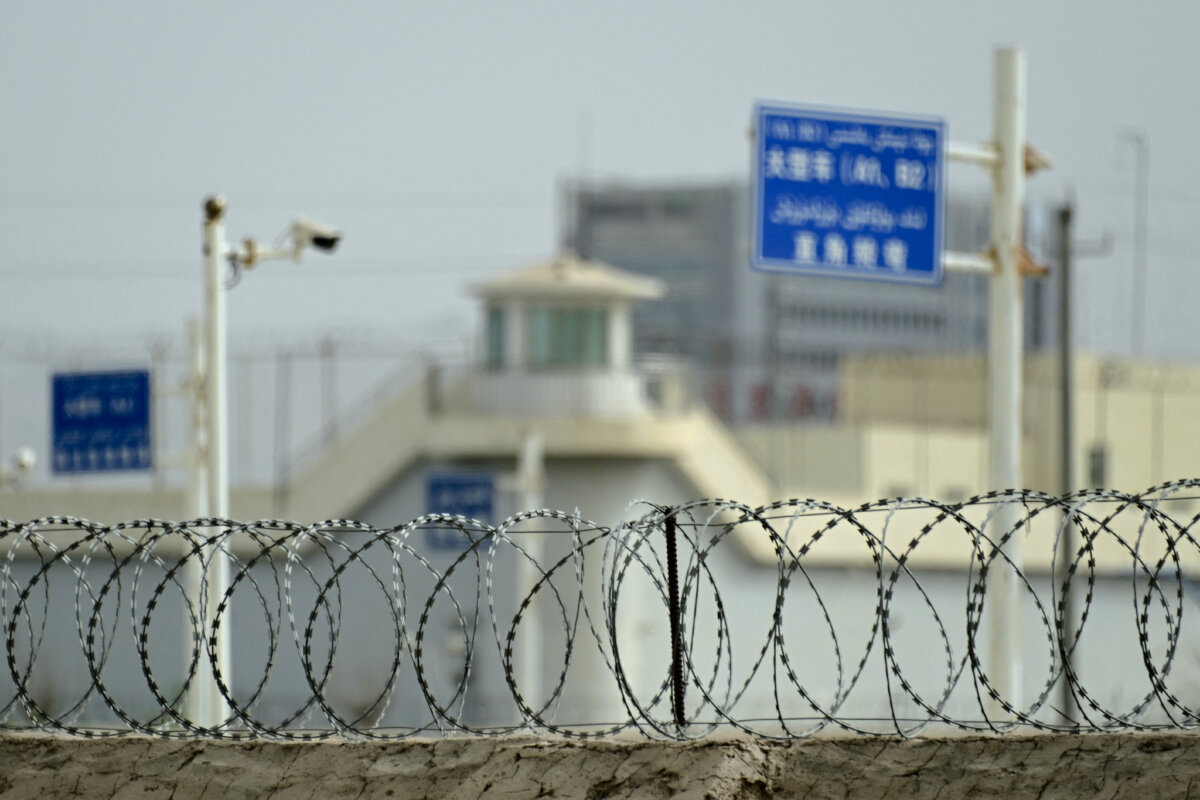
The camp in which she was forced to work held about 2,500 people, both men and women, young and old, including Kazakhs, Kyrgyz, Uyghurs, and other Turkic peoples. There were security cameras everywhere, both inside and outside the camp.
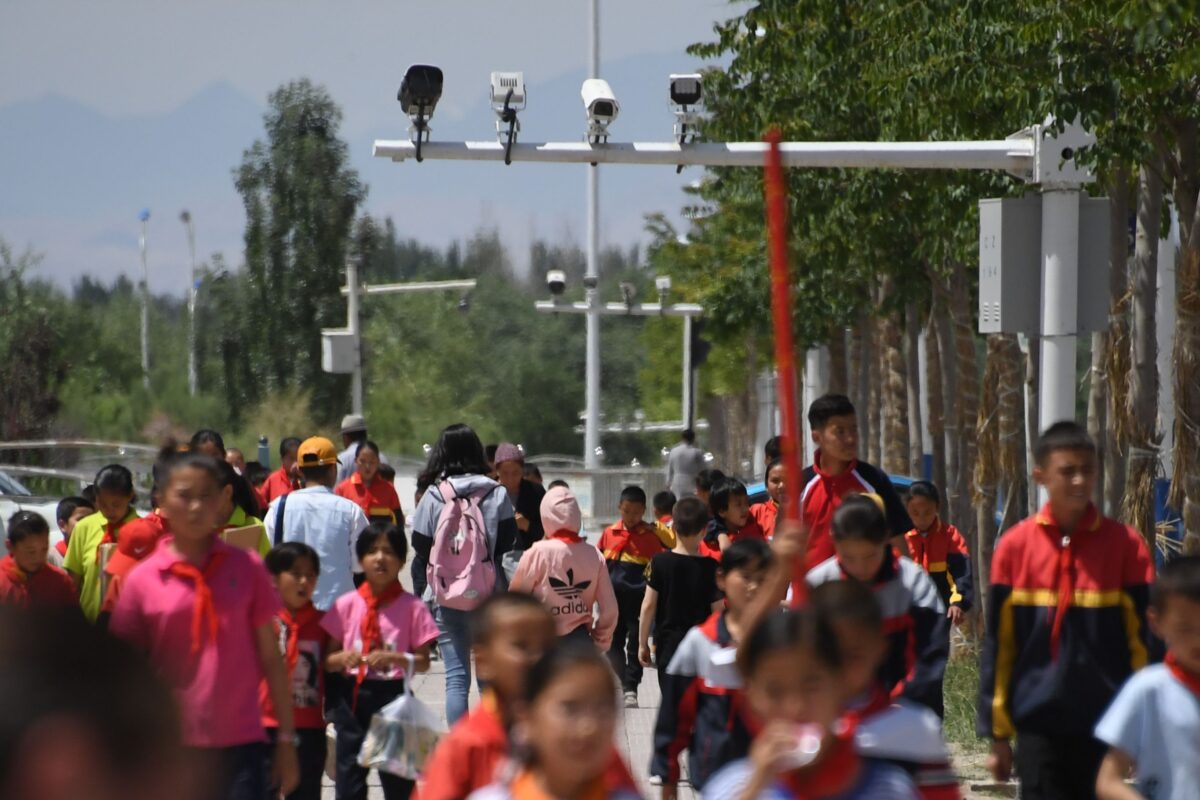
“Surveillance cameras monitored every corner, every activity, everything that was being done in the camps, 24 hours a day,” Sauytbay said. “The only place without cameras was a room they called the ‘black room.’” This was where torture took place, she said.
“Even when I was teaching in the classroom, security forces would come in, pull out selected people, and take them into the black room. During lessons, we could hear screaming from that room. People screaming, ‘Please help us. Please save us.’”
For years, there have been allegations of sterilization and forced medical treatment in the camps. Sauytbay confirmed those allegations, saying the abuse went beyond physical torture. “Aside from torture, they would forcibly medicate them and give them shots that would sterilize them,” she said.
When asked why she believed that the CCP carried out these practices, Sauytbay said that Kazakhs, Kyrgyz, Uyghurs, and other Turkic peoples were the native inhabitants of East Turkestan, and that the camps were part of a long-standing policy to eliminate the native population. According to her, those detained were innocent and had committed no real crimes. Once inside the camps, authorities began fabricating charges to justify their detention, she said.
For Uyghurs, she said, the most common accusations were terrorism or separatism. “If they had any religious affiliation, they would say that was religious extremism,” Sauytbay said. “If they tried to maintain their identity, they were labeled as separatists or terrorists.” These labels were routinely used as blanket justifications for detention, she said.
Sauytbay noted that for Kazakhs, authorities cited ties to Kazakhstan as grounds for detention. This included having relatives there, traveling to Kazakhstan, holding a Kazakh residency card, or even communicating with someone across the border. She said similar accusations applied to anyone connected to what authorities internally labeled as 26 “terrorist” countries.
Sauytbay said there were roughly 30 official categories of accusations used to justify detention. Even minimal contact could trigger suspicion. “If you received a phone call from one of those countries, or if you had a relative there, you were a suspect,” she said. However, she emphasized that these policies did not apply to Han Chinese.
According to Sauytbay, once a person was detained, authorities examined his or her background and lifestyle to construct a charge that fit the state’s narrative. Businesspeople were accused of threatening state security through foreign ties, she said, and artists and musicians were also targeted. She cited cases in which Kazakh singers were accused of separatism simply for performing songs in the Kazakh language. References to ancestry, heritage, or homeland were treated as evidence of anti-state sentiment, Sauytbay said.
“This is how they did it,” she said. “They looked at who you were, what you did in life, and then they found a crime that fit their narrative.
“These people were already in the camp, and then the government tried to find a reason to blame them.
“They could not endure the psychological and physical torture they were subjected to in the camps.”
The situation was so hopeless, according to Sauytbay, that some people would have taken their own lives, but even that was impossible because of the constant 24/7 surveillance.
As an instructor, Sauytbay said, she was not tortured, but her life was only marginally better than those of the prisoners. They were given three small meals a day, usually a bowl of watery rice and mantou (a Chinese steamed bun), with no opportunity to obtain additional food. Like the inmates, she was not permitted to have any contact with the outside world.
In 2018, after witnessing what took place inside the camp, authorities released her, but they refused to restore her position as a kindergarten director. Soon afterward, she said, she was warned that the CCP intended to send her back to the camp, this time as a prisoner.
“If I were sent there again, I knew I was not going to come out alive,” Sauytbay said.
Faced with detention, she said, she took the risk of escape and fled across the border into Kazakhstan, where she was arrested for illegal entry and faced possible deportation back to China. After months of fear, appeals, and uncertainty, Sauytbay said, she ultimately obtained refugee status and in July 2019 was resettled in Sweden, where she has lived with her family since.
More than 1 million Uyghurs have been held in CCP detention camps, according to the Council on Foreign Relations. Sauytbay was fortunate to escape. Today, she serves as vice president, based in Sweden, of the East Turkistan Government in Exile, and has documented her experience in her book “The Chief Witness: Escape from China’s Modern-Day Concentration Camps.”
Through Sauytbay’s testimony and that of other refugees, the CCP’s crimes have been well-documented. Nevertheless, detentions, torture, sterilization, and forced organ harvesting continue.
Views expressed in this article are the opinions of the author and do not necessarily reflect the views of The Epoch Times.
 Friends Read Free
Copy
Facebook
Tweet
Friends Read Free
Copy
Facebook
Tweet