

Commentary
France and Britain have both built welfare systems that may have begun life as humane responses to social need but have since ossified into fiscal traps. Nowhere is this clearer than in pensions. In France, retirees enjoy not only earlier retirement than their European peers but also far larger state transfers, a problem that has been brewing since the end of World War II. In Britain, this problem goes back even further, with a system that predates even the legacy of the National Health Service, grown from roots in the Liberal reforms of the 1910s.
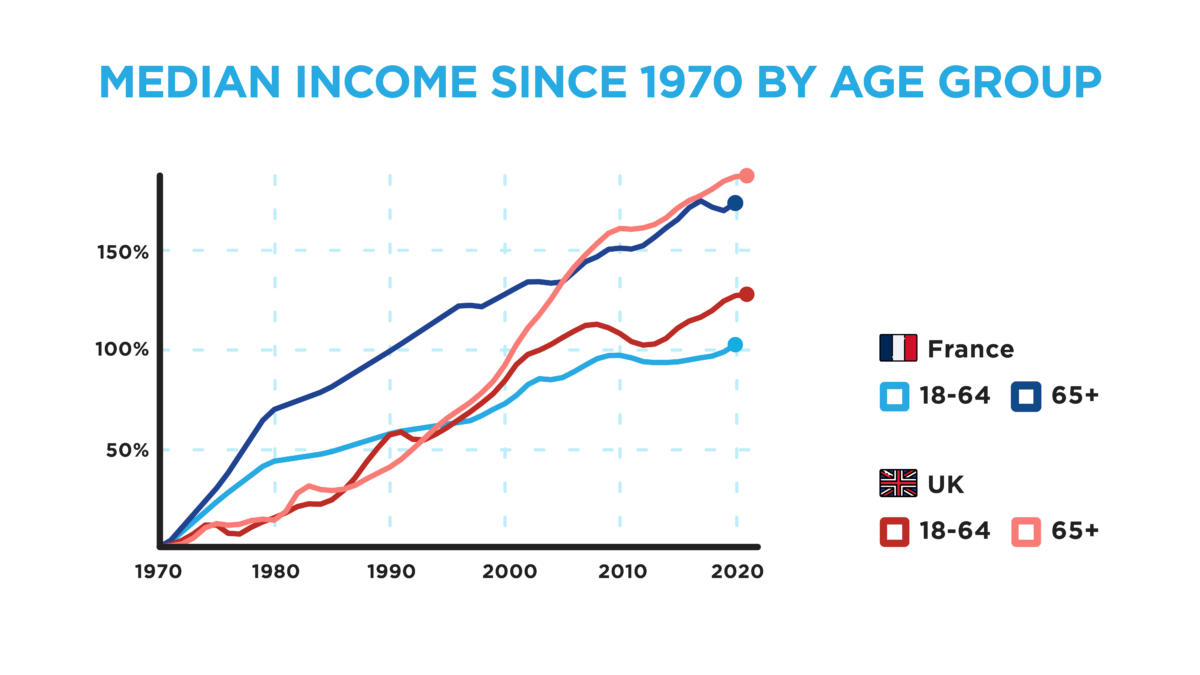
The result is a perverse inversion: “Over-65s now have higher average incomes than the working-age population—unique both internationally and in France’s own history.”
Pensions are now so bloated that they consumed one-sixth of the national defense budget last year, stopping France from meeting NATO’s 2 percent target. It puts even greater strain on the country as it tries to meet the increased 4 percent target that Trump is pushing for.
French President Emmanuel Macron’s modest proposal to raise the retirement age from 62 to 64 provoked mass strikes and protests across the country. Then-French Prime Minister Michel Barnier’s suggestion of delaying a pension rise by six months helped topple a government, while then-French Prime Minister François Bayrou’s refusal to cut pledges contributed to another collapse. French ministers are now warning that the pension system must return to balance by 2030 to remain sustainable.
Britain is traveling a similar path. The “pension triple lock,” introduced in 2010 as a guarantee of dignity for the elderly, has mutated into a political straitjacket. It ensures that pensions rise by whichever is highest between three factors—wages, inflation, or 2.5 percent—meaning they grow faster than the economy itself.
The BBC recently calculated that the flat-rate pension will soon rise to 12,534 pounds per year, while the old basic pension will climb to 9,607 pounds, the third consecutive year of inflation-busting increases. Because the personal tax allowance is frozen at 12,570 pounds until 2028, millions of pensioners with no other income will pay tax on their pensions for the first time by 2027.
Already three-quarters of retirees pay some form of income tax, and that share will only increase. The Guardian has likewise reported that wage growth will lock in another 4.7 percent pension increase in 2025, adding billions to government obligations.
Both cases reveal how policies born of compassion metastasized into obligations that the state can no longer afford. In France, the expansion of pensions was part of the post-war social contract, when the welfare state was seen as an instrument of national healing. In Britain, the triple lock was born from a concern over pensioner poverty after years of neglect, with the birth of National Insurance—itself a funding mechanism that is a battlefield between the Conservative and Labour parties.
But once granted, benefits are never rolled back. Instead, they become entrenched privileges, defended by electorates that demand ever more while working generations see their own prospects dwindle.
The fiscal consequences are unavoidable. Britain’s health and care bill for those older than 65 has doubled since 2000. By 2016, as much as 40 percent of the National Health Service budget was dedicated to older patients, while 36 pence on the pound was spent by local authorities on adult social care. The triple lock adds billions more every year. That money comes at the expense of infrastructure, housing, and education. In France, pensions now distort the budget to the point of undermining foreign and security policy. Both countries have seen debt ratios climb as governments borrow to placate pensioners while leaving younger generations to foot the bill later.
Politically, the costs are brutal. Then-British Prime Minister Theresa May’s 2017 “dementia tax” proposal—a cautious attempt to shift some care costs onto wealthier homeowners—was savaged in the press and forced into an abrupt U-turn, fatally damaging her premiership. Labour’s new government has already been forced into retreat on means-testing winter fuel payments, despite holding a landslide majority. In France, Macron’s reforms provoked months of unrest, while Barnier and Bayrou saw governments collapse over similar disputes. In both systems, honesty is punished while fiscal sleight of hand is rewarded.
This is the logic of welfarism carried to excess: Policies that began as safety nets now function as untouchable privileges, defended by electorates complicit in their own illusions. Pensioners in both France and Britain live more comfortably than their grandchildren, yet still expect protection from even the slightest retrenchment. The outcome is not intergenerational solidarity but intergenerational plunder, with younger taxpayers footing the bill for entitlements that expand faster than the economy sustaining them.
Unless voters are prepared to hear hard truths and reward leaders willing to confront them, the fiscal burden of welfarism will continue to mount, crowding out investment, distorting national priorities, and paralyzing politics itself.
From the Foundation for Economic Education (FEE)
Views expressed in this article are the opinions of the author and do not necessarily reflect the views of The Epoch Times.
 Friends Read Free
Copy
Facebook
Tweet
Friends Read Free
Copy
Facebook
Tweet