
Commentary
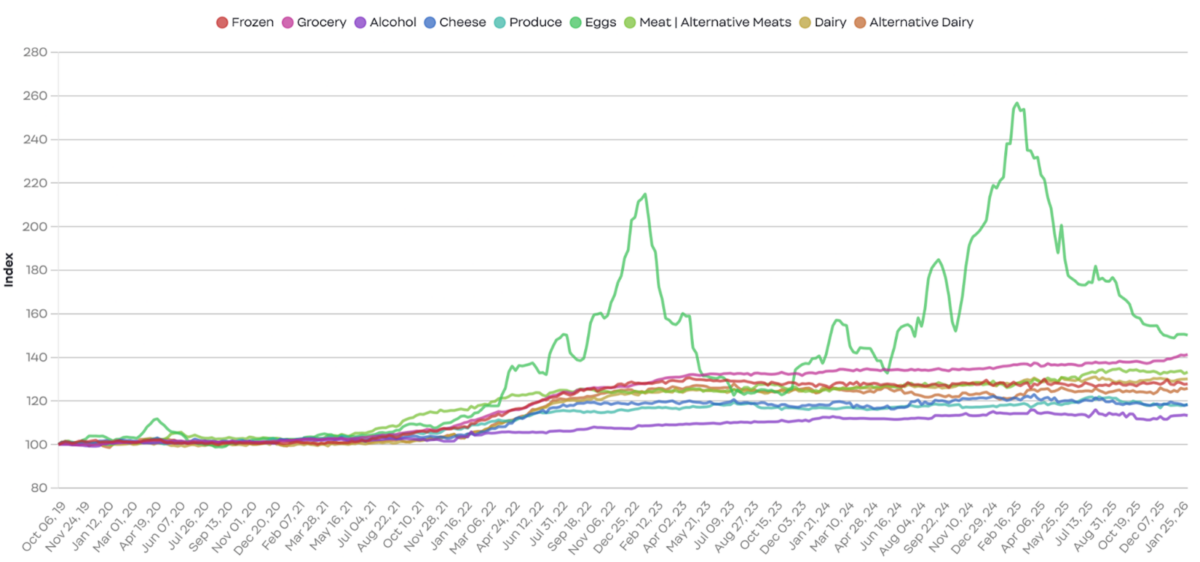
Eggs are one of nature’s great treasures, healthy and convenient. Two years ago, getting them nearly broke the bank. In my neighborhood, they rose to a dollar each at one point. It was heartbreaking.
But then the Trump administration got to work, ending the forced hen slaughter and pushing for more supply. The result was spectacular. Eggs crashed in price. I just paid $3.50 for a dozen free-range, organic eggs, and the run-of-the-mill eggs are much cheaper.
They are within the budget, consistent with the new federal dietary standards, and overall great for your health. If you are undertaking a new diet with a 24-hour fast, eggs are the perfect thing to cause the pounds to fall off while maintaining high levels of protein.
For those who practice the Lenten fast, eggs are a nice relief from fish.
I get it, though; you can only eat so many scrambled eggs like you make them for breakfast.
The omelette is the option. It’s like a completely different food, and it accommodates a huge range of other ingredients: onions, squash, spinach, mushrooms, tomatoes, herbs, cheese, and even salmon and sausage.
You have surely tried omelettes at the high-end places serving brunch on Sundays. They have a station and a master of the craft who can make one in no time. It arrives on the plate, and it is great.
Lots of people dream about this but cannot even imagine doing it at home. Maybe they think they lack the technique. Maybe they think you need a special burner or pan. None of this is true. Anyone can make an omelette at home. It is a full meal if you do it right. I guarantee that the pounds will fall off if you do a diet of one omelette a day. You will also be plenty full.
A crucial part of this is a serious challenge for Americans. In every part of the world except the United States, people do not refrigerate their eggs. That makes them the perfect temperature for omelettes. We, on the other hand, suffer under egregious regulations that require any eggs sold at retail to have their outer membrane removed, thus requiring them to be refrigerated.
It’s all so ridiculous, and it’s why foreign visitors are so astonished that we keep eggs in the ice box. No one else on planet Earth does this. This makes them too cold to use in omelettes, so you have to compensate. You need to take the eggs out and leave them on the counter several hours before you even contemplate making an omelette.
You will need two eggs for a small pan, three eggs for a medium-sized pan, and four eggs for a large pan. As to which pan, the usual belief is that you need something coated with a non-stick surface. I don’t believe this. For my own part, I regard the iron skillet as the gold standard of pans. If it cannot be done in an iron skillet, I think, it should not be done at all.
After your eggs are at room temperature, the next great challenge regarding temperature comes. The pan must be medium hot before you even begin. The pan needs butter or olive oil heated to a low-medium heat—not super hot and not merely warm. If you want to put a number on it, think 250 degrees F.
If you are using lots of ingredients such as white onions, sausage, bell peppers, spinach, or squash, it’s a good idea to cook all those in advance. It can take 15 minutes or so for them to be ready. You can leave them in the pan or take out half if you are planning on making two.
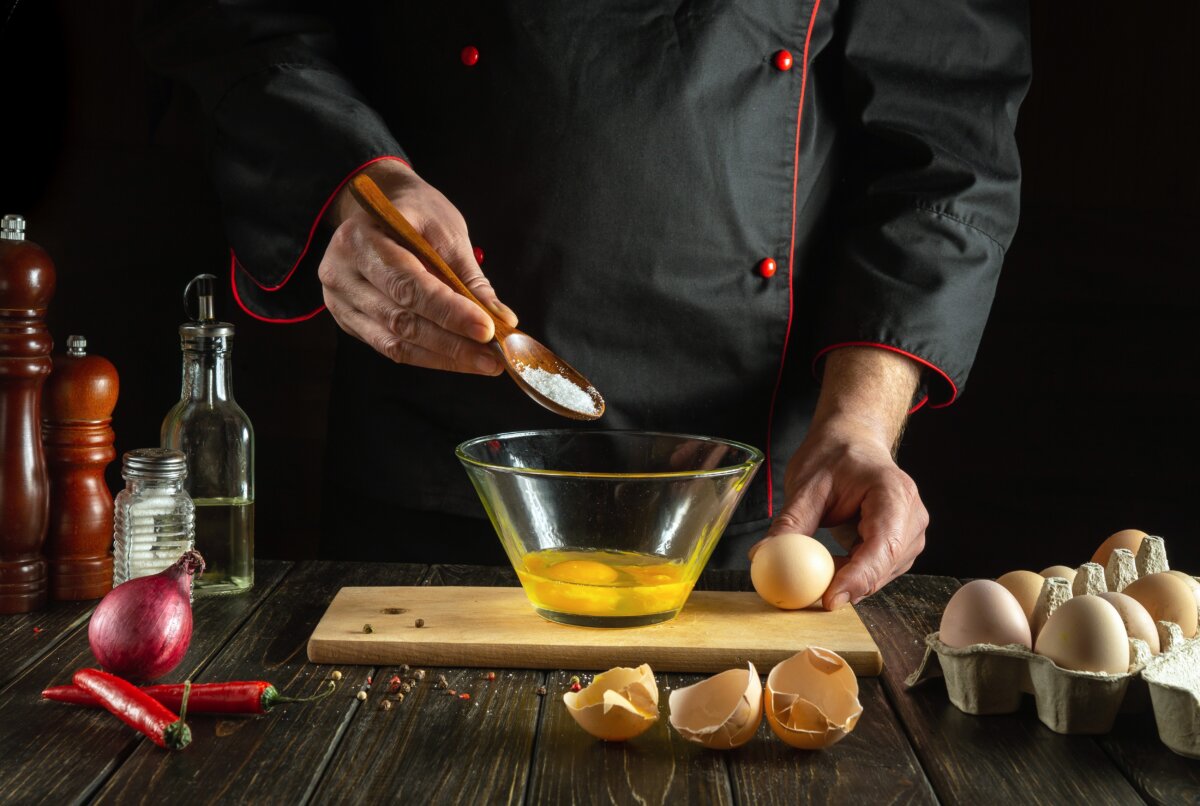
Crack the eggs into a bowl, and add some cream, half and half, or milk, say two or three tablespoons. Others recommend water, but this makes the results less rich and interesting, so use milk if you have it. Use a whisk to blend it all together, stirring only until it is mixed but not going so far as to make peaks. That’s the core of the ingredients.
Now you add your salt, pepper, and herbs to the egg mixtures. This can all be done very quickly.
Pour the mixture into the pan evenly so that it goes to the sides. I like to move it around a bit at this point to make sure everything is even.
Then comes the cheese if you are using it. It is better on top than mixed in. Sprinkle it after you have poured in the mixture.
Here, you want to cover the pan. I have no top for my iron skillet, so I just use a wooden cutting board. This way the steam from the mixture rises up and is pushed back down, causing the omelette to fluff up.
How long should you cook it? It really depends on your setup and temperature. Attempting the great folding too soon creates a mess that looks like scrambled eggs, but waiting too long means burning the bottom, which is not good. Keep an eye out and practice—so you’ll know precisely when the moment arrives. It’s less than 10 minutes but more than five, in my experience.
Then comes the great trick. You need a large spatula. Move it around the sides to loosen anything stuck. Start to work the spatula under the omelette. Once you get close to the center, flip one half over the other half. This can cause some breakage when you first try it, but don’t be discouraged. The more you do this part, the better you will get at it.
A large omelette with four eggs is trickier, and a small omelette with two eggs in a small pan is easier, obviously. Regardless, practice makes perfect.
I wish I understood why, but making this dish causes the eggs to impart a wholly different experience from scrambling or any other technique. It turns eggs into a real meal.
People are constantly complaining about the price of groceries these days. I completely get it. But you can get around this the smart way. Eggs are completely affordable right now. We don’t know how long this will last. Strike, as they say, while the iron is hot.
Omelettes are exciting. They are chemistry. They are invention. They are creation. They are magic. You are the chemist, inventor, creator, and magician. It’s in your hands, nearly without limits.
Views expressed in this article are the opinions of the author and do not necessarily reflect the views of The Epoch Times.
 Friends Read Free
Copy
Facebook
Tweet
Friends Read Free
Copy
Facebook
Tweet