
Commentary
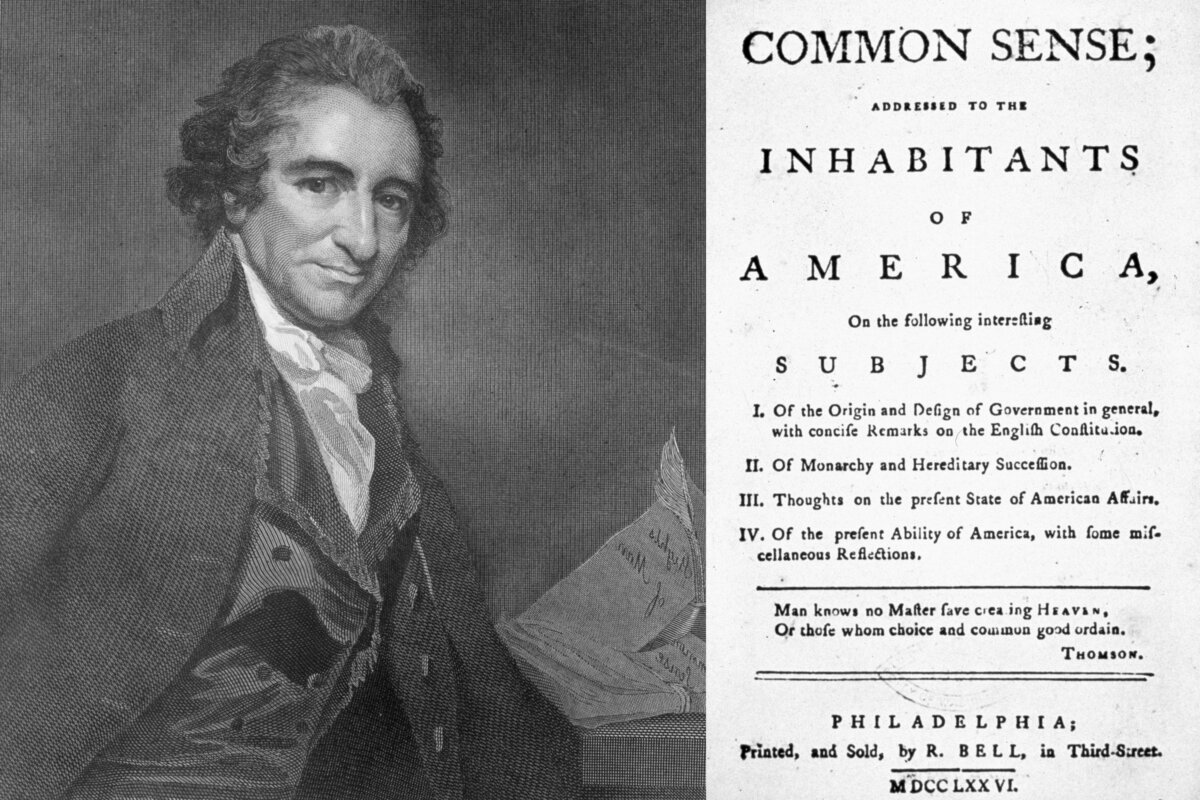
I’ve just spent a harrowing weekend reflecting on Thomas Paine’s “Common Sense,” the pamphlet that came out in January 1776. The printer could not keep up with the demand. Everyone who could read wanted a copy. It went viral, as they say today.
Incredibly, the monograph was dated 250 years ago this month, preparing the cultural ground for the Declaration of Independence that was written months later.
Paine began: “The cause of America is in a great measure the cause of all mankind.” That cause is freedom and independence, the right of all people to be unburdened by oppression by forces that would trample on the rights and capacity of a people to manage their own affairs.
The small monograph turned the public toward seeking independence from Britain. I say “harrowing” because the distance between the ideals found in this pamphlet and those of today’s America is so vast as to make them nearly unrecognizable.
The presumption throughout the text is that tyranny should never again be tolerated. Despotism was for the old world. Tyranny was outdated. It belonged nowhere in a land conceived in liberty. The only question was when and how to overthrow despotic rule.
The upshot of Paine’s monograph was that now is the time. Waiting would only lead to calamity.
It worked. He got his revolution. The British were defeated, and America was born. Freedom had its asylum. The world began anew, full of promise. A century later, everyone wanted to be America. The monarchies of old fell apart. The American century was born.
The middle class was ennobled. Lives lengthened. The standard of living soared to new heights. Technology took over. Spectacular things were everywhere. Freedom had done its work. It had liberated the human mind to create, build, empower, and change the face of the earth.
Then something changed again. When? Maybe it was during the Civil War. Maybe during World War I. FDR and the Great Depression entrenched it. Or maybe it was the traumas of World War II. Perhaps there was some hope that freedom could be saved even up to the response to the crimes of Sept. 11. But after that watershed following the Cold War, there was no turning back.
The COVID-19 response in retrospect should not have been so shocking, the population treated as lab rats in a medical experiment. There is a real danger these days that everyone participates in the dumbing down of freedom itself. After stay-home orders, closures of small businesses and schools, abolition of religious holidays, forced universal human separation, tens of trillions of dollars stolen, and mandatory experimental injections, the dialing back of tyranny is a relief.
But is that all we really want or need? Perhaps it’s time to reread “Common Sense” to remember the actual ideals. The world that Paine dreaded—the thing he feared the most and the tyranny that he had dedicated his life to opposing—is upon us.
We have new managers in control who have sworn to gut the bureaucracy, untangle government from the industrial interests that run it, and restore much of what has been lost. What this amounts to is a hostile takeover of an establishment. It is far from complete. Indeed, it has barely begun.
To get a better sense of what we need for a real restoration, “Common Sense” is essential. For it is impossible to read this and not get the message: Now is the time. There is no more waiting.
As with other classic writings on this level, you discover things about it in each new reading, material you might not have noticed or been prepared for in the past. This time, I was overwhelmed with a sense that he is speaking to us right now, trying to embolden us to see what is going on around us.
I experienced the white-hot rhetoric of this piece while American politics has descended into the depths. We still pay taxes and obey the regulators, but now the illusion that we are getting something for our money is stripped away. Indeed, waste and fraud seem no longer the exception but the rule. Only 17 percent of those polled even have confidence in government at all.
It is a sign that we might be living in the last days of Leviathan, one not dissimilar to that against which Paine inveighed. The once indispensable institution, the reputed cornerstone of civilization, the grand power structure of story and song, is looking more ridiculous by the day.
The Trump administration might be in charge, but everyone in Washington regards them as interlopers, invaders, unwelcome guests, temporary managers to be tossed out when the next election cycle comes. That may indeed happen, and the cycle of continuing to throw off the yoke begins again.
Meanwhile, right now, enterprise in the form of small business continues on its merry way, providing goods and services to the whole population and doing its best to ignore Washington’s antics.
Paine speaks directly to the issue:
“Society in every state is a blessing, but government, even in its best state, is but a necessary evil; in its worst state an intolerable one: for when we suffer, or are exposed to the same miseries by a government, which we might expect in a country without government, our calamity is heightened by reflecting that we furnish the means by which we suffer.”
Paine saw that the moment was at hand, the time to rally the people against their rulers. Contrary to myth, Paine wasn’t actually calling for war and bloodshed. He was calling for kicking the grifters out of their perches of power. He wanted an end to British rule. That doesn’t necessarily mean war. It can happen peacefully if the rulers just walk away.
We might call this the Paine plan.
That means in the end, then as now, it is up to us. We should all be working every day and in every way to detach ourselves from dependence on our oppressors. We can make the freedom that the 18th-century intellectual giants such as Paine dreamed of an actual reality. Many of us, if not most of us, are doing this every day.
In Paine’s writings, you find a revolutionary idea that he was correct in thinking had descended on the world for the first time. It was the idea of liberalism—classical liberalism, more precisely. His rendering of this idea was particularly radical, but at its core, it summed up the views of a generation that truly did set the world free.
The idea was that society needed no overarching ruler to give it direction. It needed no official church to make it religious. No king was necessary to give society decorum or to manage relations with other nations. It needed no central plan to spell out a list of priorities. We certainly do not need 444 agencies. And yet when Trump shuts down a few, the hue and cry from the media is ear-splitting.
How I wish we could recapture the vision of Paine today, the burning and passionate desire to give the cause of freedom a full reboot. Paine ended a second edition of his monograph with a full cry for unity in this cause:
“Wherefore, instead of gazing at each other with suspicious or doubtful curiosity; let each of us, hold out to his neighbour the hearty hand of friendship, and unite in drawing a line, which, like an act of oblivion shall bury in forgetfulness every former dissension. Let the names of Whig and Tory be extinct; and let none other be heard among us, than those of a good citizen, an open and resolute friend, and a virtuous supporter of the rights of mankind, and of the FREE AND INDEPENDENT STATES OF AMERICA.”
Views expressed in this article are the opinions of the author and do not necessarily reflect the views of The Epoch Times.
 Friends Read Free
Copy
Facebook
Tweet
Friends Read Free
Copy
Facebook
Tweet