
Commentary
There’s a good chance that, in the weeks ahead, U.S. President Donald Trump’s administration will be dictating Canada’s broadcasting policy and American companies will be funding their northern neighbour’s film and TV industry on their own terms.
That possibility was created last week when Canada’s regulator, the Canadian Radio-television and Telecommunications Commission (CRTC), was instructed by Prime Minister Mark Carney’s cabinet to take a second look at its most recent decision implementing the 2023 Online Streaming Act. In that, the CRTC ordered streaming companies—most of which are American—to dedicate 15 percent of their Canadian revenues to the creation and promotion of certified Canadian content and news.
The decision also reduced the Canadian content contribution expectations for domestic broadcasters from as much as 40 percent to a mere 25 percent of their revenues. In doing so, the CRTC was following the expectations laid out in the Online Streaming Act which are, essentially, to derive revenue from foreign streamers to support the production of Canadian film and television programming.
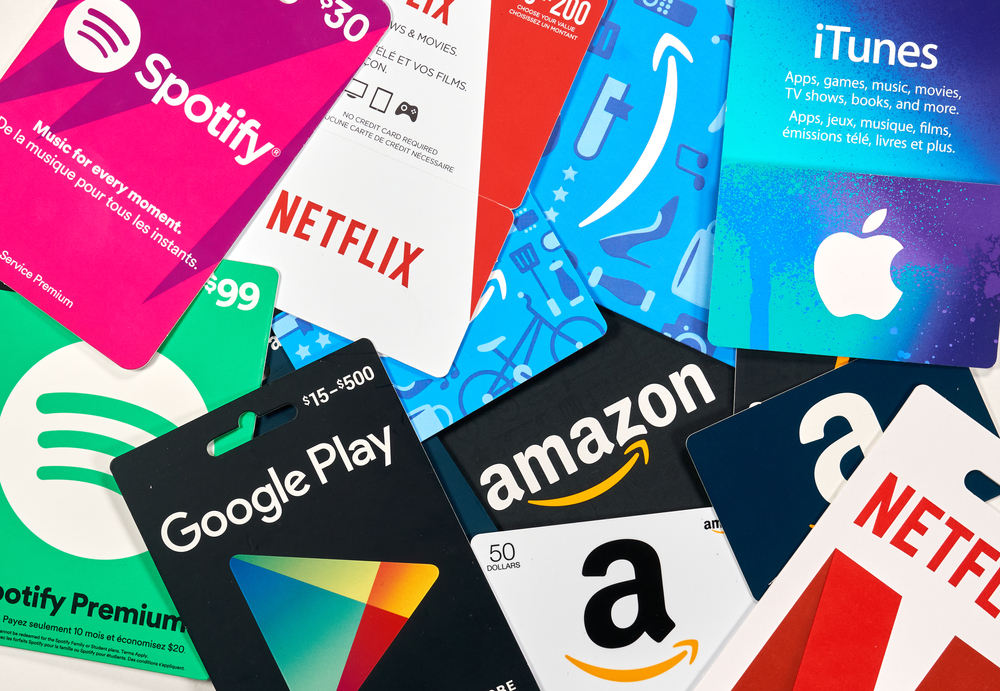
The bottom line was to shift much of the burden of financing Canadian cultural aspirations from Canadian broadcasters, whose businesses are in decline, to American streaming companies such as Netflix, Disney+, Apple, Amazon, and more, whose businesses are growing.
While the American companies expressed a willingness early on in the CRTC process to contribute, they have denounced the manner in which the regulator has implemented the act. They have the backing of the Trump administration which, like the Biden administration before it, did not like the idea of American companies being forced to pay into Canadian funds to subsidize Canadian cultural production. Decisions on those companies’ Federal Court appeals regarding earlier CRTC decisions remain pending.
Most significantly, U.S. Trade Representative Jamieson Greer has mentioned the Online Streaming Act as one of the major concerns for the USA as it seeks to renew the Canada-U.S-Mexico free trade agreement. Canada’s Liberal government MPs may have voted in the House of Commons in favour of what the Conservative opposition referred to as a “Netflix tax,” but one day following a meeting in Washington between Greer and Canadian Trade Minister Dominic LeBlanc, Canada announced it was instructing the CRTC to “reconsider” its decision to impose such a levy.
Heritage Minister Marc Miller said this was due to the decision’s impact on consumers. Further, he said that the government would step up to supply $600 million to compensate Canadian broadcast newsrooms and film and TV creators now that they wouldn’t be getting 15 percent of streamers’ revenue. Most significantly, Miller also indicated that he planned to supply the CRTC with a set of policy directives indicating how the government expects the regulator to implement the always but now extremely tricky Online Streaming Act.
In my mind, that means that Canada is going to, if not kill it entirely, reshape the Online Streaming Act to the Americans’ liking and, in an effort to save face, instruct the CRTC to implement it in a fashion pleasing to the Trump administration. That could mean that not only will the government defenestrate its independent regulator, it will also expect it to regulate in a fashion determined in Washington, albeit via Ottawa.
So, if you are trying to keep up, what happened was:
- Canada is trying to outsource the subsidization of its domestically produced film, TV, news, and music so that less of it is paid for by Canadian companies and more (perhaps most) of it is paid for by American companies.
- The American companies don’t like that idea and neither does their government.
- Rather than let the issue obstruct a new trade agreement, Canada has put its ambitions on hold, perhaps permanently, creating massive uncertainty within its domestic industries.
- To compensate for that, Canada is willing to increase its deficit and debt in order to sustain dying businesses trapped within an outdated regulatory environment.
- In the meantime, Canada will await orders on exactly what it can expect American companies to agree to invest in the Canadian film and TV industry.
At a time when Carney is working overtime to diversify his country’s trade connections and make Canada look less like a U.S. protectorate, this is an incredibly embarrassing set of circumstances.
As I have argued for many years without success, Canada’s approach to the reality of the communications revolution was doomed to fail provided it tried to apply—which the Online Streaming Act does—20th-century solutions to 21st-century issues.
Whether it was the Digital Sales Tax (dumped at Trump’s insistence), the Online News Act (which led to a ban on news links on Facebook in Canada), or the Online Streaming Act (as described), Canada’s approach to the digital world had already proven to be misguided.
Now, it is not only that. It has become humiliating.
Views expressed in this article are the opinions of the author and do not necessarily reflect the views of The Epoch Times.
 Friends Read Free
Copy
Facebook
Tweet
Friends Read Free
Copy
Facebook
Tweet