
A Republican bill introduced in the U.S. Congress aims to counter Canada’s Online Streaming Act and take “retaliatory action” if the Canadian legislation is deemed to discriminate against American commerce.
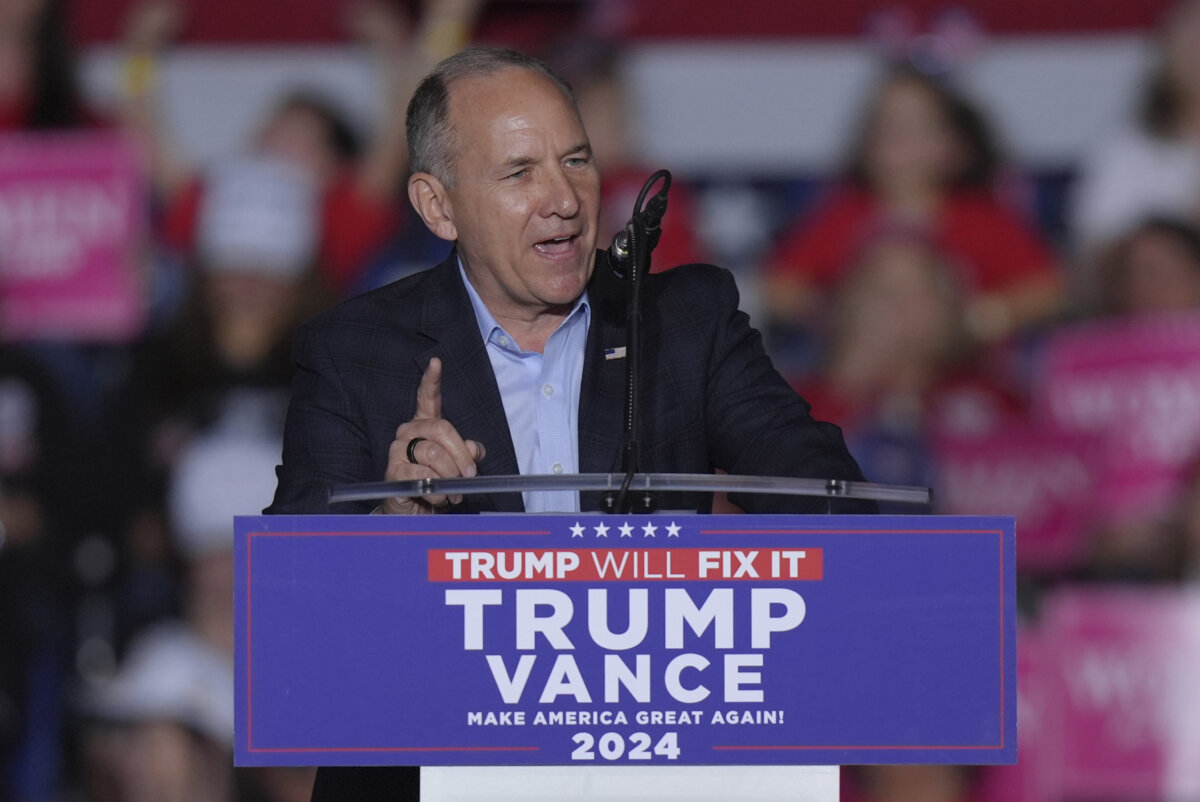
The bill, introduced by U.S. Rep. Lloyd Smucker on March 19, would trigger an investigation by the U.S. trade representative into Canada’s Online Streaming Act. If the legislation is found to discriminate against or burden American commerce, the representative would be directed to “take necessary retaliatory action to combat Canada’s policies,” Smucker’s office said in a press release.
The Online Streaming Act, previously known as Bill C-11 and passed into law in 2023, gives the Canadian Radio-television and Telecommunications Commission (CRTC) more regulatory power over content carried by streamers online.
At the time it was introduced, the legislation was opposed by the Conservatives as well as artists and literary figures such as Margaret Atwood, who were concerned about increased government control over the internet, while the Liberal government said the legislation was needed to modernize Canada’s Broadcasting Act and promote Canadian content.
Although not yet fully implemented, the law in part obliges large streaming services like Netflix and Spotify to promote, fund, and platform Canadian content. Streaming companies that make $25 million or more per year and are not affiliated with a Canadian broadcaster are required under the law to contribute 5 percent of their Canadian revenue to funds that support local and cultural broadcasting in Canada.
Smucker’s office said the Online Streaming Act imposes “costly financial and regulatory burdens on U.S.-based digital services while exempting Canadian competitors.”
The U.S. bill, called the Protecting American Streaming and Innovation Act, intends to counter Canada’s “digital trade barriers targeting American streaming companies and content producers,” Smucker’s office said.
Speaking in support of the U.S. bill, the Washington-based Digital Media Association CEO Graham Davies said the Online Streaming Act “continues to be a significant source of concern to our members.”
“It discriminates against non-Canadian, and especially U.S., companies, jeopardizes investments, and imposes new and undue burdens on music streaming services,” he said.
University of Ottawa law professor Michael Geist said in a March 19 social media post that the U.S. Congress “isn’t messing around” with its proposed Protecting American Streaming and Innovation Act.
“Calls into question whether [CUSMA/USMCA] cultural exemption even applies to the digital delivery of services and mandates retaliation if the law remains on the books unchanged,” Geist said.
The U.S. bill says that if the U.S. investigation finds the Online Streaming Act discriminates against or burdens American commerce, Canada would be required to take “satisfactory steps” to remove or amend the act within 180 days.
If not, the U.S. trade representative could suspend, withdraw, or modify concessions or benefits to Canada under the USMCA or other agreements, and impose additional tariffs on Canadian goods “in amounts commensurate with the harm” from implementing the Online Streaming Act.
Meanwhile, Ottawa has said the law is needed to ensure fairness to publishers and to support Canadian content.
“If you benefit from the system, you should contribute to it,” then-Heritage Minister Pablo Rodriguez said in 2023. “With the Online Streaming Act, we’re acting to support our creators, our artists, our independent producers and our culture so that they thrive in the digital age.”
Trade Irritant
The Online Streaming Act has been cited as a trade irritant for the United States since it came into force in 2023.
U.S. Trade Representative Jamieson Greer criticized the Online Streaming Act during closed-door remarks to members of Congress that were released to the public last December, saying the legislation continues to be a roadblock for Washington renewing the United States–Mexico–Canada Agreement (USMCA). He also said the law goes against the rules of the USMCA.
“Canada insists on maintaining its Online Streaming Act, a law that discriminates against U.S. tech and media firms, as well as a number of other measures that restrict digital services trade,” Greer said.
U.S. President Donald Trump’s 2026 Trade Policy Agenda and 2025 Annual Report, which Greer delivered to the U.S. Congress in early March, listed Canada’s “discriminatory and restrictive” digital measures, including the Online Streaming Act, as one of several problems that “require resolution” in reviewing the USMCA.
USMCA Review
The USMCA review is set to begin on July 1. Under the free trade agreement, approximately 80 percent of Canadian goods imported to the United States are exempt from tariffs.
Greer told Fox Business on March 18 that Mexico is ahead of Canada in negotiations related to the review of the USMCA. His office announced on March 5 that the first round of bilateral talks with Mexico on the agreement would begin the week of March 16, but no similar announcement has been made for Canada.
While formal talks between Canada and the United States have not yet begun, Carney had a call with Trump on March 8, and the Prime Minister’s Office said the leaders discussed bilateral trade and the economy.
The call took place shortly after Canada-U.S. Trade Minister Dominic LeBlanc visited Washington to meet with Greer. LeBlanc said on March 6 after the meeting that he and Greer had a “constructive and substantive” discussion pertaining to the USMCA review, and on broader bilateral trade issues.
Noé Chartier and Paul Rowan Brian contributed to this report.
 Friends Read Free
Copy
Facebook
Tweet
Friends Read Free
Copy
Facebook
Tweet