
Commentary
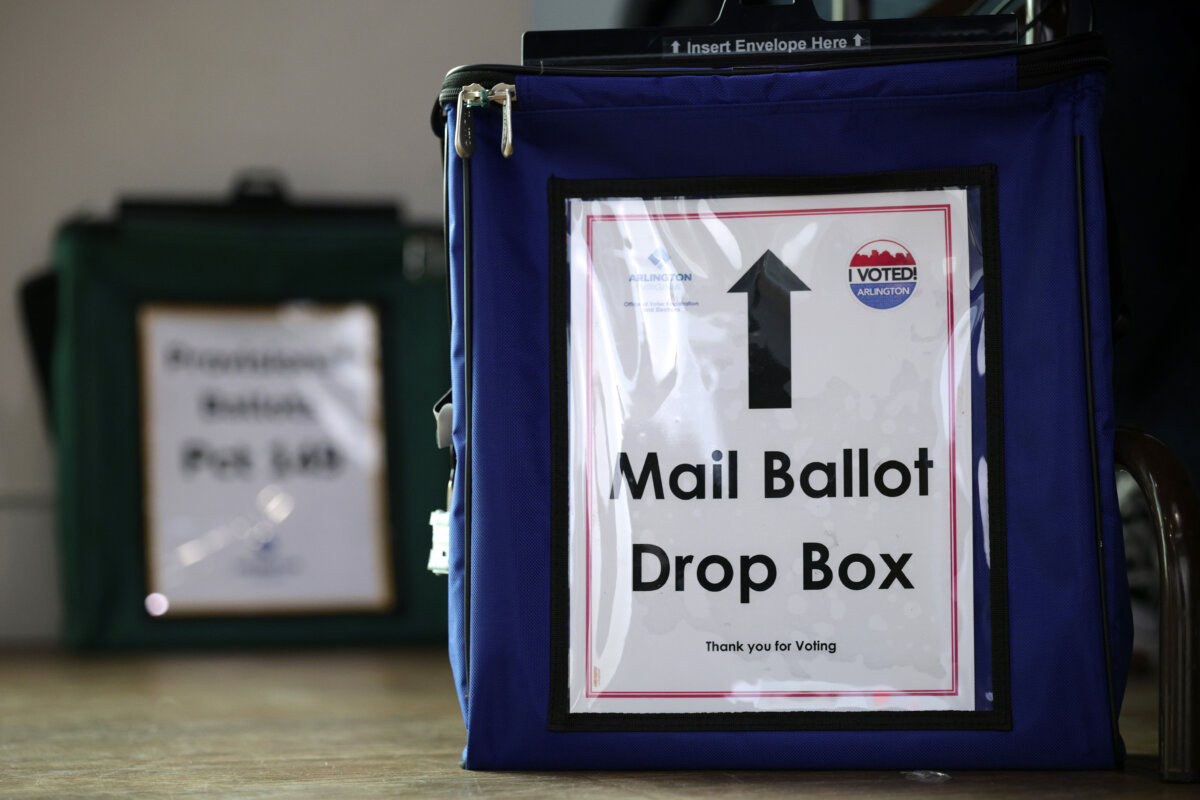
The Supreme Court’s decision to stay the injunction blocking President Donald Trump’s March executive order on mail-in ballots gives voters something they are clamoring for: greater confidence in election integrity. A new Rasmussen Reports survey finds that, by a 52 percent to 34 percent margin, likely voters say the government has not done enough to prevent election cheating. Even more striking, voters say by nearly two-to-one that widespread cheating is likely to affect the outcome of this fall’s congressional elections.
Concerns about November’s elections cross political and demographic lines. Majorities of Democrats, Republicans, and independents expect widespread cheating to affect the outcome, as do majorities across racial groups—including 75 percent of Hispanics and 63 percent of blacks—and among both sexes and every age group. Only self-identified liberals do not share that concern as a group.
Other surveys show that voters are concerned that mail-in voting makes cheating easier, but Trump’s executive order was more narrowly focused and concerned that those who voted were noncitizens or deceased.
The Supreme Court ruled 6–3 that the lower court had acted prematurely. Federal courts review final rules, the majority explained, “not proposed rules—and certainly not antecedent internal directives to propose a rule.” Litigants are free to challenge the Postal Service’s final rule, but they went to court too early when they challenged Trump’s directive ordering the U.S. Postal Service (USPS) to begin the rulemaking process.
U.S. District Judge Indira Talwani in Boston, an Obama appointee who issued the original injunction preventing the Postal Service from even initiating that rulemaking process, lifted the nationwide injunction on Aug. 23. Her action temporarily cleared the way for USPS to implement its new mail-ballot rules ahead of the November midterms.
Two dozen states immediately filed a new lawsuit challenging the final USPS rule itself rather than Trump’s earlier directive to develop one, and Talwani used that new filing to put in a new injunction on Aug. 24. Among other arguments, they contend that USPS lacks statutory authority to regulate who may receive mail ballots and that the rule intrudes on states’ constitutional authority over elections. And Talwani has already indicated that she is very sympathetic to their claims. The original case was titled Trump v. California, but it was brought in Boston because Democrats wanted the most sympathetic circuit court judges in the country.
But voter fraud in federal elections is a federal crime. Federal law makes it a crime to knowingly and willfully deprive or attempt to deprive a state’s residents of a fair election through the procurement, casting, or tabulation of ballots known to be materially false, fictitious, or fraudulent. It also prohibits noncitizens from voting in federal elections, subject to narrow statutory exceptions, and prohibits voting more than once in covered circumstances.
The Postal Service also has substantial authority and a responsibility to combat crimes involving ballots sent through the mail. That raises an obvious question: If federal law makes election fraud a crime and criminals use the mail to commit it, why shouldn’t USPS take reasonable measures to prevent its mail system from facilitating that fraud?
Congress has also given the federal government authority to examine federal election records. With the Civil Rights Act of 1960, Congress imposed record-retention requirements on state election officials. Officials must preserve for 22 months records relating to voter registration and other acts requisite to voting in federal elections, allowing authorities to inspect records relevant to enforcing federal election laws.
Ironically, in Democrats fighting the federal government’s efforts to obtain voter-registration records under the Civil Rights Act of 1960, Congress enacted the law in part to protect Southern black Americans from practices that diluted or denied their voting rights and gave the federal government tools to investigate violations of federal voting laws. Allowing noncitizens or deceased people to vote in federal elections would likewise dilute the votes of eligible U.S. citizens.
The Justice Department is now invoking that statutory authority to demand access to statewide voter-registration lists. DOJ filed suit against states that refused its requests and, as of its April update, reported bringing such litigation against 29 states and the District of Columbia.
Trump’s executive order also directs USPS to coordinate with its inspector general and the Justice Department when it suspects unlawful use of the mail involving federal election materials. The order cites existing federal statutes governing mail and election crimes.
Voters deserve both confidence in election results and safeguards that ensure that every lawful vote counts equally. The Supreme Court was right to allow the Postal Service to finish its rulemaking before courts judged rules that did not yet exist. Now that USPS has issued its final rules, courts can decide the actual legal questions—including whether federal authority to protect election integrity extends to these safeguards for ballots sent through the mail. But the First Circuit in Boston seems determined to keep delaying action until after this year’s elections.
From RealClearWire
Views expressed in this article are the opinions of the author and do not necessarily reflect the views of The Epoch Times.
 Friends Read Free
Copy
Facebook
Tweet
Friends Read Free
Copy
Facebook
Tweet