
Commentary
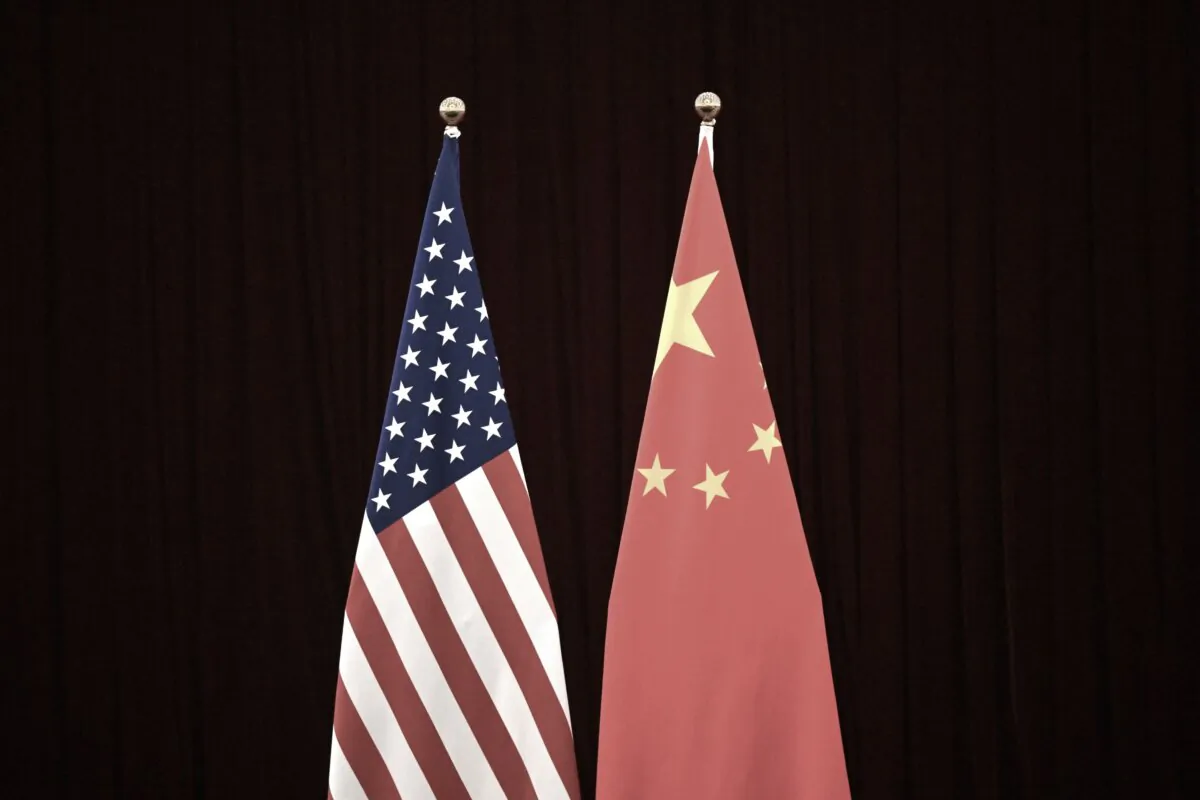
The threat to the United States from the People’s Republic of China (PRC) is multifaceted, long-term, and aggressive. Whether it’s from military modernization to economic coercion, cyber warfare to space competition, the PRC’s national security challenge is global, and it targets U.S. interests, values, security, and standing in the world.
While much of the focus of U.S. policymakers has been on the military threat from China, the communist country has also implemented a multipronged approach to weaken the United States economically, politically, culturally, and diplomatically. It is enlisting a whole-of-government strategy blending civil and military approaches with tactics short of war to expand its influence and improve its geopolitical position.
Their determined plan uses economics, media, education, politics, culture, diplomacy, and information, among many other approaches, in a highly integrated and orchestrated fashion. Its actions take place within the United States domestically. They seek to undermine the United States regionally and globally while sowing doubt in the minds of U.S. allies.
In short, in many respects, the United States is involved in a Cold War with China, and it urgently needs to do more to stop China’s aggressive actions.
A central component of the Cold War with China is the effort made by its government to influence American public opinion and culture. The Chinese Government has a veritable army of anonymous social media accounts that it uses to not only present its views but to foment division among our people while silencing critics of its regime. It also distributes government-funded newspapers within the United States, little more than propaganda broadsheets, and invests in key media infrastructure to not only support its views but to also mute criticisms of its policies.
Additionally, through massive state support, it also seeks to shape American culture through supporting select movies, such as the 2019 movie “Midway,” to create division between the alliance of the United States and Japan, as well as prompting the temporary removal of the flag of Taiwan from the jacket of actor Tom Cruise in the 2022 movie “Top Gun: Maverick.” Much like the Soviet Union during the Cold War, China is using all of its resources to challenge, coerce, silence, and divide opinions about its policies and actions. It uses cultural influence as much as any other capability at its disposal.
There is no better example of this than what China has done to expand its capabilities in space. Through robust state-funded support, economic espionage, theft, and coercion, China has aggressively grown its constellation of satellites and other capabilities, giving its military and intelligence services as well as its state-run industries significant advantages. To this end, it has even tried to replicate Elon Musk’s reusable rocket concept, the Starship, as well as its Mechazilla Catching Tower.
These are just the latest examples of Chinese economic espionage that have been going on for decades and have done great harm to our commercial space companies. Even as they have advocated for peaceful uses of space, China has also aggressively militarized space, creating advantages that could be used in a future conflict. The United States needs to do a better job at confronting this sustained threat.
The Chinese government has also sought to systematically expand its power and take over international institutions affiliated with the United Nations and other global and regional organizations. These efforts are made not only to expand its control but to also mute international criticism of the PRC’s actions and create diplomatic and other complications for the United States and its allies.
Consider China’s involvement with U.N. environmental organizations and how it has been able to silence criticism and prevent investigations of the activities of its maritime militia. China pillages fish stocks around the globe and often destroys reefs and harasses other national fishing fleets. It has also done much to downplay the PRC’s significant contributions to air pollution and how its development projects worldwide, as part of its Belt and Road Initiative, destroy the environment. Finally, China consistently seeks to reduce Taiwan’s role on the world stage, delegitimize its political system, and exclude it from international forums.
While the leaders of the People’s Republic of China publicly call for peaceful relations with the United States, they are relentlessly pursuing a campaign to challenge the United States in virtually every economic, political, diplomatic, and military sphere of activities. It consistently seeks advantages using a sustained, long-term campaign of relentlessly expanding its influence using all of the resources of its government.
In many respects, our country is involved in a new Cold War with China, requiring a similarly enduring approach that enlists not just the resources of the U.S. government but our own civil society, allies and partners, and freedom-loving people across the world. We must do a better job of making America first and China last.
From RealClearWire
Views expressed in this article are the opinions of the author and do not necessarily reflect the views of The Epoch Times.
 Friends Read Free
Copy
Facebook
Tweet
Friends Read Free
Copy
Facebook
Tweet