
Commentary
Part 2 of this series can be read here.
Are tariffs always taxes? When does a statute granting powers to the president go too far?
These are some of the questions the Supreme Court will address in two consolidated tariffs cases: Learning Resources Inc. v. Trump and Trump v. V.O.S. Selections.
This is the first of two installments that unpack the principal constitutional issues for you. These essays examine those issues through the lens of the Constitution’s original meaning, irrespective of any mistaken later interpretations.
When Are Tariffs Taxes?
Tariffs are financial impositions on imported items. The Constitution refers to them as “imposts.” That word, in turn, is part of the Constitution’s larger category of “duties” (Article 1, Section 8, Clause 1).
In the current litigation, both sides claim that all tariffs are taxes or all tariffs are regulations of commerce. But from the standpoint of the Constitution, both sides are wrong.
Here’s the background.
Before and during the time when the Constitution was adopted, governments employed tariffs for several reasons. Sometimes governments imposed them to raise revenue to fund the government. A tariff designed to raise money was considered a “tax.”
On other occasions, governments imposed tariffs at rates so high that they effectively discouraged or banned imports of particular goods. The usual reason for this was to protect local producers or local shippers by pricing foreign goods out of the domestic market. Another reason was to prosecute a trade war against a foreign government. These “prohibitory tariffs” were not considered taxes but regulations of trade. Similarly, if the tariff produced some revenue, but the money was directed solely at funding inspection programs, the tariff was a regulation of trade.
The distinction between imposts for revenue (taxes) and imposts for regulating commerce is crucial for understanding the arguments the American colonists leveled against the British Parliament before independence. Americans were willing to pay tariffs levied by Parliament in order to regulate trade for the general welfare. But Americans were unwilling to pay tariffs for raising revenue. Because the colonists were not represented in Parliament, any efforts by that assembly to raise revenue through tariffs was “taxation without representation.” Taxation without representation violated the sacred rights of all Englishmen to not be taxed without their consent.
The parties in the current litigation are not the first to question the viability of the “tax versus regulation” distinction. But there is no doubt that most of the Founders accepted it. And, as we shall see, they wrote it into the Constitution.
A more difficult issue is the following: If the tariff significantly restricts trade but also raises some money, is it a tax or a trade regulation?
Fortunately, the Founders addressed this question. For example, in 1767–1768, John Dickinson penned a series of newspaper op-eds called “Letters from a Farmer in Pennsylvania.” Dickinson’s letters were celebrated and admired everywhere—except perhaps in the British ministry. The “Farmer Letters” made Dickinson an international celebrity. He subsequently served as one of the Constitution’s leading framers, and played a significant role in its final ratification.
Dickinson explained that a tariff was a tax only if levied “FOR THE SOLE PURPOSE OF RAISING A REVENUE” (his capitalization). Thus, a mixed-purpose tariff is a regulation of commerce, not a tax.
It is true that a tariff intended solely to raise money may have the incidental effect of reducing imports. But if that is not a legislative purpose, then the measure is a tax.
The Constitutional Plan
The Constitution assumes this tax versus regulation distinction. In the taxation clause, the Constitution grants Congress power to “lay and collect Taxes, Duties, Imposts and Excises” (Article 1, Section 8, Clause 1). The phrase is somewhat repetitive, since duties and imposts may (or may not be) taxes and excises always are. But the effect of the clause is to give Congress authority to adopt tariffs for the purpose of raising revenue.
Congress’s power to impose prohibitory tariffs, on the other hand, comes from the commerce clause (Article 1, Section 8, Clause 3). This provision permits Congress to “regulate Commerce with foreign Nations,” including prohibitory or regulatory tariffs. (The frequent claim that the commerce clause granted only power to sweep away trade barriers is, therefore, incorrect.)
Article 1, Section 9 also rests in part on the difference between tariffs-as-taxes and tariffs-as-regulations. Clause 5 reads, “No Tax or Duty shall be laid on Articles exported from any State.” This provision covers both those tariffs that qualify as taxes and those that do not but still qualify as “duties.” Clause 6 adds, “No Preference shall be given by any Regulation of Commerce or Revenue to the Ports of one State over those of another.” This provision covers tariffs of both kinds.
What About the Trump Tariffs?
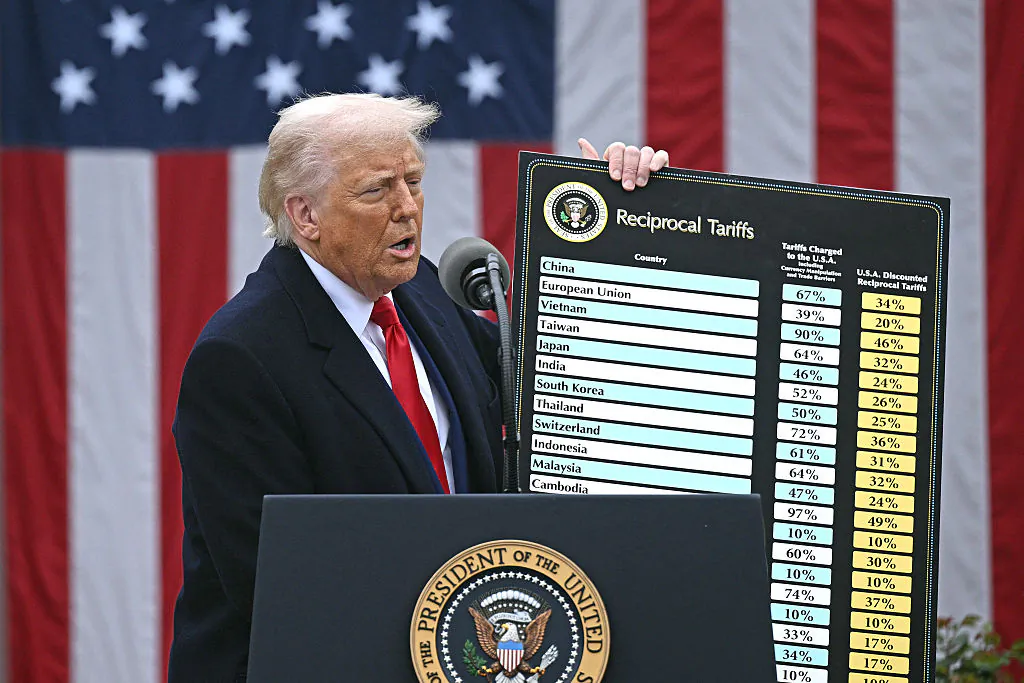
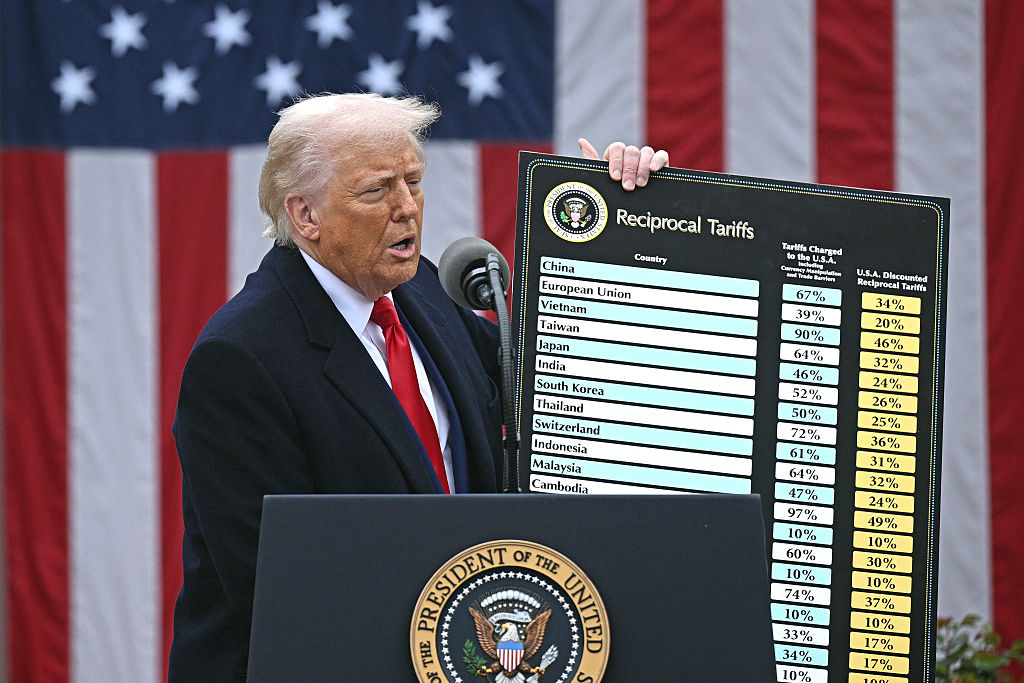
The president has repeatedly said that his tariffs serve both to raise money and to regulate trade. And, as a factual matter, they do both raise money and regulate trade. Under Dickinson’s formulation, therefore, they are regulations of foreign commerce rather than taxes.
But this doesn’t tell us whether the president may impose them. The Constitution says nothing about the president regulating “Commerce with foreign Nations.” That is the prerogative of Congress. Moreover, the Constitution specifies that only Congress holds “the legislative Power” (Article 1, Section 1) and that only the president holds “the executive Power” (Article 2, Section 1). Isn’t regulating trade a legislative rather than an executive function?
As a matter of fact, during the 18th century, in the British system the crown (i.e., the chief executive) had theoretical authority to regulate trade. But in practice, this authority had been ceded to Parliament, and the Constitution accordingly lodged it in Congress rather than in the executive.
On the other hand, Founding-era legislatures did sometimes grant and define authority for the executive branch. For example, Congress might say that the president could impose or remove a prescribed tariff upon the occurrence of a particular event. We commonly think of this as “delegating” authority to the executive. But I think that it is merely Congress defining the scope and conditions of a law and therefore prescribing the content of the president’s “executive Power.”
As the source of his tariff authority, President Donald Trump relies on two principal statutes. One is the National Emergencies Act of 1976. The other is the International Emergency Economic Powers Act of 1977.
The National Emergencies Act permits the president to declare a national emergency simply by notifying Congress of his decision. The law originally provided that Congress could veto that decision, but the Supreme Court ruled that the congressional veto was unconstitutional. So now the president’s decision is final unless Congress adopts a law contradicting it and the president either signs the law or Congress overrides his veto.
The effect is to allow the president to declare emergencies almost at will.
Once the president has declared an emergency, Section 1701(b) of the International Emergency Economic Powers Act empowers him to “deal with an unusual and extraordinary threat with respect to which [the] national emergency has been declared.” Then Section 1702 explains how he may “deal with” that threat.
It states that the president may “regulate, direct and compel, nullify, void, prevent or prohibit … transfer … transportation, importation of, or dealing in … any property in which any foreign country or national thereof has any interest by any person, or with respect to any property, subject to the jurisdiction of the United States.”
If you had trouble reading that passage, it is because this language is the sort of gibberish for which modern congresses have become infamous. For our purposes, the significant phrase is that the president may “regulate … importation.”
Accordingly, Trump 1) relied on the National Emergencies Act to declare emergencies by executive order, and then 2) imposed tariffs to “regulate importation” by executive order.
In the next installment, we’ll sort out the constitutionality of all this.
Views expressed in this article are the opinions of the author and do not necessarily reflect the views of The Epoch Times.
 Friends Read Free
Copy
Facebook
Tweet
Friends Read Free
Copy
Facebook
Tweet