
Commentary
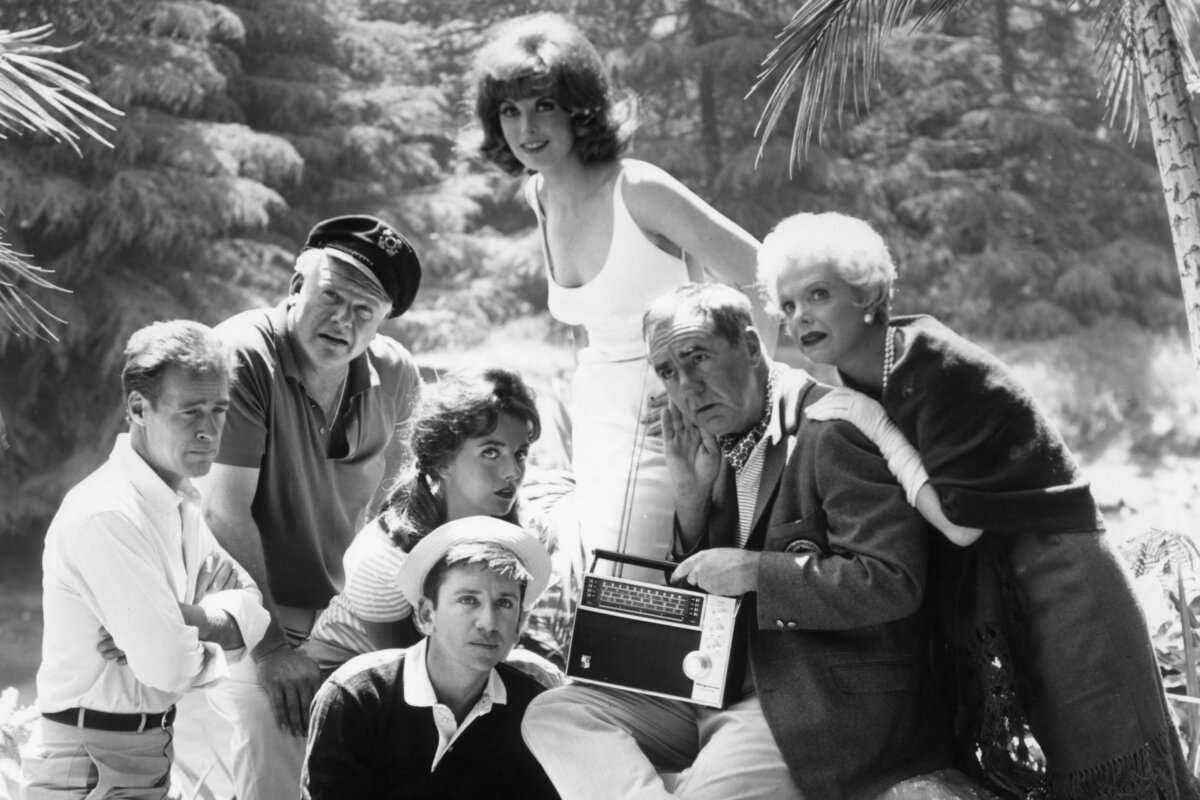
I grew up on the show “Gilligan’s Island”—all those sick days, fake or real, home from school watching the TV—which was already in syndication from its initial run from 1964 to 1967. I have to remind myself that this was 60 years ago, but it still feels modern.
The show was ostensibly about a group of Americans, on a three-hour boat ride, who find themselves in a storm and land as castaways living on an island. They struggle over the elements and somehow prevail. The viewer remains in a constant state of anxiety over whether they will be rescued but still marvels at the little society they manage to create in the meantime.
It’s a diverse crew with the skipper of the crashed ship, a lockjawed millionaire and his wife whose money was useless but maintained their class standing, a serious and objective scientist, a glamorous movie star, and a country girl who might as well be a milkmaid. Gilligan, played by Bob Denver, whom I later met (I was starstruck), was just an ordinary person.
Gilligan was, however, the hero of the show, extremely fallible and humble, but somehow, he always came through with his ordinariness and common sense. The viewer was invited to associate themselves with Gilligan more than the rest because there was nothing particularly special about him.
He was just a middle-class American—not a movie star, a credentialed expert, not a robber baron—which was precisely the point. Working with others, and together, they were able to construct a full and vibrant society in peace while they worked through the struggles that would appear in every episode.
Years later, I met professor Paul Cantor (1945–2022), a highly regarded Shakespeare scholar teaching at the University of Virginia. Implausibly, he had just published his 2001 book “Gilligan Unbound.” It was his foray into pop culture, an exercise he undertook partly because his students cared about the topic and also because he believed that commercial culture actually matters in the shaping of the social order.
Cantor had a thesis. The show seemed to be a comedy about nothing in particular but was actually a recreation of Alexis de Tocqueville’s “Democracy in America” put on prime time. It was a Cold War-era sitcom about how the American democratic spirit was capable of conquering every trial, every evil, and every challenge, no matter where it landed. It could create scientific labs, country clubs, Hollywood-style shows, and single-family homes anywhere on the planet, no matter the obstacles.
In other words, this show was actually a patriotic tribute to the American nation, a reverential tribute to the uniqueness of the American spirit.
Cantor’s book is a brilliant piece of literary criticism. I read it over and over and marveled at his keen insights.
He described his thesis as follows:
“I wrote that ‘Gilligan’s Island’ reflected the political confidence of 1960s America in the midst of the Cold War. A representative group of Americans could be dropped anywhere on the planet and they would rule, creating a small-scale model of U.S. democracy and fending off a sampling of its enemies, from Soviet cosmonauts to a Japanese soldier still fighting World War II to a Latin American dictator.
“Gilligan is the perfect democratic hero because he has no claims to superiority. The Professor has wisdom; the Millionaire has money and social status; the Skipper has a kind of military authority as captain. Gilligan is the pure common man. And, of course, the only time the castaways hold an election, he is chosen as president. Throughout the series, Gilligan represents the triumph of the ordinary over the extraordinary.”
When the island held an election, for example, Gilligan won. Otherwise, this small crew managed to recreate vast features of American life, from theater to industry to country clubs to scientific labs. In seeing all of this in a seemingly silly sitcom, Cantor was a prime example of why we have professors in the first place, and I was privileged to know him well.
As it turns out, Cantor sent a copy of his book to Sherwood Schwartz, the writer who created “Gilligan’s Island” and “The Brady Bunch.” Schwartz actually read the book and responded to Cantor. Cantor reported the exchange.
“Once Schwartz had read the book, he wrote me another long letter explaining that it had always bothered him that people criticized ‘Gilligan’s Island’ for being silly; they didn’t understand it, he said. ‘Not a single critic got it, with the basic concept of democracy staring them right in the face.’ He viewed my book as a vindication of his work: ‘I never thought I’d see the day when an English Professor of some note would use ‘Gilligan’s Island’ as one of four pillars on which rest the liberal democratic view of the recent past in America.’”
So there we have it: The professor of literature is vindicated by the comedy sitcom writer himself!
As I think back on how much this show shaped my own view of who Americans are and why they have mattered in the world, I’m really struck by how normal and inevitable the show felt to me as an 8-year-old kid. How much did this show actually shape my understanding? To what extent was my own thinking on the American idea informed by such supposed silliness that is actually incredibly sophisticated in a philosophical sense?
De Tocqueville believed that Americans had discovered and even created a special thing: the capacity of a people to self-govern without a permanent elite, a monarchy, a religious despot, or a conqueror. His thesis was that America had discovered freedom and made it work. “Gilligan’s Island” shows that this spirit was transplantable anywhere, an indomitable and persistent truth that would overcome all odds, even the most desperate ones.
It was a message that resonated at the height of American patriotism and clarity during the Cold War. Freedom would overcome all.
Do we still believe that? I’m not sure, but we should. Thomas Jefferson, Tocqueville, and Schwartz were onto something: America works despite all odds.
Views expressed in this article are the opinions of the author and do not necessarily reflect the views of The Epoch Times.
 Friends Read Free
Copy
Facebook
Tweet
Friends Read Free
Copy
Facebook
Tweet