Commentary
The United States carried out two major military operations in early 2026—first capturing then-Venezuelan President Nicolás Maduro, then conducting joint strikes with Israel against the Iranian regime. The military equipment sold by China performed poorly in both Venezuela and Iran.
Overall, counter-stealth detection networks, long-range surveillance and command systems, military-grade isolated intranet (the Iranian version of China’s “Great Firewall”), and anti-ship ballistic missiles didn’t function effectively during the conflicts.
In my view, rampant corruption across China’s military and technology sectors, plus the Chinese Communist Party’s authoritarian rule, are the major reasons behind this failure.
Top Brass Corruption in the Military-Industrial Sector
China has 11 state-owned defense conglomerates that are under the direct management of the Chinese Communist Party (CCP). All these conglomerates have seen senior executives investigated for corruption since the Party’s 20th Congress in 2022.
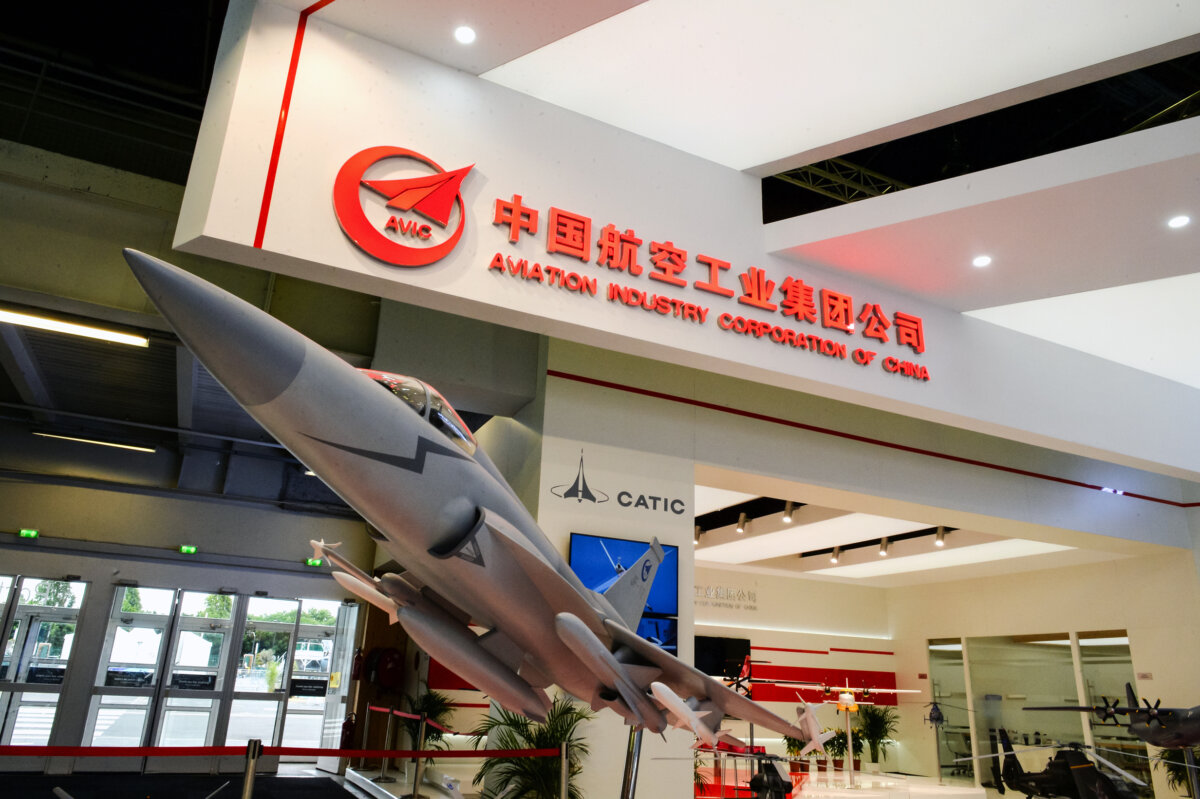
On March 25, Tan Ruisong, former chairman of Aviation Industry Corp. of China (AVIC), was sentenced to death with a two-year reprieve by a court in Dalian, China. He was convicted of embezzlement, bribery, insider trading, and leaking insider information. The amounts he stole were staggering: 89.93 million yuan (about $13 million) in embezzlement and 613 million yuan (about $89 million) in bribes, totaling more than 700 million yuan ($102 million). Official reports state that Tan had been accepting bribes continuously for 26 years, even in 2024, one year after he had allegedly retired from his post as chairman.
AVIC is one of China’s largest defense contractors, with about 400,000 employees—more than Boeing and Airbus combined. According to the Stockholm International Peace Research Institute, AVIC ranked as the world’s eighth-largest defense contractor by revenue in 2024.
Entrusting such a vital company to an official convicted of serious crimes raises doubts about the reliability of its so-called state-of-the-art weapons. In real combat situations—especially against advanced U.S. or Israeli weapons—China’s military equipment shows its weaknesses. For instance, in Venezuela and Iran, Chinese radar, reconnaissance systems, and other weapons were mostly ineffective and offered little resistance.
Tan is just one example. Other fallen defense executives include those from China’s nuclear, aerospace, ordnance, and electronics groups.
The top figures who fell from grace include Gu Jun, former general manager of China National Nuclear Corp.; Wu Yansheng, former chairman of China Aerospace Science and Technology Corp.; Zhou Xinmin, former chairman of AVIC and successor of Tan; Liu Shiquan, former chairman of Norinco Group; and Zeng Yi, former chairman of China Electronics Corp.
He Wenzhong, former deputy general manager of China Electronics Technology Group Corp., was given a suspended death sentence for taking 289 million yuan ($42 million) in bribes.
Hu Wenming, former chairman of China Shipbuilding Industry Corp., was sentenced to 13 years in prison and fined 5 million yuan ($727,511) for accepting more than 59 million yuan ($8.6 million) in bribes.
Liu Weidong, former deputy general manager of China South Industries Group, has been prosecuted for accepting “especially large” bribes.
Corruption Among Top Scientists, Academicians
Weapons design, improvement, and testing rely heavily on China’s top military scientists, especially those from the Chinese Academy of Sciences (CAS) and the Chinese Academy of Engineering (CAE).
Since 2022, at least 10 academicians with military backgrounds have been removed from the rolls.
In March, Yang Wei, chief designer of China’s J-20 stealth fighter, was removed from the official website of CAS. His profile had already disappeared from AVIC’s website in January 2025.
The other nine academicians include Luo Qi, former chief engineer at China National Nuclear Corp.; Xiao Longxu, former chief engineer at the Rocket Force Research Institute; Jin Donghan, former president of Tianjin University, power machinery expert, and a member of CAE; Cao Jianguo, former chairman of Aero Engine Corp. of China; Wu Manqing, former vice president of CAE and a leading radar expert; Zhao Xiangeng, former CAE vice president and a key figure in nuclear weapons research; Wei Yiyin, former deputy general manager at China Aerospace Science and Industry Corp. and a missile guidance specialist; Liu Cangli, former head of the China Academy of Engineering Physics; and Liu Guozhi, former deputy head of the People’s Liberation Army (PLA) General Armaments Department who later led the Central Military Commission’s Science and Technology Commission.
These men were regarded as China’s top minds in military technology. Their downfall reveals widespread corruption even at the highest levels of weapons development.
Widespread Corruption Among Generals
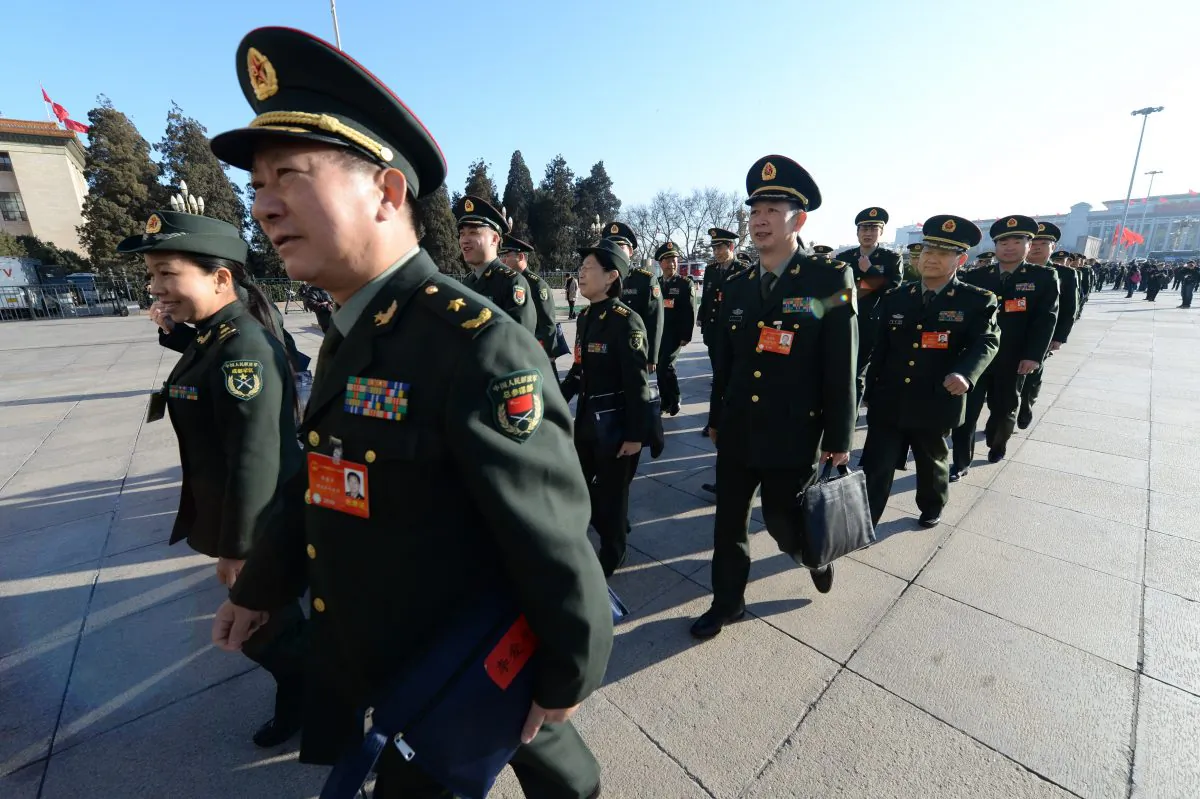
Shortly after the CCP’s 20th Congress, a massive scandal erupted in the Rocket Force, leading to the purge of multiple commanders and dozens of generals. The first three consecutive commanders of the Rocket Force—Wei Fenghe, Zhou Yaning, and Li Yuchao—were ousted for corruption.
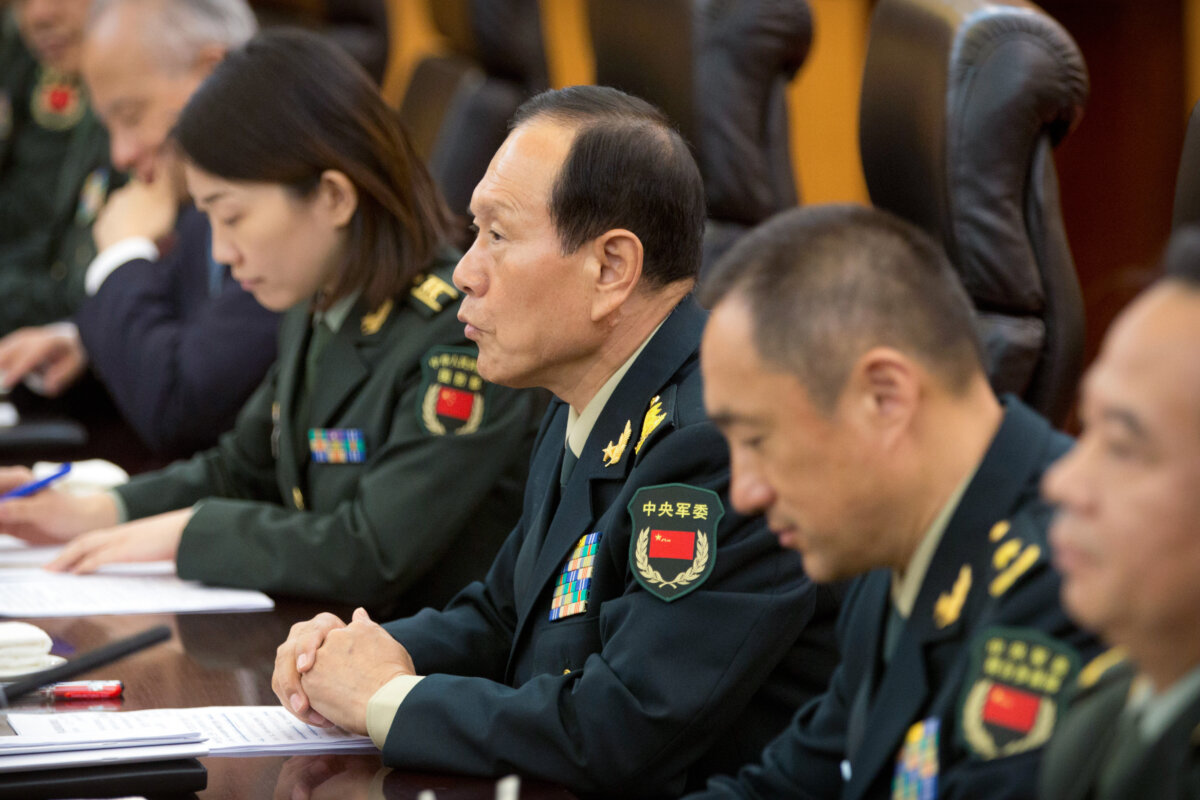
The anti-graft campaign quickly spread to the Central Military Commission’s Equipment Development Department. Former Defense Minister Li Shangfu, who once headed that department, was also removed.
The Equipment Development Department oversees massive budgets and procurement decisions, making it one of the most corruption-prone parts of the military. In June 2024, state-run media outlet Xinhua News Agency reported that Li was expelled from the Party and the army and stripped of his full general rank for accepting and offering large bribes.
Corruption in military procurement has basically run rampant.
A number of generals tied to the Central Military Commission’s Equipment Development Department have been investigated, including the department’s former deputy directors Zhang Yulin, Ju Xinchun (also former commander of the Southern Theater Navy), and Rao Wenmin. Other generals purged include Lu Hong and Li Tongjian, former director and deputy director of the Rocket Force Equipment Department, respectively.
Rot in the Military Personnel System
The roots of corruption trace back to the Jiang Zemin era, when Guo Boxiong and Xu Caihou turned the military into a vast marketplace for buying and selling ranks. Although the current CCP leader, Xi Jinping, started an anti-corruption campaign and military reforms, he never addressed the fundamental problem.
Consequently, promotions and assignments are still primarily driven by money and personal loyalty instead of competence.
For instance, the two top military personnel chiefs appointed by Xi after he came to power—Zhang Yang, former head of the Central Military Commission Political Work Department, and his successor, Miao Hua—continued to blatantly sell promotions.
This culture of buying and selling positions has infected the entire PLA. Officers or generals who purchased their ranks will inevitably use their roles to recoup the money they paid for promotion. Military procurement involves large volumes, broad areas, and huge sums—it’s one of the fastest and most profitable ways to make money. They definitely wouldn’t pass up a chance like that to line their pockets.
Xi has promoted 81 full generals, but according to the Canadian think tank Cercius Group, at least 70 generals have been purged, sidelined, or quietly removed since late 2023.
Currently, the PLA has only four active full generals, with two of them promoted from lieutenant general in December 2025. Across the Chinese Navy, Army, Air Force, Rocket Force, five major theater commands, and paramilitary armed police, nearly every full general, including commanders and political commissars, has been purged.
The Core Problem: Absolute Loyalty Without Oversight
The CCP consistently stresses the Party’s full control over the military, as it has publicly advocated that “political power grows out of the barrel of a gun.” In practice, this involves transforming the army into a tool for the Party to uphold its authoritarian rule. For Xi, it means that the military is a means of sustaining his power, with little real oversight.
After the Cultural Revolution ended, some within the CCP asked, “Who will keep Mao Zedong in check?” Now, 50 years later, the question remains the same: Who watches Xi Jinping? And who can keep the CCP itself in check? This is a fundamental root of corruption—an issue that can’t be solved under the Party’s rule.
Without oversight from the highest levels, corruption filters down to every tier. Subordinates, fearing for their jobs, turn a blind eye to their superiors’ crimes—and even engage in them for personal benefit—resulting in widespread corruption throughout the military and defense industry.
This is the main reason why Chinese weapons sold to Venezuela and Iran proved ineffective in actual combat.
Conclusion
Xi has led anti-corruption campaigns for 14 years, yet the problem seems to worsen. In 2025 alone, the Central Commission for Discipline Inspection investigated 181 high-ranking officials—the highest number since Xi assumed power.
Even if the crackdown increases this year, it won’t address the core issue: Who supervises the top leader and the ruling party?
As long as that fundamental question remains unanswered, anti-corruption efforts are a Band-Aid solution. The cycle will continue—more corruption, more purges—until the authoritarian system itself collapses.
Views expressed in this article are the opinions of the author and do not necessarily reflect the views of The Epoch Times.
 Friends Read Free
Copy
Facebook
Tweet
Friends Read Free
Copy
Facebook
Tweet