
Commentary
There is a major problem with the neologism anarcho-capitalism. It is a fusion of two words (anarchism and capitalism) the definition of which no one can seem to agree. Shoving them together with a dash in between only compounds the problem. If the point of language is to communicate meaning, this term does the opposite. It spreads confusion.
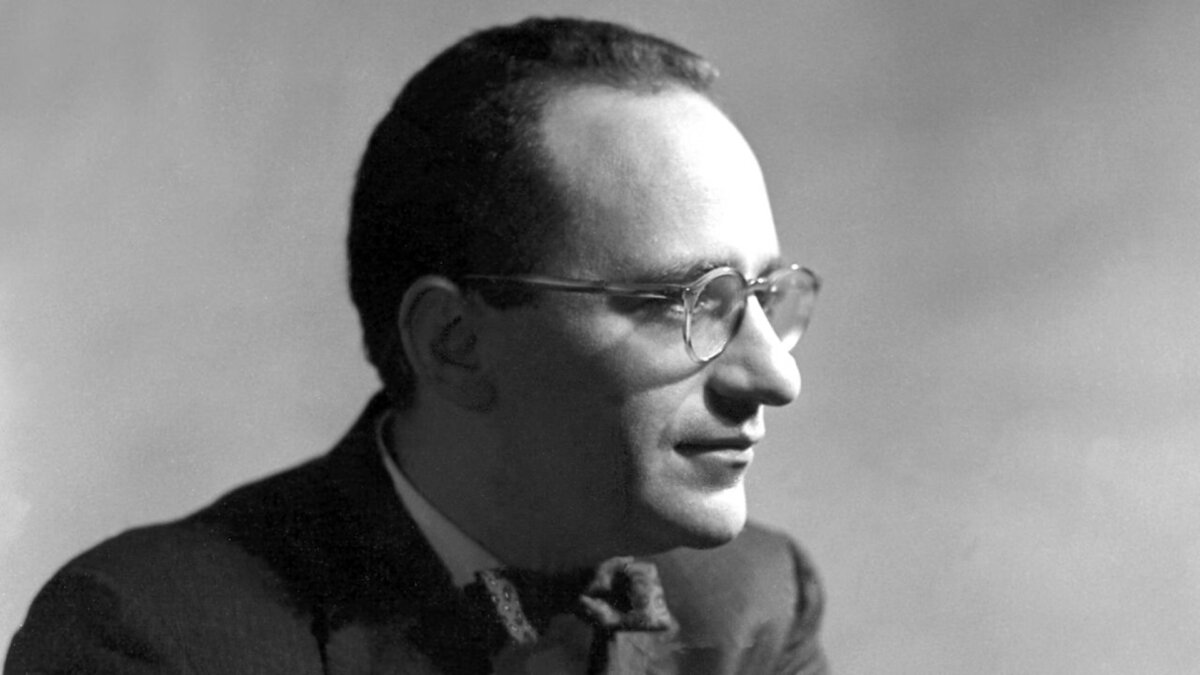
This is why I’ve never used the term to describe my outlook, even though my mentor Murray Rothbard (1926–1995) not only used the term to describe himself; he even invented it, even if the idea itself has precedent in the history of ideas (Gustav de Molinari, for example, who lived from 1819–1912). I admire Rothbard enormously and appreciate his many contributions to economics, history, and philosophy. But that does not mean that I must embrace this designation.
Let’s start with the word anarchism. It technically means a society without a state. But what is a state? Here is another source of confusion and debate. I would say it is an institution that can take your money, your time, and your life without your permission and without doing anything considered to be illegal. That is roughly the definition offered by the French liberal Frédéric Bastiat.
You can say a state is necessary or maybe a necessary evil, as our Founders believed. Still it is an interesting intellectual exercise to imagine life without one. Would it be complete chaos or surprisingly orderly?
The anarchist claim, put in the most sympathetic light, is simply the assertion that society contains within itself the capacity for self-management. Or as Pierre-Joseph Proudhon put it, liberty is the mother, not the daughter, of order.
There wasn’t much of a state in Colonial times and communities formed and functioned just fine. Even now, there are private courts and arbitration agreements now that do not rely on government courts. Fully private communities are common. Private enterprise has proven itself capable of building roads and managing streets with great competence. Same with education, sewage, and garbage collection and disposal. Goodness knows we would be better off without government intrusion in medicine. Some nations even do without a military entirely like Costa Rica. Full scale privatization is possible, at least in theory.
Anyone who has not thought carefully about this topic has not really taken political philosophy seriously. If you believe there must be a state, what failing in the fabric of society itself have you identified that is in need of fixing by a compulsory overlay? There needs to be a compelling and believable answer that has empirical and theoretical backup. Another powerful question: what magical capacity does the state itself possess that guarantees its creation will lead to better results than would otherwise obtain?
All theories that posit the need to create a state should recall 1 Samuel 8:11–18: “This is what the king who will reign over you will claim as his rights: He will take your sons and make them serve with his chariots and horses. … He will take your daughters to be perfumers and cooks and bakers. He will take the best of your fields and vineyards and olive groves and give them to his attendants. He will take a tenth of your grain and vintage and give it to his officials and attendants. Your male and female servants and the best of your cattle and donkeys he will take for his own use. He will take a tenth of your flocks, and you yourselves will become his slaves.”
And so on. There is danger here.
To be sure, there are plenty of valid criticisms of the anarchist outlook. What if the private institutions that fill the vacuum in effect become as coercive or more so than the state? That’s not entirely out of the question, e.g., a homeowners association, a tech company that spies on you and sells your data, or a pharmaceutical company that poisons people with lies. To be sure, there are private solutions to all these problems. You can move. You can insist on better terms of use. You can sue for damages. All this presumes that society has created mechanisms and institutions that make all this possible.
Even if that is true, full privatization might not result in what most of us would consider to be a liberal social order. There is no reason, for example, for Google or a private religious community or a company town to adhere to a Bill of Rights that does exist as it would not in an anarchist society. One might evolve organically but might not.
On the other end, most people who hear the word anarchist do not think of a world ruled by private corporations but rather a society without rules that would end in utter chaos. Etymologically, the correct term for such an order is not anarchy but anomie or antinomianism. That’s fine for those who communicate with a dictionary nearby but not helpful for common talk. We can argue about language all day but none of us are in charge of how a word is popularly understood.
Now let’s talk about capitalism. I’ve used that term for years to refer to the voluntary matrix of exchange extending from agreed upon property relationships; that is, what we call freedom. That’s an idyllic definition that has never pertained in real life. Real-world capitalism has been something very different in every historical case of which I’m aware. Private companies get state privileges. Property rights are allocated based on royal privileges (see Enclosure Acts). Bailouts and monopoly grants are pervasive. And no one seems to agree on the status of what’s called intellectual property in a capitalist economy.
Other people hear the term capitalism and hear only that capital part of the word; that is, a society organized around the interests of the largest property holders while everyone else has no choice but to inhabit the role of a worker/peasant. I don’t think of it that way at all but I’m in no position to reconstruct the popular understanding of a single word. Remember that it wasn’t Adam Smith who coined the term capitalism but Karl Marx.
In the Cold War period, it was much easier to use the term capitalism in a way that would convey meaning because it was deployed in contradistinction to the word communism as in the system of the Soviet Union. Fine. The trouble is that the political economy of the Soviet Union was never textbook communism following the grueling experience of “War Communism” from 1920–23. It mutated into a massive bureaucracy that more closely resembled feudal or fascist arrangements with an all-powerful state overlord.
Also, many features of 20th-century American capitalism have been seriously compromised as well by centralized banking, loose and corrupted money, the income tax, bouts of wartime price control, an industry-controlled regulatory state, a welfare state that builds bureaucracy, a vast administrative apparatus in medical and pharmaceuticals, plus an imperial military machine, among other non-capitalist institutions.
In any case, for the purpose of clarity of exposition, the term capitalism these days does not lend itself to providing greater understanding but rather confusion. This is what happens when a single word means a thousand different things to a thousand different people. I can insist on my own definition but that does not serve much purpose either.
The bigger problem I have with the fusion of anarchism plus capitalism points to the issue of a planned order. Presumably, an anarchist society would be unplanned. It would not game ahead of time what kind of results would be obtained from trying the experiment. Whatever else one wants to say about capitalism, it is certainly a certain kind of socio-economic system, one that guarantees private property in the means of production and probably also includes rules concerning the legal status of corporations.
When you say the term anarcho-capitalism, are you merely predicting that a proper anarchism would result in a proper capitalism? If so, that strikes me as defensible. On the other hand, maybe you are saying that you are willing to accept anarchism provided it results in what you call capitalism, in which case one’s anarchism is merely provisional.
Or maybe the fusion of the two terms merely confesses a bias, in which case you are not really an objective observer of the scene and no one should feel compelled to accept what you say as gospel. No matter how you look at it, this fusion of two undefined yet heavily normative terms can only lead to more confusion.
I get why Murray Rothbard enjoyed using the term. He was enormously brilliant and principled but often mischievous. Most of the anarchists he knew as a kid were either communists or socialists. He concluded at some point that anarchism was a good idea but completely rejected socialism and communism. So for clarity’s sake, he invented a new term. It served him well, if only to help market his intellectual product.
That said, I don’t think it serves anyone else well unless you are merely looking for a flag to wave. Which is fine. But don’t think that means that you are making your point any clearer.
In any case, for all these reasons, I’ve never warmed to the term as a self-description. Ever. That doesn’t stop countless media venues from calling me that, including my own Wikipedia page, which of course I cannot control. Such is the state of information in our times. I’ve pretty much given up correcting people but at least now this article has been published.
Views expressed in this article are the opinions of the author and do not necessarily reflect the views of The Epoch Times.
 Friends Read Free
Copy
Facebook
Tweet
Friends Read Free
Copy
Facebook
Tweet