
Commentary
In Book 11, near the center of the Odyssey, Odysseus gives us the first account of resurrection. It involves a descent to the realm of the dead. All mortal men go on this journey. Only a few have ever come back. It becomes a standard pattern in epic literature. Odysseus’s descent, traditionally called the katabasis, may initially seem like another fantastic adventure alongside Cyclopes, witches, and monsters. Yet its position in the poem suggests something more important. Odysseus cannot simply sail from Troy to Ithaca. Before he can recover his home, his kingship, and ultimately himself, he must confront death.
The pattern became one of the most enduring in Western literature. Virgil sends Aeneas into Hades before the founding of Rome. The Apostles’ and Athanasian Creeds proclaim Christ’s descent to the dead before the Resurrection. Dante places a journey through Hell at the beginning of the soul’s ascent toward God.
Why does the descent recur in Homer? Because the pagan hero’s greatest enemy is finally not another warrior or monster. It is mortality itself.
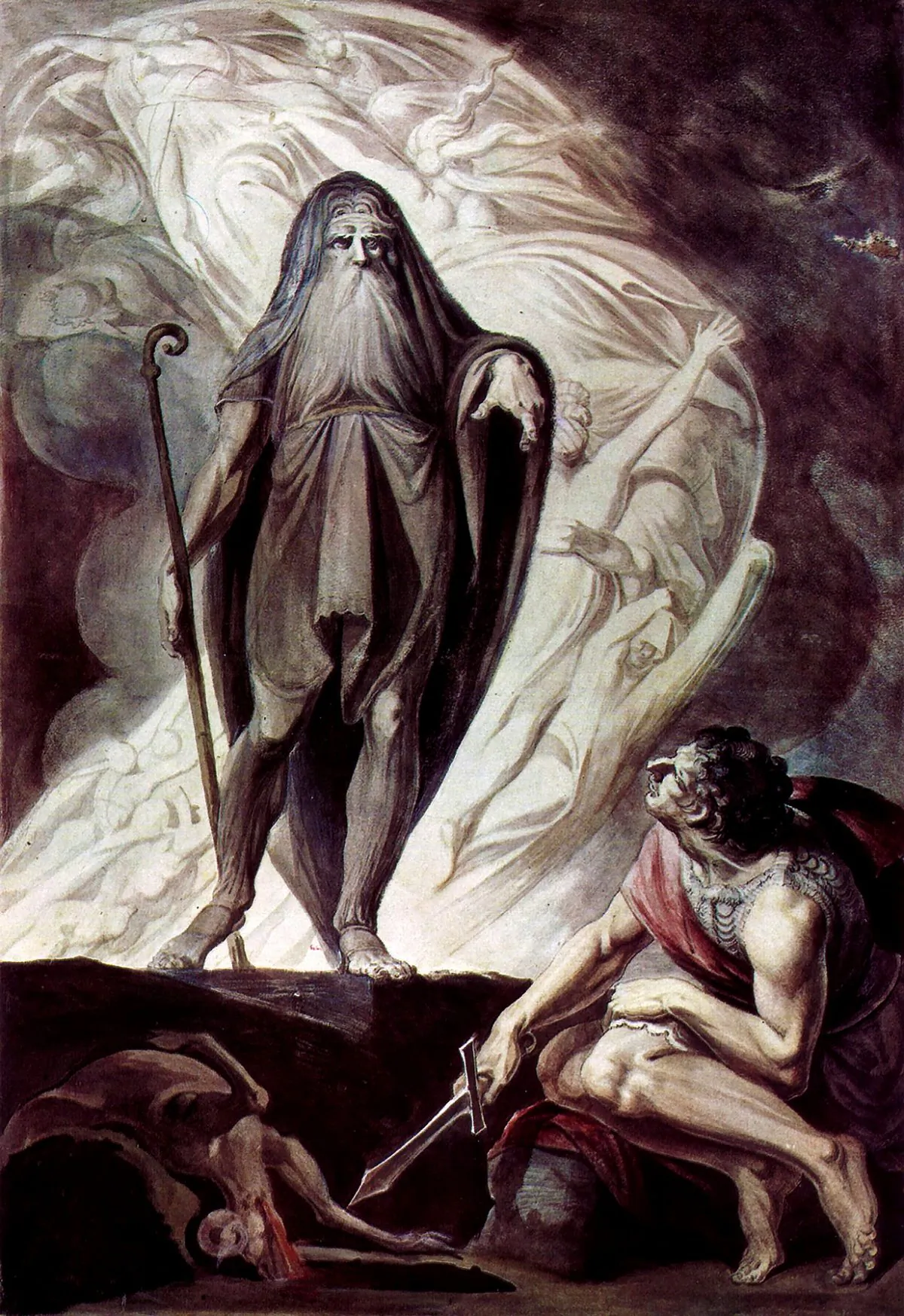
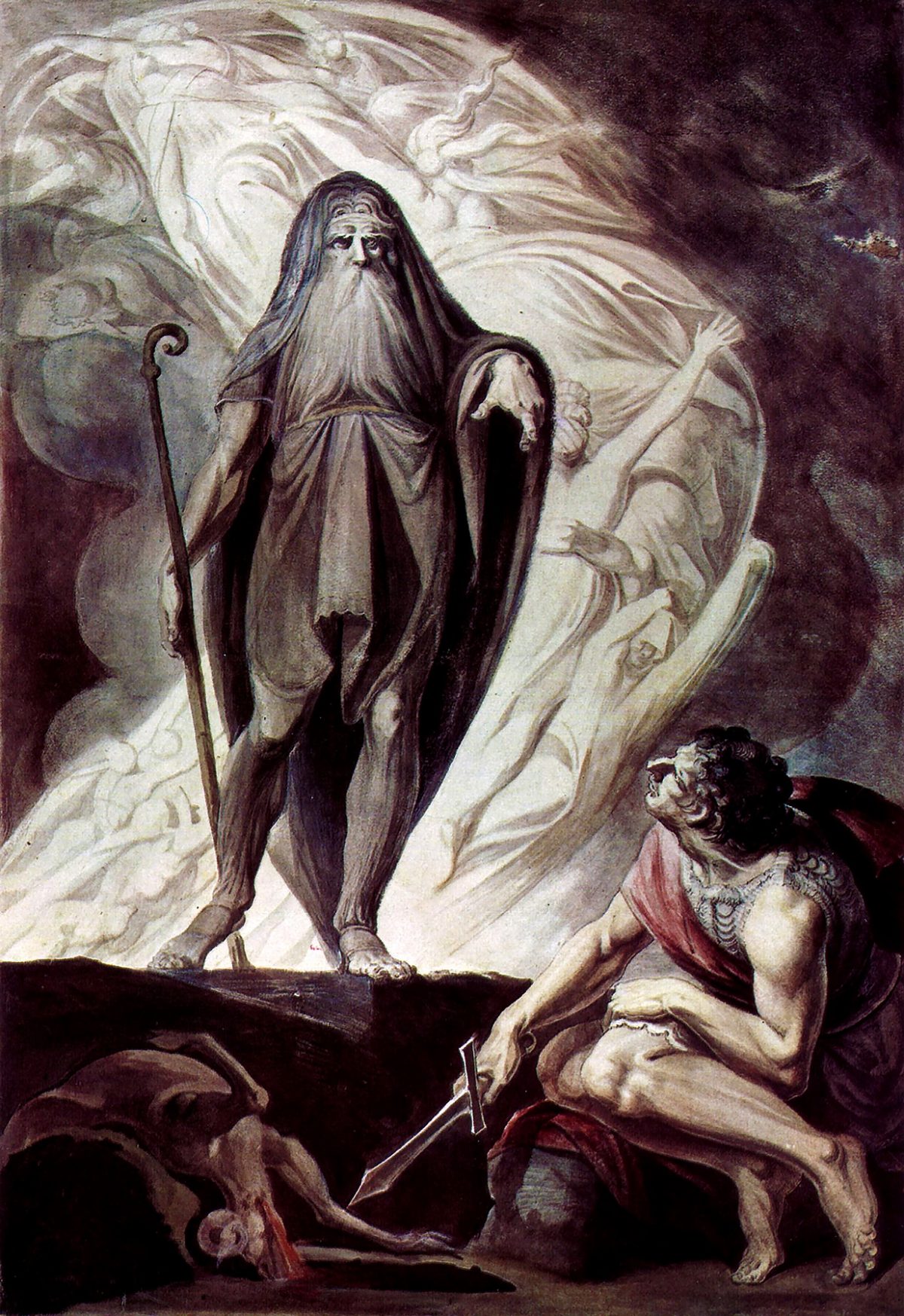
Homer establishes the heroic pattern. In Book 11 of the Odyssey, Circe tells Odysseus that before he can return home he must consult the dead prophet Tiresias. This is already paradoxical: the living man must learn from the dead how to live. It is a disturbing element of the pagan story. It is termed nekyia, a form of necromancy. Consulting with the dead is forbidden in Deuteronomy 18:10-12 because God is of the living (Isaiah 8:19). But it is a consistent pattern of paganism and shamanistic practice.
The Underworld strips away the illusions of heroic existence. Odysseus encounters his mother, Anticleia, and discovers that she died partly from grief during his absence. He meets Agamemnon, the mighty commander of the Greek expedition, now reduced to a shade after being murdered upon his own homecoming. He sees Ajax, whose resentment survives even death. Most strikingly, he meets Achilles. It is a key passage.
In the Iliad, Achilles chose a short life with everlasting glory—kleos—over a long and obscure life at home. In Hades, however, Achilles tells Odysseus that he would rather serve as the hired laborer of a poor man among the living than rule over all the dead.
The values of the Iliad have been subjected to the judgment of death.
Odysseus consequently emerges with a different understanding of nostos. Homecoming is no longer merely preferable to death. Ordinary mortal life—wife, father, son, household, land—has acquired a value that even heroic glory cannot replace.
Virgil deliberately develops Homer’s pattern in Book 6 of the Aeneid. Aeneas descends into the Underworld under the guidance of the Sibyl. Like Odysseus, he seeks knowledge through necromancy necessary for his journey. But Virgil transforms the personal nostos of Homer into a civilizational mission. Aeneas encounters his father, Anchises, who reveals the future heroes of Rome. The descent therefore changes Aeneas’s understanding of himself. He enters Hades as a Trojan refugee; he leaves as the bearer of Rome’s victorious future. He must consult with the past before he can found the future.
Christianity radically transforms the pattern. In the ancient Christian confession of Christ’s “descendit ad inferos,” or “descent to the dead,” reflected in passages such as 1 Peter 3:18-20 and Ephesians 4:9, Christ does not descend because he needs instruction from the dead. The direction has been reversed. The living God-man descends to proclaim his victory over death.
This difference is fundamental. Odysseus enters the realm of death temporarily and must escape it. Christ enters death itself and overcomes it. In Christian iconography of the Anastasis, particularly in the Eastern tradition, Christ is depicted breaking the gates of Hades and raising Adam and Eve from their tombs. The heroic descent has become an act of liberation.
Dante gathers these classical and Christian traditions together. The Divine Comedy begins with a man who has lost the “straight way.” Dante the poet narrates the three-day journey of Dante the pilgrim from Good Friday to Easter Sunday. Dante applies his journey to “our journey,” and his poem depicts a psychagogy (a “journey of the soul”), accompanied by regular moral instruction. It is not an exercise in necromancy. Before Dante can ascend Mount Purgatory or behold Paradise, the living man must descend through the circles of Hell.
And his guide for two-thirds of the journey is Virgil, who represents moral reasoning without grace.
Dante’s choice of guide establishes a remarkable literary genealogy: Homer sends Odysseus downward; Virgil sends Aeneas downward; Dante follows Virgil downward. But Dante makes the descent explicitly moral. Divine love is what orders the entire architecture of the Divine Comedy and directs his journey. Hell reveals what human desires become when permanently fixed upon the wrong objects. The damned are not merely being punished for their choices; they suffer according to what their choices made them (contrapasso).
The recurring pattern of descent therefore expresses something fundamental about heroic transformation. The hero must encounter the limit of every human ambition. For the pagans, that limit is death. For the Christian, it is sin which, unbroken, leads to spiritual death. Only the Life that has conquered sin and death can overcome it.
Death asks heroes in the epic tradition what glory, wealth, pleasure, conquest, and reputation are finally worth.
For Odysseus, the answer points toward Ithaca. After hearing Achilles, embracing the insubstantial shade of his mother, and learning the fate of Agamemnon, returning home means something different. Penelope is mortal. Laertes will die. Telemachus will grow old and die. Odysseus himself cannot escape the same destiny.
That does not make Odysseus’s return home meaningless. It makes home, an ordered life of meaning and purpose, precious.
Odysseus must descend among the dead because only after seeing death clearly can he understand the value of returning to the living. Later heroes will give even better answers, but none of them negate Homer’s original lesson of the importance of the return of the father and king.
Views expressed in this article are the opinions of the author and do not necessarily reflect the views of The Epoch Times.
 Friends Read Free
Copy
Facebook
Tweet
Friends Read Free
Copy
Facebook
Tweet