
Commentary
Missiles flying, mullahs dying, thousands of drones crashing into buildings and radars, anti-ballistic missiles hitting their targets, anti-ballistic missiles missing their targets, and oil flowing through the Strait of Hormuz shut down. Well, not quite.
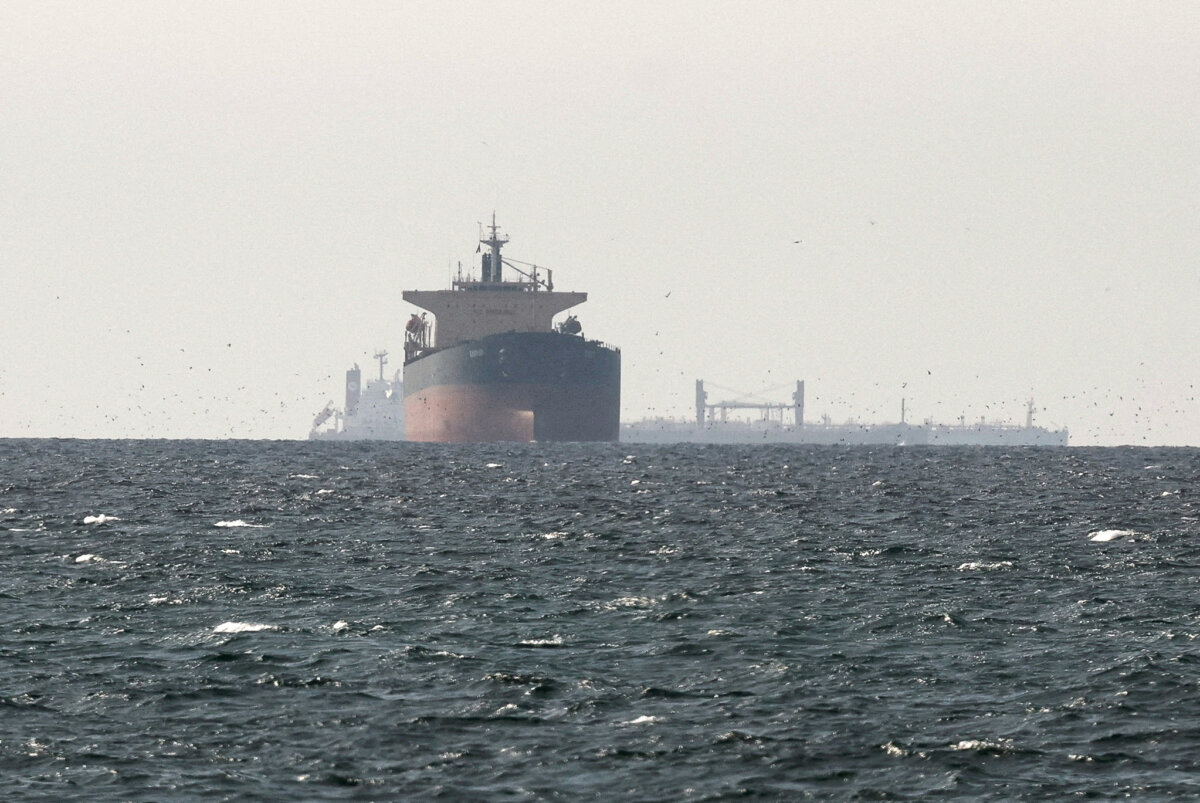
Turns out that while the rest of the world has been suffering from the loss of oil flowing through the strait, China has been enjoying a steady stream of about 1.25 million barrels per day, more than 28 million barrels, since the war began with attacks on Iran by Israel and the United States.
Aside from a smattering of oil that has made its way to India, no other country has continued to receive a steady supply of oil from Iran. What’s more, the president of the United States has even publicly assured China that it would be an “honor” for the United States to ensure that China continues to get its oil from Iran.
“We’re really helping China here and other countries because they get a lot of their energy from the Straits,” U.S. President Donald Trump told reporters on March 9. “We have a good relationship with China. It’s my honor to do it.”
Given that the Chinese communist regime is not exactly a friend of the United States, Trump’s statement seemed a bit odd. After all, it is the regime that unleashed a deadly virus on the world that resulted in the deaths of millions of U.S. citizens. And it is the regime that has been the primary source of the chemicals whose sole use has been to create the fentanyl that has killed hundreds of thousands of Americans.
And it is the regime that has been waging an all-out trade war against the United States for decades—a trade war that has gutted U.S. manufacturing might and destroyed millions of good American jobs, even as those who should know better droned on about the virtue of free trade with a country where free trade is not possible. What’s more, for decades, the regime has been stealing more than $300 billion in intellectual property annually—trillions of dollars cumulatively.
But let’s put aside the use of the words “honor” and “good relationship” as being no more than unscripted comments from a president known for unscripted comments. After all, no one knows better than Trump that his supporters aren’t at all excited and honored to have the United States ensure that China continues to get its oil even as Iran continues to earn billions of dollars from that oil.
Although appearing to placate China is certainly not high on Trump’s list of things he enjoys doing, he had at least two good reasons to do so. The first being that if China loses its supply of oil from Iran, it has the money to buy oil from other sources—sources that other nations are relying on and competing for. Shutting down the oil flowing to China through the Hormuz Strait would send oil prices higher.
Bottom line, the world and many in the United States are not patient when it comes to skyrocketing oil and gas prices, and even higher prices would put more pressure on Trump to figure out a way to declare victory and get some kind of cease-fire in place, even if U.S. goals had not yet been accomplished.
Less publicized is the possibility that, in conversations with Chinese leader Xi Jinping or representatives of his regime, it could have been communicated that if the United States shuts off Iranian oil to China, Beijing might just step up the aid it’s providing to Iran. This could involve stealthy, Mach 3 anti-ship cruise missiles and other military hardware.
But the most dangerous aid China could supply to Iran would be to fully use its extensive constellation of satellites to provide real-time tracking of U.S. forces in the region. Although Russia is almost certainly providing a whole bunch of satellite-based intel to Iran, it cannot provide the 24/7, second-by-second intel that China could provide. Such intelligence would have deadly consequences for U.S. forces.
Hence, although placating China is unpleasant—given that the United States is in a real war that is putting thousands of U.S. sailors, airmen, Marines, and soldiers in harm’s way—it is a necessary compromise.
Views expressed in this article are the opinions of the author and do not necessarily reflect the views of The Epoch Times.
 Friends Read Free
Copy
Facebook
Tweet
Friends Read Free
Copy
Facebook
Tweet