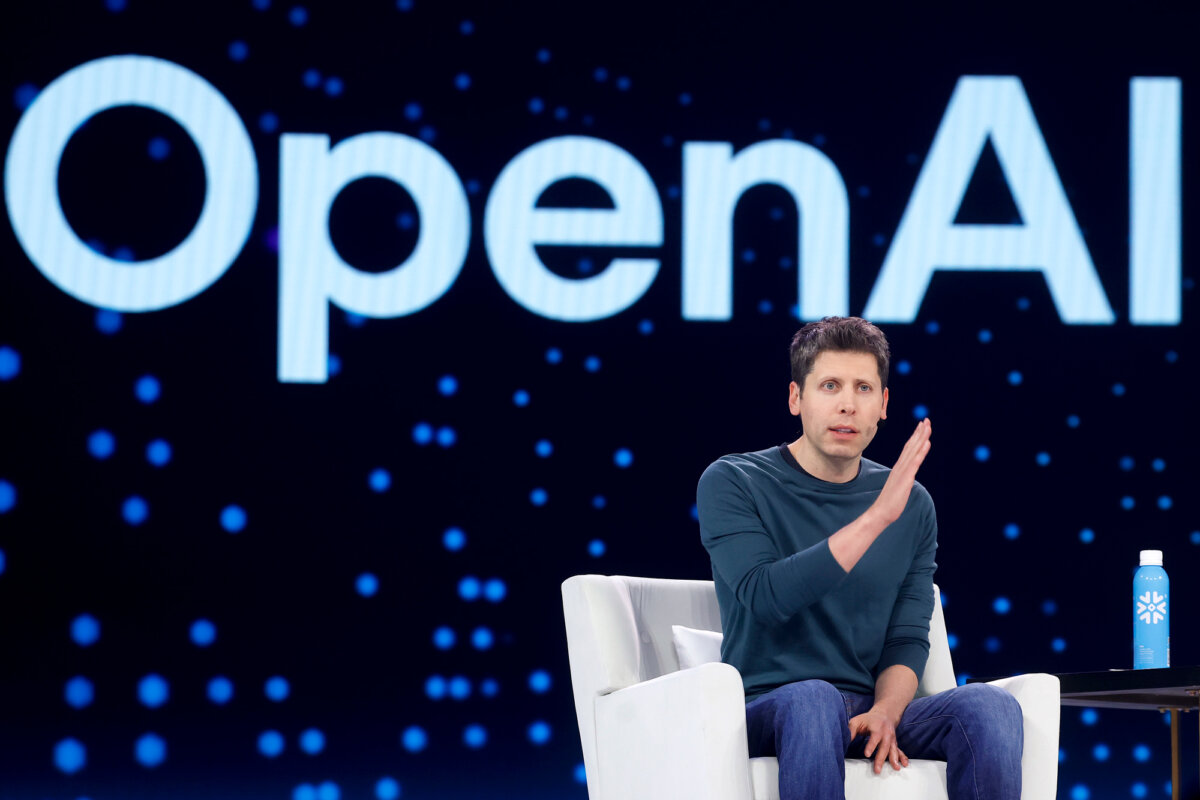

U.S. stocks ignored OpenAI’s announcement that it successfully completed a $110 billion funding round on Feb. 27.
Amazon invested $50 billion, Nvidia allocated $30 billion, and Japan’s SoftBank dedicated $30 billion in the latest funding round, the tech giant said in a news release. Other investors are expected to pour money into OpenAI.
In total, this was more than twice last year’s financing and brings OpenAI’s pre-funding valuation to $730 billion—up from $500 billion in October.
Additionally, the company confirmed that it has signed a strategic partnership with Amazon and secured next-generation inference compute from Nvidia.
These investments will ensure OpenAI remains at the forefront of building the infrastructure needed for artificial intelligence (AI) to work for everyone, Sam Altman, co-founder and CEO of OpenAI, said in a statement.
“We’re pushing the frontier across infrastructure, research, and products to make AI more capable, reliable, and broadly useful,” Altman said.
“SoftBank, NVIDIA, and Amazon are long-term partners who share our ambition to turn real scientific progress into systems that deliver meaningful benefits for people at global scale.”
While this type of announcement would have sparked a rally a year ago, traders have become accustomed to the circular nature of the current AI market.
Ipek Ozkardeskaya, senior analyst at Swissquote Bank, calls it a market where “everybody’s hand is in everybody’s pocket.”
“If one of the companies stumbles, the whole group—increasingly running on debt—could wobble,” she said in a note emailed to The Epoch Times.
‘One More Thing to Worry About’
The leading benchmark averages were red across the board.
The tech-heavy Nasdaq Composite Index fell 200 points, or 0.9 percent. The blue-chip Dow Jones Industrial Average tanked as much as 800 points, while the broader S&P 500 erased 0.6 percent.
Market watchers attributed the decline to the hot January producer price index (PPI).
Wholesale inflation rose by 0.5 percent, higher than the consensus forecast of 0.3 percent. Core PPI, which strips out the volatile energy and food components, advanced 0.8 percent—also higher than the market estimate of 0.3 percent.
The latest inflation print likely caused concerns that the Federal Reserve will leave interest rates higher for longer.
“This morning’s higher inflation data is one more thing to worry about within the ‘traditional’ economic analysis of price stability and full employment, even before investors factor in the disruptive potential of AI’s impact on the economy,” Chris Zaccarelli, CIO for Northlight Asset Management, said in an emailed note to The Epoch Times.
California-based financial services company Block said on Feb. 26 that it will reduce its workforce by more than 10,000 workers, citing the prevalence of AI tools.
Even with AI chip darling Nvidia posting a solid fourth-quarter earnings report earlier this week, the chipmaker has been under pressure, with shares falling more than 5 percent.
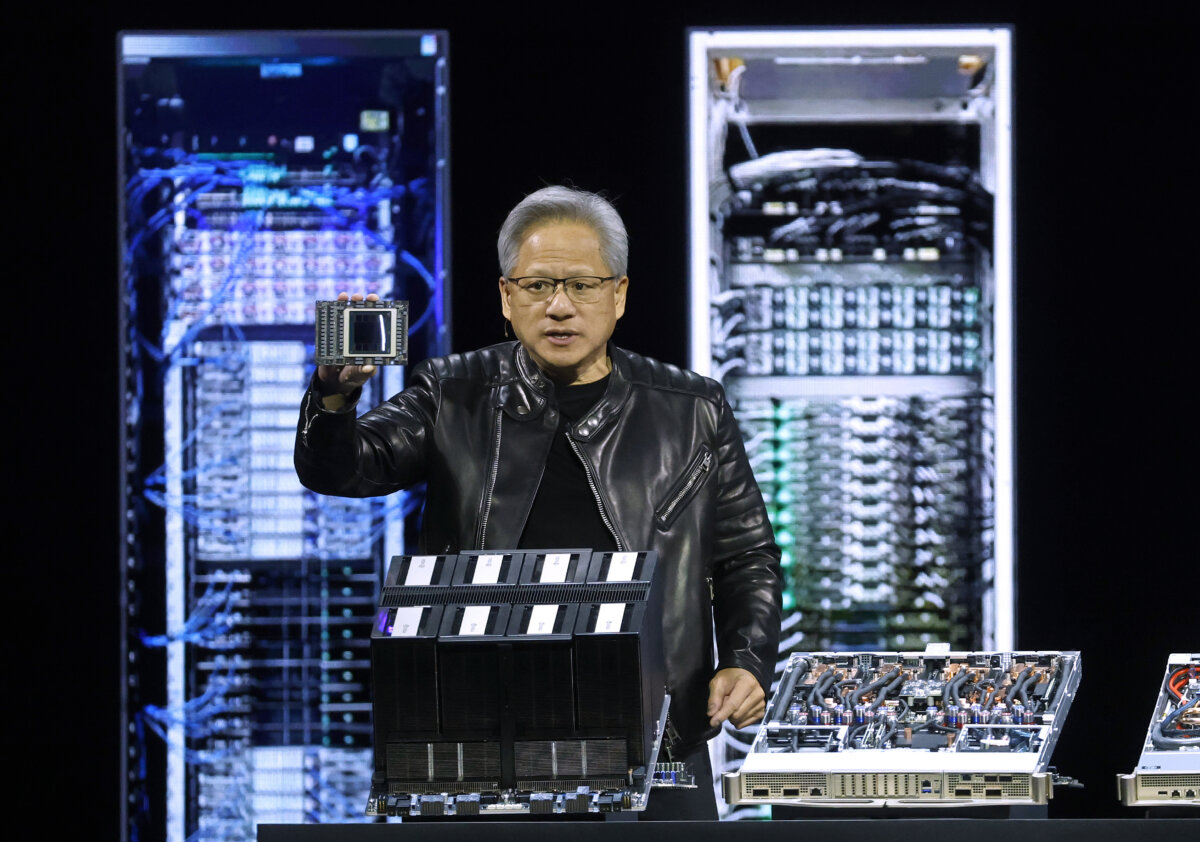
Analysts have noted that Nvidia currently has $95 billion in purchase obligations, meaning that if the AI sector slows, the tech juggernaut will be left paying for unused capacity, which could weigh on margins and lower earnings expectations.
“The interpretation has flipped on fears that AI capex could slow and leave Nvidia with excess capacity. This looks like peak-cycle behaviour,” Ozkardeskaya said.
“It doesn’t necessarily mean that AI adoption will slow, but that the Big Tech AI push could level out.”
The Nasdaq also fell more than 3 percent in February.
Concerns about hyperscalers’ substantial capital expenditures and the lack of returns on massive investments have curbed enthusiasm across the broader AI market.
“Some companies have been hammered by the amount of AI spend that they’ve promised, and it has scared investors,” Luke Rahbari, co-portfolio manager at The Rational Equity Armor Fund, said in a note emailed to The Epoch Times.
Scores of tech giants have increased their capex plans for the next year.
In the past month, Alphabet, Amazon, Meta Platforms, Microsoft, and Oracle have said they plan to bolster capital expenditure by approximately $750 billion in 2026.
While they still rely heavily on positive cash flow, many of these companies are also taking on debt.
Alphabet recently offered a 100-year bond, attracting sizable demand overseas. This past fall, Amazon issued its first $15 billion bond since 2022. Oracle says it will raise up to $50 billion from capital markets.
But some analysts are not too worried about Nvidia’s Atlas-like standing in the financial markets.
“I have a hard time believing that anyone is just going to come right out of the blue with a better product and something that’s going to challenge Nvidia’s position and all of Nvidia’s spending when we look at this season of results,” Rahbari said.
 Friends Read Free
Copy
Facebook
Tweet
Friends Read Free
Copy
Facebook
Tweet