
U.S. District Judge Paul Gardephe on Sept. 18 sentenced a Chinese chemical company executive to 25 years in prison and three years supervised release for his role in importing fentanyl precursors to the United States.
Qingzhou Wang ran Amarvel Biotech in Hubei, China. A jury in January found Wang and coconspirator Yiyi Chen guilty of fentanyl precursor importation, money laundering, and, in the case of Wang, methamphetamine precursor importation.
“These executives turned a Chinese chemical company into a pipeline of poison, shipping hundreds of kilos of fentanyl-related precursors into the United States, disguising them as everyday goods, and cashing in through cryptocurrency,” Terrance Cole, head of the Drug Enforcement Administration (DEA), said in a statement.
“Americans were dying, but they kept selling. Thanks to DEA and our global partners, they now face justice, and this case sends a clear message: Anyone, anywhere in the world who profits from American deaths will be found and held accountable.”
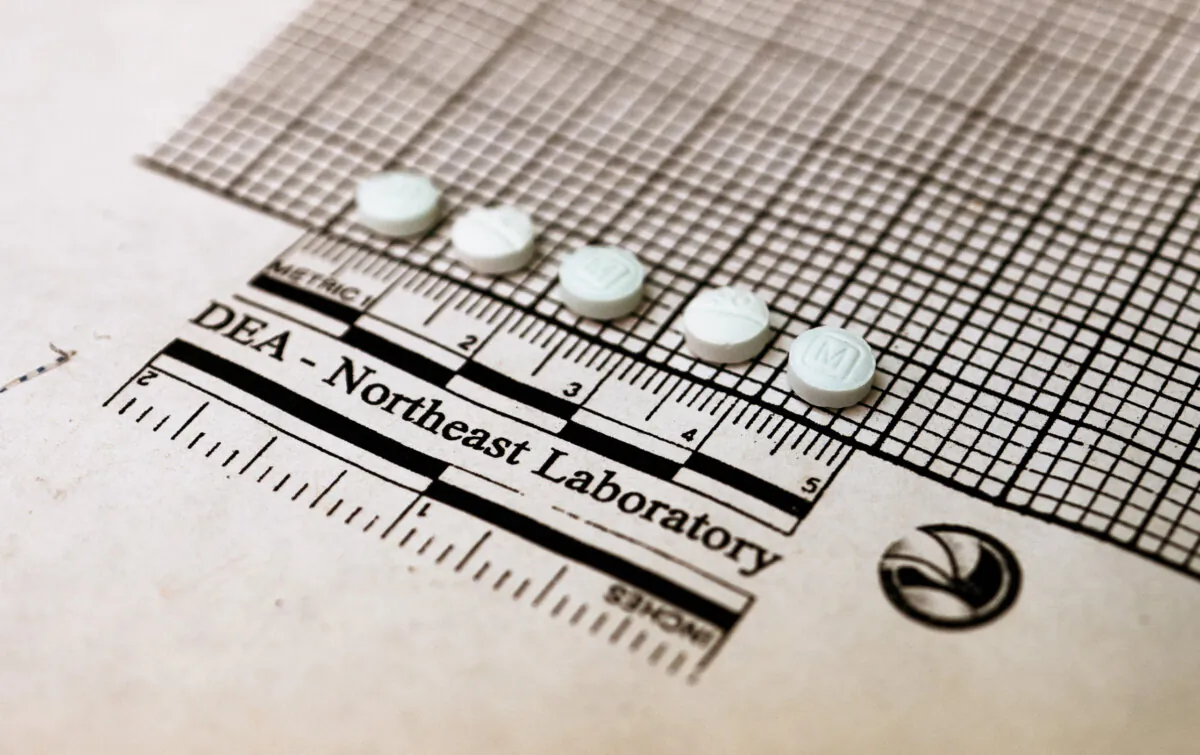
Wang, Chen, and another coconspirator not in custody had shipped to the United States more than 200 kilograms of precursor chemicals used to make fentanyl. Prosecutors noted this was enough to make 50 to 55 kilograms of fentanyl, or approximately 25 million lethal doses.
Chen was sentenced to 15 years in prison on Aug. 22. Her attorneys had asked for 30 months. The judge rejected arguments for leniency, saying the heavy sentence was necessary for deterrence.
The judge had also rejected last-minute arguments from Wang’s attorneys for lower sentencing guidelines based on the purity of the drugs imported. They had asked for three years, and prosecutors had asked for at least 20.
Beginning around November 2022, the Amarvel Biotech executives had corresponded with a DEA source who posed as a buyer in Mexico with operations in the United States.
A jury found that Wang and Chen knew the chemicals would be used to make fentanyl and methamphetamines and sold in the United States.
In arguing that Wang and Chen understood the illicit and potentially deadly nature of their business, prosecutors presented correspondence showing that Wang and Chen were told American buyers had died from overdosing on products made from one of their shipments, to which they defended the quality of their products based on their regular Mexican business.
Wang and Chen had corresponded with and sold to the DEA source in 2022 and 2023—during the fentanyl epidemic, when overdose deaths soared to more than 76,000 per year in the United States.
The company advertised “100 percent stealth shipping” and “Mexico hot sale,” stating it would ship chemicals in packaging like nuts and dog food to avoid detection. It also claimed to ship multiple tons of chemicals to the United States on a monthly basis, and ship regularly to Culiacan, Mexico, where the Sinaloa cartel is based.
The number of fentanyl overdose deaths has since come down, with 2024 seeing a 27 percent decrease compared to 2023, according to the U.S. Centers for Disease Control and Prevention.
In 2023, Wang and Chen agreed to meet with the DEA source posing as a buyer, and after traveling to Fiji were arrested and extradited to the United States to be charged and tried.
The Trump administration has made stopping the fentanyl crisis a priority, calling on Mexico and China to play their roles in curbing drug trafficking.
Earlier this month, the FBI and DEA announced charges against four Chinese companies, 22 Chinese nationals, and three Americans allegedly involved in fentanyl trafficking in 2022. The defendants bought chemicals from the Chinese companies that could yield more than 150 kilograms of fentanyl mixtures.
The House recently passed the Stop Chinese Fentanyl Act, which would strengthen the existing Fentanyl Sanctions Act to allow the United States to sanction Chinese individuals or organizations that refuse to cooperate with U.S. efforts to stop drug trafficking.
 Friends Read Free
Copy
Facebook
Tweet
Friends Read Free
Copy
Facebook
Tweet