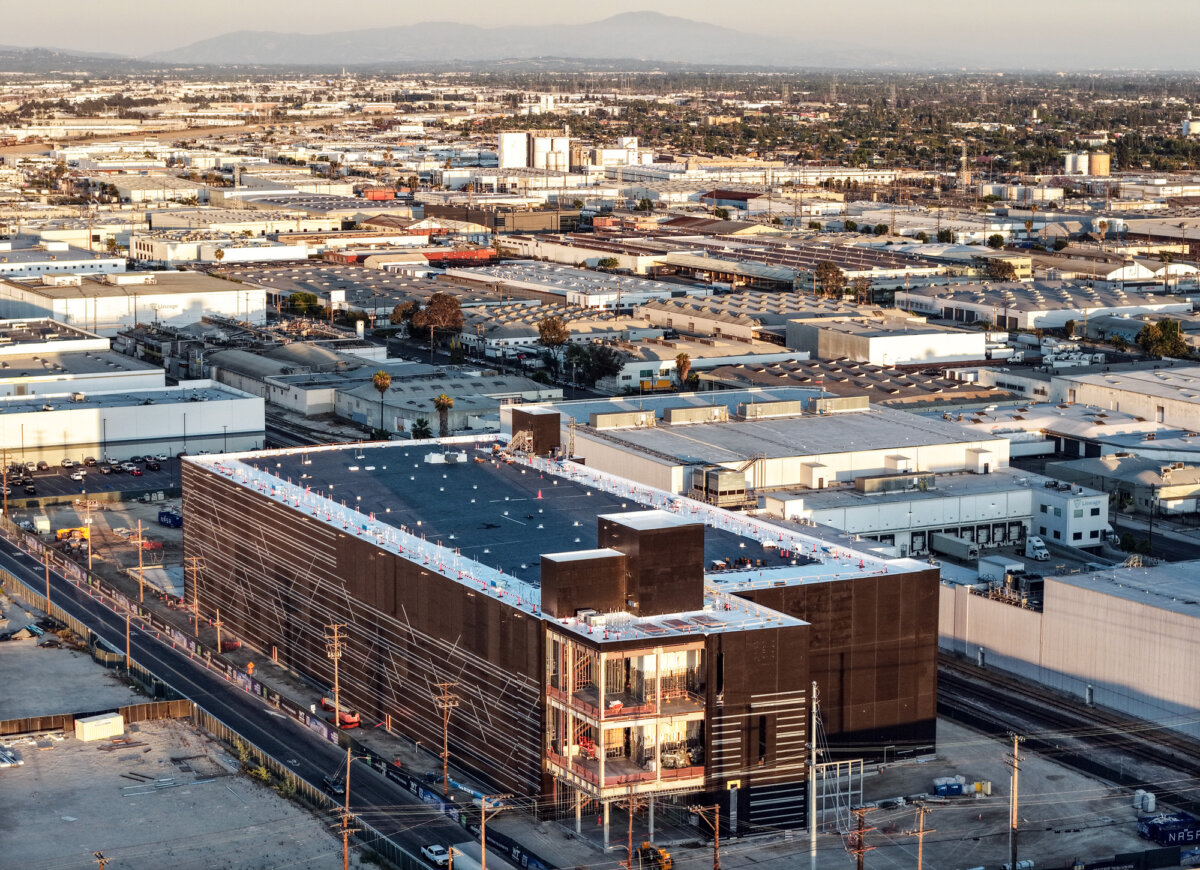

Data centers in America will eat up about 20 percent of the nation’s electricity consumption in 2035, according to a BloombergNEF report.
This is a major hike from 5.9 percent today, it stated on July 21.
The United States currently has more than 3,100 data centers in operation and more than 1,800 in various stages of development, according to the infrastructure intelligence and mapping platform Data Center Map.
The report said that electrical demand from artificial intelligence is increasing and that BloombergNEF projects data center power needs in the country will reach 194 gigawatts by 2035.
It said that just one gigawatt is “equivalent to the capacity of a traditional nuclear reactor.”
“Every coal plant, every gas plant, every solar farm in the United States, one unit of energy out of five generated by them is going to data centers,” said Lloyd Arnold, BloombergNEF analyst and one of the authors of the report.
“So that’s the same energy that’s going to be going into powering electric vehicles, powering cities.
“We’re already seeing the grid struggling to keep up, and that’s driving a change in how assets connect to the grid,” Arnold said.
The report said that the record amount of data center capacity that can be connected to the grid is 7.1 gigawatts a year.
However, it said that even if that pace is maintained, there could be a 19-gigawatt shortfall by 2035 under the base-case scenario.
According to a January Data Center Power report by Bloom Energy, the surge in demand is being fueled not only by more data centers but by significantly larger ones.
It said that as data centers scale “toward gigawatt-scale development, traditional electrical architectures are expected to become increasingly inadequate.”
“Operators that continue to plan projects around traditional grid assumptions risk falling behind on both schedule and scale,” it added.
Opponents of the growth of data centers held 142 protests across 42 states on July 18, coordinated by a former leader of the modern-day Tea Party movement.
The protests were coordinated by HumansFirst, which was cofounded by Amy Kremer, who is also the cofounder of Women for Trump.
Kremer has described the movement as nonpartisan and has criticized Republicans for giving Big Tech a “free pass” on data centers.
“They just woke up one day and found out they’re going to have this monstrosity in their community, and they don’t want it,” said Kremer, who predicted that data centers would be a defining issue in November’s midterm elections and the 2028 presidential race.
Texas, where many data centers are planned, hosted 18 protest events, the most of any state.
Georgia had 11 rallies, California had eight, and Pennsylvania, Florida, and Indiana had seven.
According to Data Center Watch, community opposition to data centers is surging nationwide, shifting from individual zoning disputes into a national political force.
An estimated $152 billion in potential investment was blocked or delayed in 2025, including $98 billion in the second quarter alone—more than all disruptions combined since 2023 and affecting 20 projects, the research organization’s data show.
The activity accelerated sharply in the third and fourth quarters, when hundreds of activist groups across 42 states organized to block the construction or expansion of data centers.
A Redfin-commissioned, Ipsos-conducted survey found that 47 percent of residents oppose the construction of AI data centers in their neighborhoods, while 38 percent support them.
The survey also showed that younger Americans are more likely to support building data centers in their “backyard.”
Politically, 49 percent of Republicans and 36 percent of Democrats support the construction of data centers.
Mary Prenon contributed to this report.
 Friends Read Free
Copy
Facebook
Tweet
Friends Read Free
Copy
Facebook
Tweet